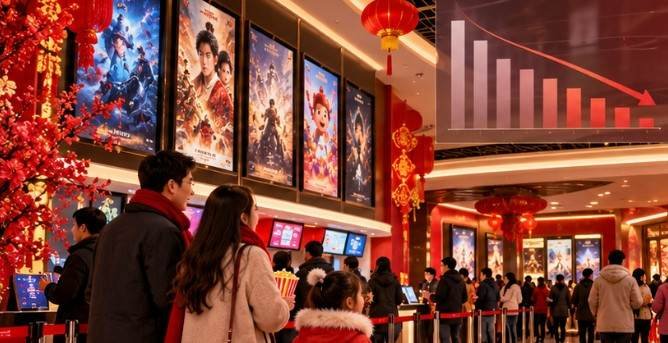
China recorded 596 million domestic tourist trips and RMB 803.5 billion in tourism spending during its nine-day 2026 Spring Festival holiday. Yet one of the country’s most closely watched entertainment indicators moved sharply in the opposite direction: holiday movie-ticket revenue fell.
That contradiction makes news from china box office boom staycation spring festival economy more interesting than a simple story about record spending. Chinese consumers were clearly willing to open their wallets, but they were becoming selective about where the money went.
Travel, restaurants, local entertainment and experience-driven purchases gained ground. Cinemas discovered that subsidies and a major holiday were not enough to guarantee blockbuster attendance.
China’s Nine-Day Holiday Produced Record Travel Numbers
The 2026 Spring Festival public holiday ran from February 15 through February 23, one day longer than the comparable 2025 break.
According to China’s Ministry of Culture and Tourism, domestic travelers made 596 million trips during those nine days, 95 million more than during the previous year’s eight-day holiday. Domestic tourism spending reached RMB 803.5 billion, an increase of RMB 126.5 billion.
Those headline figures are enormous, but there is an important qualification.
Reuters calculated that both trips and spending increased by almost 19% from the previous holiday while spending per trip actually slipped roughly 0.2%.
In other words, consumers traveled more without dramatically increasing how much they spent on each journey.
That matters because China’s policymakers are attempting to shift economic growth toward stronger household consumption. The International Monetary Fund has identified consumption-led growth as a major policy priority, while noting that weak domestic demand and household caution remain structural challenges.
The Staycation Story Is Really About Shorter, Experience-Rich Trips

Calling every domestic holiday trip a staycation oversimplifies what happened. China still experienced huge intercity travel flows. However, suburban attractions, county-level destinations, nearby heritage towns and short leisure trips became important parts of the holiday economy.
Beijing offers a useful example. The city recorded 19.843 million tourist visits and RMB 33.14 billion in tourism revenue. Its parks alone attracted more than 12.5 million visits.
More revealingly, Beijing’s suburban tourism promotion platform generated over 31,000 confirmed orders worth more than RMB 10 million after promoting nearby destinations through short videos and livestreaming.
Shanghai displayed the same appetite for urban leisure. The city welcomed 21.67 million visitors, while combined online and offline consumer spending reached RMB 60.35 billion, up 12.8% year over year. Offline spending climbed 15.4%.
The economic lesson is straightforward: destinations no longer need to persuade every family to take an expensive cross-country vacation. Restaurants, museums, hotels, festivals, suburban attractions and entertainment venues can compete for smaller pieces of a family’s holiday budget close to home.
The Supposed Box Office Boom Needs a Reality Check
Cinema provides the most important counterpoint.China entered the holiday with substantial policy support for moviegoing. The National Film Administration launched its “2026 Film Economy Promotion Year,” with banks, payment companies, entertainment platforms and other partners announcing at least RMB 1.2 billion in moviegoing subsidies for the year.
Yet official figures show the Spring Festival movie slate generated RMB 5.752 billion from approximately 120 million admissions.
That is substantial revenue in absolute terms, but Reuters reported box-office receipts were down 39.5% from the comparable holiday and admissions fell 35.8%. Weak audience response to several new releases contributed to the decline.
This is why the news from china box office boom staycation spring festival economy story should not be reduced to “Chinese consumers are spending again.”
Consumers were spending—but entertainment companies still had to earn their attention.
Subsidies Cannot Replace Strong Content
The movie results also provide a practical warning for businesses analyzing Chinese consumer demand.
Discounts can reduce the friction involved in making a purchase. They cannot make an unwanted product desirable.
A family offered a cheaper cinema ticket can still decide that a hot-spring hotel, restaurant meal, lantern festival or nearby cultural attraction offers better value.
For American entertainment executives watching China, that distinction is particularly relevant. A growing leisure economy does not automatically translate into equal growth across theaters, streaming, theme parks, restaurants and travel.
Retail and Dining Added Another Layer of Strength
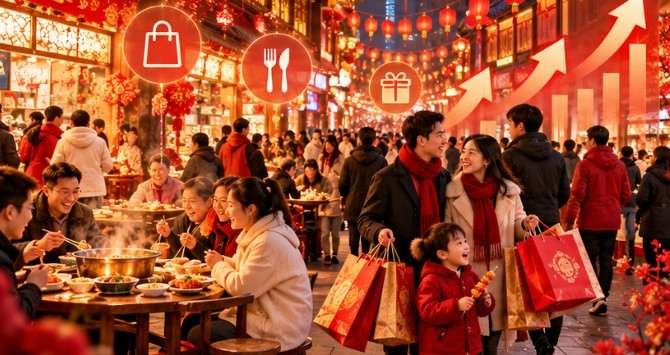
The holiday was backed by an unusually coordinated policy push.
During the first four days, average daily sales among major retail and catering businesses monitored by the Ministry of Commerce increased 8.6% year over year. Traffic at 78 major shopping streets and districts rose 4.5% during the first three days, while their revenue increased 4.8%.
China’s “Happy Shopping for Spring Festival” campaign linked restaurants, accommodation, transportation, tourism, retail and entertainment while encouraging trade-in subsidies, shopping incentives and better payment options.
Local governments also allocated RMB 2.05 billion for consumption vouchers, subsidies and cash-style incentives ahead of and during the holiday.
A Simple Three-Test Method for Reading China’s Holiday Data
Anyone evaluating China’s consumer economy should avoid judging it from one giant headline number.
Use three tests instead.
1. Check Total Spending
Rising tourism receipts, restaurant revenue and retail transactions show whether consumers are participating at all.
The 2026 numbers clearly pass this test.
2. Check Spending Per Consumer
This reveals whether households are becoming more confident or simply participating more frequently.
Tourism spending per trip was essentially flat to slightly lower, which suggests continued price sensitivity.
3. Compare Categories
Movie theaters weakened while tourism, dining and several local leisure categories strengthened.
That divergence tells investors and businesses far more than a single nationwide consumption figure.
The World Bank’s July 2026 China Economic Update reached a similarly cautious macroeconomic conclusion: China’s economy remained resilient, but weaker domestic demand and household caution continued to constrain the shift toward consumption-led growth.
What US Businesses Should Take From the Spring Festival
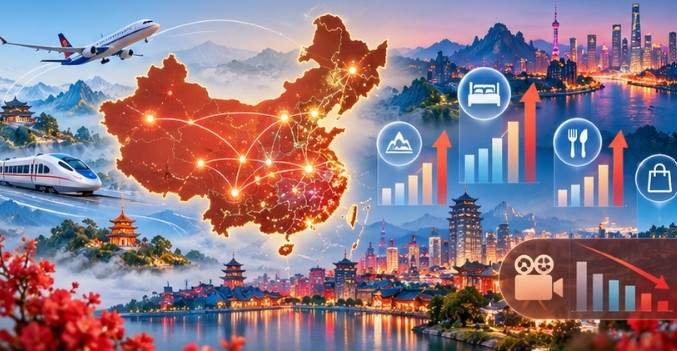
For American brands, studios, travel companies and investors, China’s holiday numbers suggest an increasingly experience-driven but value-conscious consumer.
The strongest opportunity may not always be a premium product requiring a huge commitment. Local entertainment, dining bundles, short hotel stays, cultural experiences and cross-category promotions can capture demand from people who want memorable experiences without dramatically expanding household budgets.
Companies should therefore measure conversion, repeat visits, average spend and promotional dependency—not simply total traffic.
A packed attraction can look spectacular while delivering modest per-customer spending. Conversely, smaller experience businesses can prosper by capturing several inexpensive transactions across a holiday.
Frequently Asked Questions
1. Did China’s 2026 Spring Festival set tourism records?
Yes. China reported 596 million domestic tourist trips and RMB 803.5 billion in domestic tourism spending during the nine-day holiday, both record highs.
2. Did China’s 2026 Spring Festival box office boom?
No. The market generated RMB 5.752 billion, but revenue fell roughly 39.5% year over year and admissions dropped about 35.8%.
3. Why did local and short-distance tourism perform well?
Consumers increasingly combined family gatherings with nearby cultural attractions, hotels, restaurants, festivals and suburban experiences that offered convenient entertainment without requiring expensive long-haul travel.
4. What does the Spring Festival economy reveal about Chinese consumers?
It suggests consumers remain willing to spend on valued experiences while comparing prices carefully and choosing between competing leisure categories.
What the Holiday Numbers Ultimately Say
The most useful takeaway from news from china box office boom staycation spring festival economy is not that China’s consumers suddenly rediscovered unlimited confidence. It is that they continued spending while becoming more selective.
A record 596 million domestic trips demonstrated enormous appetite for experiences. Strong restaurants, shopping districts and city tourism reinforced that message. The cinema decline showed the limit: consumers will not automatically reward every sector simply because they have time off or receive discounts.
For businesses watching China’s economy, that distinction should shape the next strategy. Follow where households voluntarily spend their leisure time—not merely where promotional money is being offered.