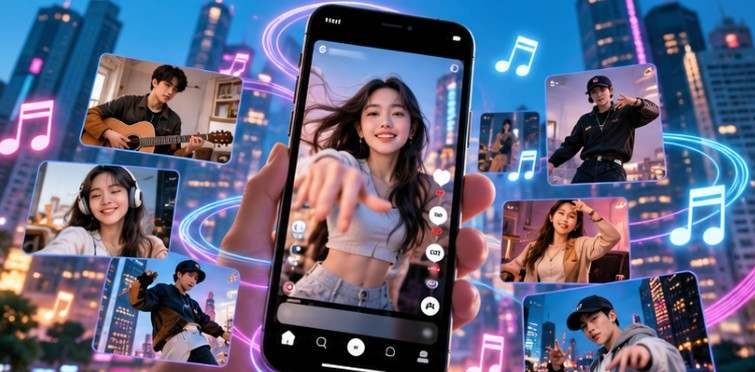
One superstar demonstrated how quickly music could change the balance of power in China’s short-video market. After Jay Chou established his official Kuaishou presence in 2020, his account attracted millions of followers within days, while his music became fuel for videos, fan participation, livestreams, and platform promotion. By late July, Kuaishou said Chou’s livestream debut had attracted more than 68 million total viewers.
That helps explain why kauishous music moves challenge douyins dominance became more than an entertainment-industry story. Kuaishou was demonstrating that premium music rights could function as an audience-acquisition tool, a creator incentive, and a way to make its platform culturally harder to ignore.
Kuaishou Was Fighting for More Than Songs
Douyin, ByteDance’s Chinese counterpart to TikTok, had already shown how naturally music fits short-form video. A memorable sound can move from one creator to thousands of remixes, dances and reactions without requiring users to intentionally search for the artist.
Kuaishou therefore faced a strategic question: How could it give creators and viewers a reason to spend more attention inside its ecosystem?
Music was one answer.
In early 2020, Kuaishou expanded its available music following a licensing agreement with Tencent Music Entertainment. TechNode described the arrangement as one of the largest copyright deals then seen in China’s short-video sector. Douyin had separately reached its own Tencent Music licensing agreement, showing that both companies understood the competitive value of catalog depth.
The importance of music to short video was hardly unique to China. IFPI’s later global research found that 68% of time spent on short-form video apps in its 2021 survey involved music-dependent content such as dance and lip-sync videos.
That relationship turns a music catalog into something closer to platform infrastructure.
The Jay Chou Deal Gave Kuaishou a Cultural Shortcut
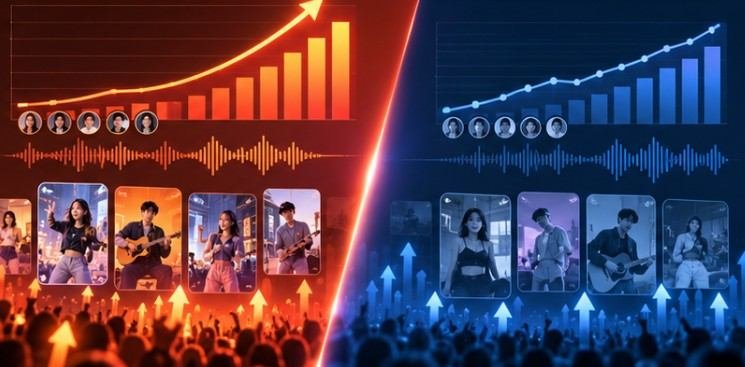
The most visible part of Kuaishou’s strategy arrived when it secured authorization involving Jay Chou and JVR Music.
In May 2020, Kuaishou announced that users could access authorized portions of Chou’s songs and music videos for short-video creation. Chou then opened what was reported as his first official account on a mainland Chinese social platform. Caixin reported that the account had nearly nine million followers by June 3.
Kuaishou subsequently promoted his single “Mojito,” connecting traditional music distribution with short-video discovery.
The deal mattered because Chou was not simply another popular creator. He brought a substantial existing fan community into an ecosystem where fans could become creators themselves.
Instead of merely listening to a track, people could build videos around it, participate in trends, follow the artist and eventually watch livestream programming.
That is an important distinction.
A streaming license gives audiences something to hear. A short-video license can give millions of users something to create with.
Music Turned Fans Into Distribution
Short-video platforms operate differently from conventional media channels because consumers frequently perform part of the distribution work.
Imagine a song being used by 10 creators. Their videos inspire another 100. Some versions become popular enough to generate thousands of interpretations.
The song effectively becomes a reusable media format.
Berklee College of Music has highlighted the same dynamic in the US market, noting how TikTok participation and viral moments have helped artists reach new listeners and even revived older recordings.
That explains why Kuaishou’s music strategy had implications well beyond signing celebrities. Every licensed song increased the raw material available to creators.
Kuaishou Also Needed New Musicians, Not Just Superstars

The strategy became more interesting when Kuaishou moved beyond established catalogs.
In July 2020, it partnered with QQ Music on a singer-songwriter competition known as “Album 12.” The program included a RMB100 million incentive initiative and promised participants exposure through livestreaming, charts, short videos, music releases and a final concert.
This created a second competitive layer.
Jay Chou could bring audiences into Kuaishou. Emerging musicians could potentially generate content that kept those audiences participating.
That produces a reinforcing loop:
Artist → licensed sound → creator participation → algorithmic distribution → audience discovery → more creator participation.
A rival cannot easily reproduce that loop simply by purchasing advertising.
Why Licensing Was a Business Strategy
Copyright is an important part of this story because platforms cannot treat commercially valuable music as an unlimited free resource.
The US Copyright Office explains that digital music licensing includes different rights and statutory frameworks, including rules established under the Music Modernization Act. Although American copyright law does not govern Kuaishou’s Chinese operations, it illustrates why music platforms worldwide must consider rights ownership, licensing and royalty administration.
The Copyright Alliance similarly explains how copyright owners can authorize others to use protected works through licensing arrangements. For short-video companies, licensing therefore creates both a defensive and offensive advantage: fewer rights problems and more attractive creative tools.
Did Kuaishou Actually Overtake Douyin?
No. That is the most important limitation to understand. Kauishous music moves challenge douyins dominance describes competitive pressure, not a complete reversal of market leadership.
Around the period of the music push, Douyin remained substantially larger. An iClick report citing 2020–21 platform figures listed Douyin at roughly 600 million daily active users in August 2020 and Kuaishou at about 300 million by January 2021.
The platforms also served somewhat different audience profiles. Research at the time found Kuaishou relatively stronger in lower-tier Chinese markets, while Douyin had greater penetration in first- and second-tier cities.
Music could narrow competitive gaps, reshape perception and attract valuable users without immediately eliminating those structural differences.
A Four-Part Test for Evaluating a Music-Platform Strategy
US marketers, media companies and creators can use Kuaishou’s approach as a useful evaluation model.

1. Does the content have cultural gravity?
Large catalogs are useful, but exclusive access to artists people actively care about can produce disproportionate attention.
2. Can users participate?
A song used only for passive listening has limited network effects. A sound that supports challenges, remixes and user-generated videos can continuously reproduce itself.
3. Is the artist connected to the platform?
Official accounts, livestreams, premieres and creator collaborations make a licensing deal considerably more valuable than simply adding tracks to a library.
4. Does attention continue after launch week?
The strongest strategy converts a promotional spike into an enduring creator ecosystem.
IFPI research reinforces the underlying principle: music is central to short-form video participation, with 63% of respondents in its 2022 study saying music played a central role in the time they spent watching short-form video.
For additional US social-platform research, Pew Research Center provides ongoing analysis of TikTok accounts and content categories, including music, dance, entertainment and promotional activity.
The Bigger Kuaishou Strategy
Music was only one piece of Kuaishou’s expansion. Its aggressive investment in creators, livestreaming, commerce and entertainment also helped strengthen the case for eventually accessing public capital. That wider business story is explored in our analysis of why Kuaishou wanted to go public.
The same creator-to-commerce pipeline later became particularly visible during China’s giant shopping events, including the evolving livestreaming strategies used during the 618 shopping festival.
Music mattered because it sat near the beginning of that funnel: attract attention first, encourage participation second, and build monetizable relationships afterward.
Frequently Asked Questions
1. Why did Kuaishou partner with Jay Chou?
Jay Chou gave Kuaishou premium music rights, enormous cultural recognition and a major official creator presence capable of attracting fans and stimulating user-generated videos.
2. How did Kuaishou compete with Douyin through music?
It expanded licensed catalogs, signed major artist partnerships, promoted original musicians and connected songs with short videos, challenges, livestreams and fan participation.
3. Did Kuaishou’s music strategy defeat Douyin?
No. Douyin remained the larger platform. Music strengthened Kuaishou’s competitive position and cultural relevance rather than immediately displacing Douyin.
4. Why are music rights valuable to short-video platforms?
Licensed music gives creators more material for videos while helping platforms manage copyright risk and encourage repeatable trends, challenges and discovery.
What Kuaishou’s Music Gamble Really Proved
The lasting lesson from kauishous music moves challenge douyins dominance is not that one celebrity can overturn an entire platform market. It is that content rights can become competitive infrastructure.
Kuaishou took songs people already loved and connected them to creators, fandom, livestreaming and algorithmic distribution. Jay Chou supplied the attention, but the larger strategy was to turn that attention into participation.
For US media and technology companies, that distinction matters. The strongest platform does not merely own or license attractive content. It gives audiences compelling reasons to reuse it, reshape it and distribute it for the platform.