
Cooking for one sounds easy until you’re staring at a half-used bag of spinach, three leftover chicken breasts, and a refrigerator full of ingredients you don’t know how to combine.
I’ve realized that how to prepare balanced meals when cooking for one isn’t really about mastering complicated recipes. It’s about making smarter grocery choices, preparing versatile ingredients, and avoiding the exhaustion of cooking something new every night.
With a simple balanced plate formula and a few meal prep strategies, you can enjoy nutritious, affordable meals without wasting food or eating the same leftovers for days.
What Should a Balanced Meal for One Person Include?
A balanced meal provides protein, complex carbohydrates, vegetables, and healthy fats. Each contributes to energy, nutrition, and overall satisfaction.
I follow a simple plate-building method inspired by the USDA’s MyPlate guidance.
How Do You Use the Balanced Plate Method?
For most lunches and dinners, I divide my plate into three portions.
Half contains vegetables such as spinach, broccoli, carrots, or bell peppers. One-quarter includes lean protein like chicken, fish, tofu, eggs, or beans. The remaining quarter contains complex carbohydrates such as brown rice, quinoa, sweet potatoes, or whole-wheat pasta.
I finish with a small amount of olive oil, avocado, nuts, or seeds for healthy fats.
This formula makes portion planning easier without strict calorie counting. I also include fruit, dairy, or fortified alternatives throughout the day to support nutritional variety.
How Can You Grocery Shop for One Without Wasting Food?
Grocery shopping for one person requires a different strategy than buying food for a family. I focus on ingredients that work across several meals rather than purchasing something special for every recipe.
Buy Frozen Foods That Last Longer
Frozen broccoli, spinach, berries, and vegetable mixes are convenient choices. They retain valuable nutrients and give me more flexibility when my plans change.
I can use a handful of frozen spinach in an omelet without worrying about finishing an entire fresh package.
Purchase Smaller Protein Portions
Instead of buying large packages of chicken or fish, I choose individually frozen fillets or ask the grocery store meat counter for smaller quantities.
This allows me to thaw only what I need while keeping the remaining portions safely frozen.
Use Grocery Store Salad Bars Strategically
When I need just a few mushrooms, chopped peppers, or sliced onions, I sometimes purchase small amounts from a grocery store salad bar.
Although these ingredients may cost more per ounce, buying only what I need can prevent waste. I check freshness and keep ready-to-eat ingredients refrigerated.
How Can You Meal Prep for One Without Eating Repetitive Leftovers?
The secret to effective meal prepping for one is preparing individual ingredients instead of several identical meals.
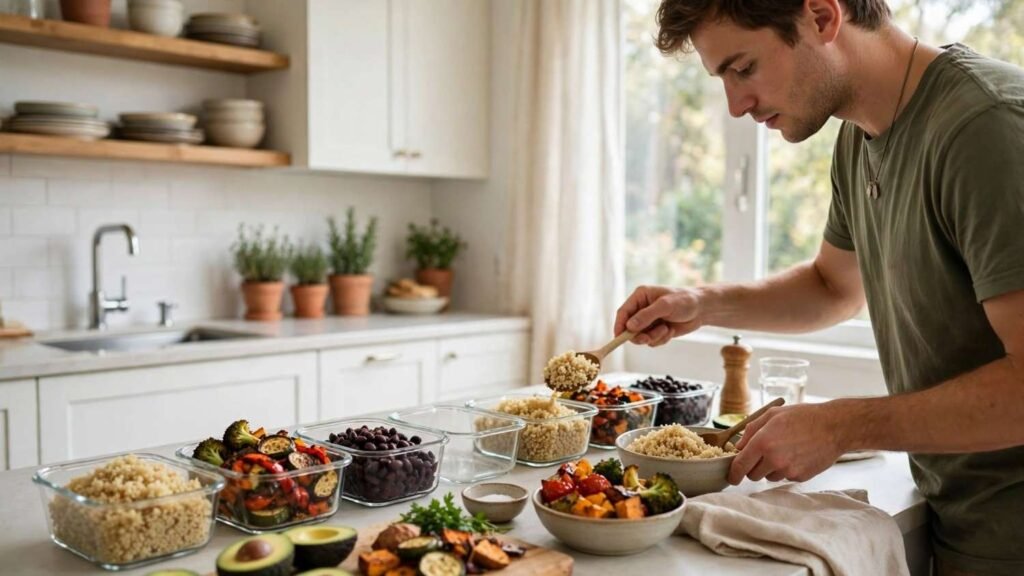
I call this component cooking. Rather than making a four-serving casserole, I prepare a couple of versatile foods that can become different dishes.
Prepare Two Versatile Bases
On Sunday, I might cook quinoa or brown rice and roast a sheet pan of broccoli and sweet potatoes.
I then choose proteins such as chicken, eggs, black beans, or tofu and keep several sauces available.
This creates a foundation for multiple healthy meals without requiring extensive daily cooking.
How Can You Turn the Same Ingredients Into Three Different Meals?
On Monday, I combine quinoa, roasted vegetables, and a cooked egg with soy sauce for a quick stir-fry.
On Tuesday, I use the same vegetables and quinoa with canned black beans, salsa, and avocado for a Mexican-inspired grain bowl.
On Wednesday, I add quinoa to fresh spinach, top it with store-bought rotisserie chicken, and finish with vinaigrette.
These meals use similar ingredients but offer different flavors and textures. That’s why I find component cooking more sustainable than preparing identical containers for the entire week.
What Are the Easiest Balanced Meals for One in Under 15 Minutes?
When I’m exhausted after work, I prefer simple recipes that deliver useful nutrients without creating a sink full of dishes.
Loaded Vegetable Omelet
I whisk two eggs with spinach and cherry tomatoes, then cook everything in a lightly oiled skillet.
Whole-grain toast adds fiber-rich carbohydrates, making this an easy breakfast or dinner. Cooking generally takes around 10 minutes.
Upgraded Canned Soup

I heat low-sodium minestrone or lentil soup, add a generous handful of baby spinach, and finish with hemp seeds or a drizzle of olive oil.
This simple upgrade adds vegetables and healthy fats. Lentil soup also contributes protein and fiber, although the nutritional balance depends on the product.
Quick Sheet-Pan Salmon or Tofu
I place a single salmon fillet or chopped firm tofu alongside asparagus on a small baking sheet. After adding olive oil and seasonings, I roast everything at 400°F.
Tofu and vegetables may cook in approximately 15 minutes, while salmon’s cooking time depends on thickness. Fish should reach 145°F for food safety.
FDA
I add microwaveable brown rice or whole-grain bread for a more complete meal.
How Can You Cook Healthy Meals for One on a Budget?
Budget-friendly cooking doesn’t mean eating plain rice every day.
I keep affordable pantry staples such as oats, lentils, canned beans, peanut butter, whole-wheat pasta, and canned tuna or salmon.
Before shopping, I check what’s already available and plan three or four meals around those ingredients.
I also compare unit prices, consider store brands, and avoid purchasing bulk packages unless I can freeze or finish everything.
Learning how to prepare balanced meals when cooking for one becomes much more affordable when every ingredient serves multiple purposes.
How Should You Store Single-Serving Meals Safely?
Proper storage helps prevent food waste and reduces the risk of foodborne illness.
I refrigerate perishable leftovers within two hours, divide large batches into shallow containers, and label them with preparation dates.
Most cooked leftovers should be consumed within three to four days or frozen for later use. When reheating leftovers, I make sure they reach 165°F.
FDA+1
I also freeze extra bread, portion proteins before storage, and keep ingredients that need to be used soon visible in my refrigerator.
What Common Mistakes Should You Avoid When Cooking for One?

One mistake is preparing oversized meals without a plan for leftovers. Another is buying specialty ingredients that work in only one recipe.
I’ve also learned not to depend entirely on refined carbohydrates when I’m busy. Adding beans, eggs, Greek yogurt, chicken, or tofu can improve the protein content of quick meals.
Most importantly, I don’t expect every meal to be perfect. Consistently choosing varied, nutritious foods matters more than following a rigid plate formula every time.
Frequently Asked Questions (FAQs)
1. What Is the Easiest Way to Make a Balanced Meal for One Person?
Combine vegetables, protein, whole grains or another nutritious carbohydrate, and a little healthy fat. A chicken and brown rice bowl with broccoli and olive oil is one easy example.
2. Is Cooking for One Cheaper Than Ordering Takeout?
Cooking at home can cost less when you plan portions carefully, reuse ingredients, and limit waste. Actual savings depend on grocery prices, takeout costs, and how frequently you cook.
3. How Can I Eat Healthy When I Don’t Have Time to Cook?
Choose convenient ingredients such as frozen vegetables, canned beans, microwaveable whole grains, prewashed greens, and ready-to-eat proteins. You can assemble many balanced meals in approximately 10–15 minutes.
4. Can I Prepare a Whole Week of Meals for One Person?
Yes. Refrigerate portions you will eat within three to four days and freeze the remaining cooked meals. Preparing ingredients separately also helps create more variety.
Final Thoughts
I’ve learned that how to prepare balanced meals when cooking for one comes down to working smarter in the kitchen, not spending more time there.
By following a flexible balanced plate method, shopping strategically, preparing versatile ingredients, and freezing extras, you can enjoy nutritious meals without unnecessary expense or kitchen burnout. These simple habits can also help you understand how to stop skipping meals during busy workdays, ensuring you have healthy, satisfying options ready even when your schedule gets hectic.
Start with two or three simple recipes, reuse ingredients creatively, and build a routine that makes healthy eating feel effortless rather than exhausting.