
A blog post can influence a purchase months after someone reads it. The customer might never click a promotional link, subscribe to a newsletter, or engage with another article. Yet when they finally need a product, your company is the first name they remember.
That invisible influence is why understanding how to measure brand lift from content marketing matters. Traditional analytics capture immediate actions, but brand lift reveals whether educational content, newsletters, and thought leadership are changing how audiences recognize, remember, and evaluate a business. The challenge is separating genuine brand growth from ordinary traffic fluctuations.
Start With Branded Search, Not Website Traffic
Branded searches offer one of the most accessible indicators of growing consumer awareness.
Someone searching for “best moisturizer for dry skin” expresses category interest. Searching for a particular skincare company suggests existing brand familiarity.
Use Google Search Console to Identify Demand
Google Search Console lets marketers examine search impressions, clicks, queries, and geographic performance. Its branded-query filtering can help distinguish searches mentioning the business from broader informational searches.
Monitor:
- Impressions for company and product names.
- Searches containing brand-related variations.
- Changes in branded clicks.
- Branded search performance across American markets.
Compare consistent reporting periods, ideally accounting for seasonal demand.
For example, suppose branded impressions increase from 8,000 to 10,000 monthly.
The percentage increase is:
Brand search growth = ((10,000 − 8,000) ÷ 8,000) × 100 = 25%
That signals increased branded search visibility, not necessarily a 25% increase in consumer awareness.
Search rankings, advertising, and competitor activity can also influence impressions.
Use Brand Lift Surveys to Measure Consumer Memory
Search data reveals behavior. Surveys investigate what people actually think. Pre-campaign and post-campaign studies can measure changes in recognition, perception, and buying intentions.
Ask Questions That Avoid Leading Respondents
A reliable survey separates unaided awareness from aided recognition.
For unaided recall, ask:
“Which companies come to mind when you think about sustainable home cleaning products?”
For aided recognition, provide several company names and ask which respondents recognize. Then examine familiarity, trust, and likelihood of purchase using consistent response scales.
The Pew Research Center’s survey methodology explains how question wording and order can influence respondents’ answers.
This matters because asking people whether they enjoyed your content before testing brand recognition and awareness may artificially increase recall.
Compare Audiences Before and After Exposure
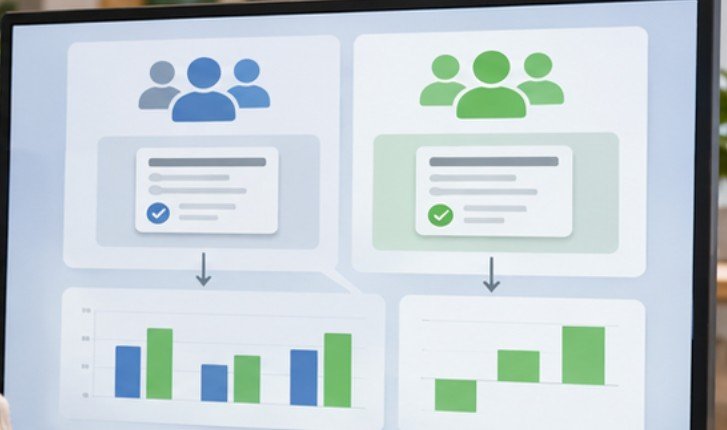
Suppose an educational campaign begins with 20% unaided brand awareness and ends with 28%. The absolute increase is eight percentage points, while the relative lift is 40%. Both calculations are useful, but they describe different quantities.
The American Association for Public Opinion Research recommends maintaining consistent wording and survey methods when measuring changes over time.
Survey audiences should also represent your intended customers rather than exclusively existing subscribers.
Separate Content’s Influence From Other Marketing
One difficult question remains: Would awareness have increased without the content campaign? A seasonal promotion, publicity appearance, or competitor controversy might generate similar results.
Test Exposed Audiences Against Control Groups
For stronger evidence, compare consumers exposed to content with comparable consumers who were not exposed.
Random assignment is preferable when feasible. Otherwise, brands can use matched geographic markets or carefully selected audience groups.
For example, a home improvement company might promote educational content in Colorado while maintaining its existing marketing approach in a comparable market.
Measure awareness before and after in both regions.
The basic calculation is:
Incremental brand lift = Change in exposed group − Change in control group
If awareness rises eight percentage points in the exposed group and three in the control group, estimated incremental lift equals five percentage points.
This difference-in-differences approach is explained in MIT research on causal measurement. Its reliability depends on comparable underlying trends and limited contamination between groups.
Track Engagement That Suggests Growing Interest
Not every marketing team has the budget for independent research panels. Smaller businesses can combine behavioral signals to identify developing brand relationships.
Look Beyond Pageviews in GA4
Google Analytics 4 provides useful engagement and conversion information.
Monitor engaged sessions, returning users, meaningful interactions, and key events associated with educational content.
Scroll tracking can help identify whether visitors reach important explanations, although reaching the bottom of a page does not prove comprehension.
Direct traffic deserves attention too, but it is not a clean measure of brand awareness. Missing referral information and attribution rules can place unrelated visits into that category.
Connect Content With Later Conversions
GA4 attribution path reporting helps identify channels contributing to conversion journeys. CRM records can provide further context, particularly for businesses with extended sales cycles.
For example, a software buyer might read a technical comparison in January, attend a webinar in February, and request a demonstration in April.
The initial article may have contributed to the decision even though the final conversion occurred elsewhere.
Review assisted journeys while acknowledging that attribution reports cannot capture every exposure.
Listen for Brand Recognition Outside Your Website

Brand influence frequently appears in conversations rather than dashboards. Social listening can reveal whether audiences discuss your company independently, recommend its educational resources, or associate it with particular expertise. Monitor relevant Reddit communities, LinkedIn discussions, product reviews, and industry forums.
Separate mention volume from sentiment. Ten thoughtful recommendations may be more meaningful than hundreds of negative mentions following a controversy.
Customer interviews and newsletter replies also provide valuable qualitative evidence. Ask new customers where they first encountered the company, while remembering that retrospective answers can be inaccurate.
Build a 90-Day Brand Lift Measurement Plan
A structured measurement schedule makes results easier to interpret.
Days 1–30: Establish Your Baseline
Record branded search performance, direct visits, returning users, and relevant social mentions. Survey a sample of prospective customers to establish initial awareness and familiarity. Define the target audience and document other marketing campaigns that could affect results.
Days 31–60: Publish and Monitor
Distribute educational articles, original research, newsletters, and expert commentary. Use consistent tracking parameters for promotional links. Monitor meaningful engagement and audience feedback without treating early traffic growth as definitive evidence of lift.
Days 61–90: Evaluate the Change
Repeat the original survey and compare results with baseline findings. Review branded searches, audience behavior, sentiment, and content-assisted conversions. Where possible, evaluate results against an appropriate control group.
The CDC’s program evaluation framework emphasizes gathering credible evidence, supporting conclusions, and using findings to improve future decisions. That evaluation discipline applies equally well to marketing.
Common Measurement Mistakes That Distort Results

Understanding how to measure brand lift from content marketing also means recognizing what the available data cannot establish.
A successful article may attract thousands of visitors without improving brand recognition. Conversely, highly specialized content may influence a small but commercially valuable audience.
Avoid treating engagement as proof of persuasion, confusing percentage changes with percentage-point changes, or attributing all branded search growth to content.
Small survey samples, overlapping campaigns, and inconsistent audience selection can also distort results.
Most importantly, brand lift should not be presented as guaranteed revenue. Awareness and preference are intermediate outcomes, not completed sales.
Frequently Asked Questions
1. What is the best metric for measuring content-driven brand lift?
Brand awareness surveys offer direct evidence of perception changes. Branded search trends, returning visitors, and sentiment provide useful supporting indicators.
2. How long does brand lift take to appear?
Some campaigns influence awareness within weeks, while organic educational content can take several months. Measurement periods should reflect audience behavior and purchase cycles.
3. Can small businesses measure brand lift without expensive tools?
Yes. Google Search Console, GA4, short audience surveys, and manual social listening provide an affordable starting point.
4. How to measure brand lift from content marketing without surveys?
Track branded searches, repeat engagement, unsolicited mentions, and assisted conversions. These indicate possible brand growth but cannot independently establish causal lift.
The Real Value Is What People Remember
Content marketing succeeds when useful information changes what audiences know, trust, and remember about a business.
That influence rarely fits neatly into a single conversion report.
I would prioritize three forms of evidence: direct awareness measurement, observable changes in branded demand, and meaningful customer behavior. Together, they provide a more credible picture than traffic growth alone.
Start with a consistent baseline, introduce stronger comparison methods when resources permit, and measure changes over a realistic period.
The most valuable content is not necessarily what generates the most immediate clicks. It is what makes your brand worth remembering when the buying decision finally arrives.