June 2020 produced one of fashion’s strangest contradictions: physical retail was under extraordinary pressure, yet brands were still betting heavily on collaborations designed to create excitement, scarcity, and cultural conversation.
The best of brand collaborations june 2020 were therefore about more than putting two logos on one product. Target made designer fashion dramatically more accessible, Yeezy promised to reshape Gap, Dior and Jordan turned a basketball sneaker into luxury merchandise, and Uniqlo mixed pop music with contemporary art.
What made these partnerships memorable was how well they matched a rapidly changing shopping environment.
Why June 2020 Was Different From an Ordinary Collaboration Month
The United States was deep in the first year of COVID-19 disruption. Stores faced closures, consumer routines had changed, and digital shopping suddenly carried far more weight.
That context matters. The U.S. Census Bureau later reported that seasonally adjusted e-commerce sales reached $211.5 billion in the second quarter of 2020, jumping 31.8% from the previous quarter. Online commerce accounted for 16.1% of total retail sales.
The U.S. Census Bureau’s historical e-commerce data provides useful context for just how quickly retail behavior shifted.
Collaborations suddenly needed to work as digital events as much as physical product launches. Strong photography, recognizable names, limited availability, social-media conversation, and simple online purchasing became particularly valuable.
Target Made Designer Fashion Feel Attainable
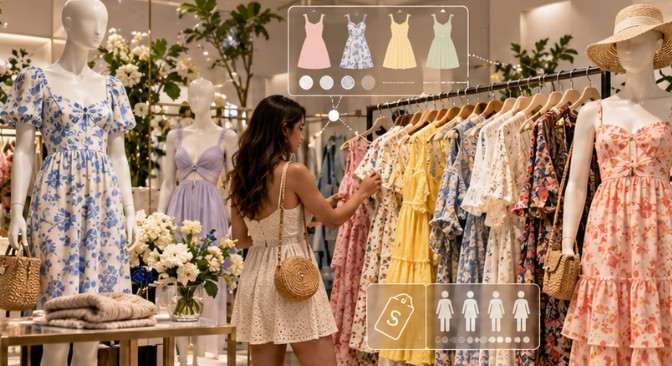
Target’s Designer Dress Collection was one of the clearest examples of collaboration being used to democratize premium design.
The retailer partnered with three female-founded labels: Cushnie, LoveShackFancy, and Lisa Marie Fernandez. More than 70 dresses were offered, with sizes spanning XXS through 3X and prices generally between $40 and $60. The collection launched online June 6, with store availability following during June.
Each label supplied something Target could not manufacture through its own name alone.
Cushnie brought polished, body-conscious minimalism. LoveShackFancy contributed romantic florals and ruffles. Lisa Marie Fernandez supplied vacation-oriented silhouettes and bold summer styling.
Target, meanwhile, supplied national distribution and prices that put those design languages in front of consumers who might never purchase the designers’ main collections.
Why the Strategy Worked
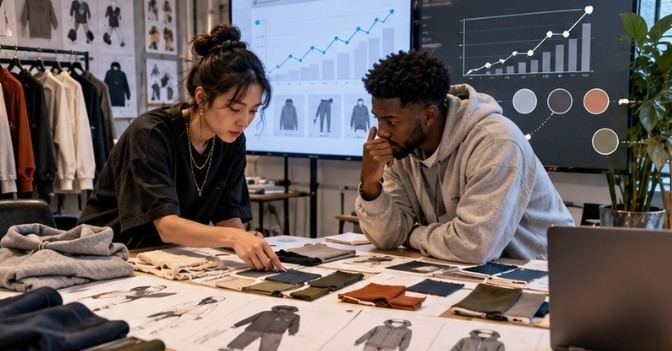
The partnership answered a basic co-branding question: does each participant contribute a clearly different advantage?
Academic and professional research suggests that successful co-branding depends partly on partner fit and on how deeply the two brands are integrated. The American Marketing Association’s review of co-branding research explains that stronger integration can increase the effect a partnership has on consumers’ attitudes toward participating brands.
Target’s collection offered a straightforward exchange: designer credibility for mass-market reach.
Yeezy x Gap Was the Month’s Biggest Strategic Bet
Few announcements generated more business interest than Gap’s June 26 partnership with Kanye West’s Yeezy.
This was not a weekend capsule or a celebrity endorsement campaign. Gap described plans for Yeezy Gap apparel covering men, women, and children, with products intended to reach accessible price points. West retained ownership of Yeezy while receiving royalties and potential sales-linked equity benefits.
The scale changed the meaning of the collaboration.
Gap contributed decades of apparel manufacturing, stores, distribution, and mainstream recognition. Yeezy contributed cultural relevance and a consumer following Gap wanted to reach.
Contemporary reporting described the arrangement as a 10-year deal, illustrating how far collaboration culture had moved beyond temporary hype drops.
For marketers reviewing the best of brand collaborations june 2020, this remains an important distinction: a collaboration can be a product launch, but it can also function as a long-term repositioning strategy.
Dior x Air Jordan Turned Scarcity Into Theater
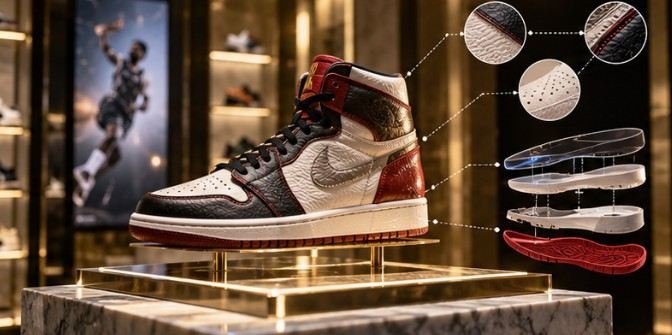
At the opposite end of the accessibility spectrum sat Dior and Jordan Brand.
Their Air Jordan 1 collaboration fused one of America’s most recognizable sneaker silhouettes with Dior’s luxury craftsmanship and branding. Registration for the highly anticipated sneakers opened in late June after pandemic disruptions altered the original release schedule. Contemporary coverage put pricing around $2,000 to $2,200 depending on the model.
That price was not a weakness in the strategy. Exclusivity was part of the product.
Dior gained direct access to sneaker culture and the enormous cultural vocabulary surrounding Michael Jordan. Jordan Brand moved further into luxury fashion without abandoning its signature silhouette.
The partnership showed how an established object can acquire a completely different meaning simply by changing its materials, distribution, scarcity, and partner.
Fashion collaborations also raise intellectual-property questions because logos, artwork, trademarks, and other creative assets may cross organizational boundaries. The U.S. Copyright Office’s discussion of fashion design protection provides useful background on the unusual legal treatment of fashion design in the United States.
Billie Eilish, Takashi Murakami, and Uniqlo Mixed Three Audiences
Uniqlo’s UT project with Billie Eilish and Takashi Murakami took another route: instead of pairing two traditional apparel brands, it connected retail, music, and contemporary art.
The collection combined imagery associated with Eilish and Murakami, including her Blohsh symbol and his recognizable flower graphics. June releases extended the collaboration to Uniqlo shoppers internationally.
This model gives brands a useful lesson in audience overlap.
A consumer did not have to be primarily interested in fashion. Someone might discover the collection through Eilish’s music, Murakami’s artwork, streetwear culture, or simply a visit to Uniqlo.
Cornell University research into symbolic co-branding has examined how partner type—including celebrities, commercial brands, and entertainment properties—can influence attitudes and willingness to pay..
The June Collaborations That Are Easy to Misdate
Historical roundups frequently blur announcement dates, launch dates, restocks, and campaigns that merely remained visible during the same period.
COS × UCCA Lab is one example. UCCA’s own project page dates the interdisciplinary COS collaboration to May 11, 2020, not June. Artists Liu Qinmin and Huang Jin worked within a project combining fashion, architecture, performance, and sound at the UCCA Dune Art Museum.
H.E.R. × DIFF presents another distinction. The artist’s eyewear collaboration was introduced in February 2020. DIFF promoted the previously sold-out collection again on June 23, which helps explain why it can appear in June discussions.
These distinctions matter because accurate collaboration analysis should separate a launch from a restock or ongoing campaign.
A Five-Point Test for Judging Any Brand Collaboration
Instead of measuring a partnership by social buzz alone, use five questions.
1. Does each partner bring something different?
The strongest collaborations exchange assets: audience, design authority, manufacturing capacity, distribution, technology, or cultural credibility.
2. Is the partnership believable?
Unexpected combinations can attract attention, but completely incompatible brand identities often look opportunistic.
3. Is there a genuine product idea?
Putting two names on ordinary merchandise is weaker than creating something consumers could not reasonably get from either brand independently.
4. Does distribution reinforce the concept?
Target used accessibility. Dior used scarcity. Both worked because distribution supported the positioning rather than contradicting it.
5. Can consumers instantly understand the story?
The strongest June partnerships could be summarized in seconds: designer dresses at Target prices, Yeezy creativity at Gap scale, or Jordan heritage through Dior luxury.
For celebrity and influencer campaigns, brands must also consider disclosure. The Federal Trade Commission’s influencer disclosure guidance states that material relationships between endorsers and brands should be made clear to consumers.
Another useful perspective comes from the American Marketing Association’s research on identifying potential brand alliances, which highlights shared audiences as a potentially valuable way to identify partnership opportunities.
Frequently Asked Questions
1. What were the biggest brand collaborations of June 2020?
Major June moments included Target’s designer collection, Yeezy x Gap, Dior x Air Jordan, and Billie Eilish x Takashi Murakami x Uniqlo.
2. Why were collaborations especially important in June 2020?
COVID-19 accelerated online shopping and disrupted physical retail, making culturally recognizable, digitally marketable product launches especially valuable.
3. Was H.E.R. x DIFF a June 2020 collaboration?
Not originally. H.E.R. x DIFF debuted in February 2020, although DIFF promoted a return of the sold-out collection in June.
4. What makes the best brand collaboration successful?
Strong partnerships combine complementary audiences or capabilities, produce a distinctive product, fit both brand identities, and give consumers an immediately understandable reason to care.
What June 2020 Still Teaches Brands
Looking back at the best of brand collaborations june 2020, the most durable lesson is that novelty alone was never enough.
Target used partnership to widen access. Yeezy and Gap attempted to combine cultural momentum with enormous retail infrastructure. Dior and Jordan used scarcity to increase desire, while Uniqlo connected audiences that crossed art, music, and apparel.
Those approaches were radically different, yet each collaboration had a reason to exist beyond publicity.
That is still the best filter for evaluating a partnership today. Ignore the celebrity names and logo combinations for a moment and ask one question: what can these two partners create together that neither could create as effectively alone?