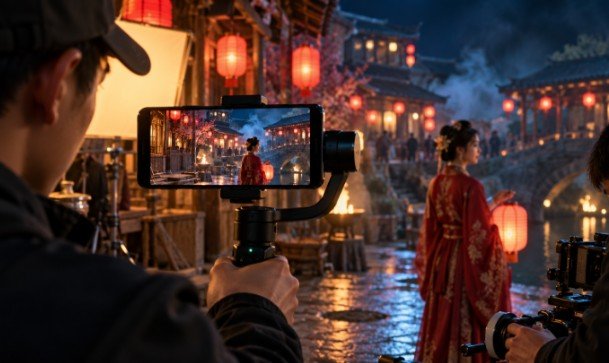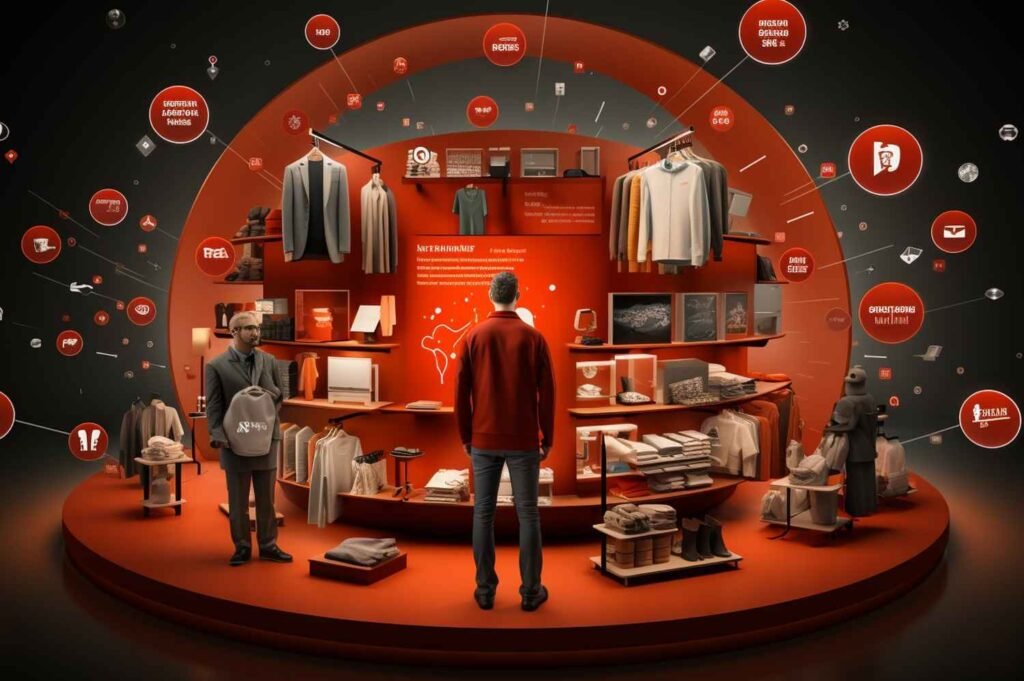

China’s short-form drama audience had already reached 662 million people by December 2024, according to figures published by the country’s broadcasting regulator. That scale helps explain why e commerce meets reality tv and rom coms in china in ways that can feel startling to American viewers: entertainment is no longer simply where products are advertised. Increasingly, entertainment itself has become part of the shopping interface.
A livestream host can behave like a reality-show personality, a romantic micro-drama can turn wardrobe choices into product discovery, and a television romance can make technology companies, fashion businesses, gaming platforms, and digital entrepreneurship part of the fantasy.
For U.S. retailers and media executives, the important lesson is not “copy China.” It is understanding what happens when storytelling, creators, payment systems, recommendation algorithms, and commerce are designed as one experience.
China Turned Shopping Into Entertainment Before Most Markets Did
Western e-commerce traditionally separates entertainment from transactions. A creator posts content, an advertisement appears, and the viewer follows a link to another page to buy. Chinese social-commerce platforms shortened that journey.
The World Economic Forum highlighted this shift years ago, noting how Chinese platforms integrated content, social interaction, payments, influencers, and purchasing within tightly connected digital environments. During the 2020 Singles’ Day period, prominent livestream seller Viya reportedly drew more than 149 million viewers to one Taobao Live session.
Brookings similarly described livestreaming as an important new sales channel for Chinese merchants, allowing sellers to demonstrate products while answering customers’ questions in real time.
Brookings research on China’s e-commerce evolution is a different psychological model. Instead of asking consumers to leave entertainment mode and enter shopping mode, platforms make the transition almost invisible.
Livestream Shopping Now Has the Drama of Reality Television
A successful Chinese commerce livestream rarely resembles a conventional home-shopping segment.
Hosts react to comments, argue about prices, race through limited quantities, introduce surprise discounts, tell personal stories and create moments of apparent spontaneity. Some personalities have become famous for unconventional formats, including extremely short product demonstrations delivered at frantic speed.
The Host Is Part Salesperson, Part Character

This matters because viewers are often following a person rather than searching for a product.
The strongest livestream personalities develop recognizable behavior, catchphrases, relationships with audiences and recurring emotional beats. That creates something close to reality television: viewers may return even when they have no specific purchase in mind.
Commerce then becomes the monetization layer underneath the entertainment.
The model is also becoming more automated. AI-generated presenters can support long-duration or round-the-clock selling, although products requiring significant trust, explanation or prestige can still benefit from credible human hosts.
China is tightening oversight at the same time. New national rules governing livestream e-commerce took effect February 1, 2026. They require stronger responsibilities around identity verification, product information, pricing, transaction records, misleading promotion and consumer protection. The rules also address misuse of artificial intelligence in deceptive commercial messaging.
Then Came the Rom-Com Storefront
The more unusual development is the growth of micro-dramas: extremely short serialized stories designed around fast hooks and relentless cliffhangers.
Romance is naturally suited to the format. Secret identities, workplace attraction, wealthy executives, betrayal, revenge and dramatic transformations can establish emotional stakes within minutes.
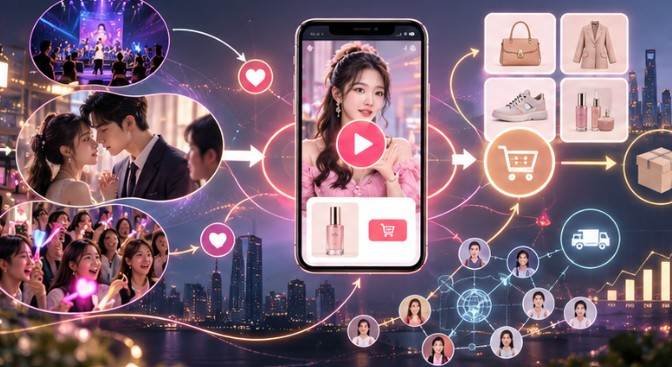
Commercially, that produces a powerful loop:
Watch an episode → become invested in a character → notice products or styles → encounter recommendations → shop → return for the next episode.
The advertisement no longer has to interrupt the story.
Why Micro-Dramas Matter
China’s broadcasting regulator reported 662 million micro-drama users as of December 2024, equivalent to 59.7% of Chinese internet users. That makes short drama a mass-media behavior rather than a niche experiment.
But rapid growth brought quality and regulatory problems. Authorities have criticized repetitive, vulgar or excessively sensational programming and have expanded registration, review and content-management systems.
In 2025 guidance, the National Radio and Television Administration described a tiered review framework for micro-dramas based partly on production investment and distribution importance.
This complicates the popular idea that Chinese micro-dramas are simply an unrestricted testing ground for outrageous romantic plots. Platforms can experiment rapidly, but creators increasingly have to operate within formal content and distribution rules.
Mainstream C-Dramas Reinforce the Commerce Fantasy

Long-form dramas add another layer to the relationship between romance and China’s digital economy.
Love Designer places fashion businesses, commercial competition and e-commerce executives within a romantic storyline. Everyone Loves Me uses technology, gaming and online identities as key components of its workplace romance.
You Are My Glory connects celebrity culture, endorsement economics, gaming and professional ambition with romance. Even historical commercial dramas such as Destined can make entrepreneurship, trade and household business-building central to emotional relationships.
The point is not that every television drama functions as a store.
Rather, digital business has become culturally normal enough to serve as a romantic setting. Founders, designers, streamers, gamers and technology workers can occupy roles once reserved for more conventional television professions.
What U.S. Brands Can Actually Learn From the Model
American businesses should avoid copying Chinese formats without considering differences in regulation, consumer behavior and platform infrastructure.
A better approach is a simple four-part test.
1. Would People Watch Without the Product?
Remove the sales pitch mentally.
If the content immediately becomes boring, it is still an advertisement disguised as entertainment.
2. Can the Product Naturally Affect the Story?
Fashion, cosmetics, travel, food, home products and technology often fit narrative commerce because characters can plausibly use them.
Forced placement destroys credibility.
3. Is Buying Friction Low?
China’s advantage comes partly from compressed discovery-to-payment journeys. Every extra page, login screen or confusing checkout step weakens entertainment-driven impulse purchasing.
4. Is Sponsorship Obvious?
This is especially important for U.S. campaigns. The Federal Trade Commission says creators should clearly disclose material connections with brands. For livestreams, the FTC recommends repeating disclosures periodically because viewers may enter at different times.
Narrative commerce may blur entertainment and advertising creatively, but brands should not blur them legally.
Why the Chinese Model Will Not Transfer Perfectly
There is a temptation to treat China as a preview of exactly what American commerce will become. That is too simple.
China’s ecosystem developed around highly integrated super-app behaviors, mobile payments, enormous domestic platforms and intense livestream-shopping adoption. U.S. consumers move between more fragmented media, retailer and payment environments.
Cultural expectations also differ. Hyperactive selling techniques or melodramatic micro-series that perform well in one market can appear excessive elsewhere.
The transferable idea is therefore not a specific livestream style. It is the architecture: reduce the distance between attention, emotional investment, product discovery and transaction.
Frequently Asked Questions
1. Why is livestream e-commerce so popular in China?
It combines entertainment, creator relationships, demonstrations, discounts, audience interaction and instant purchasing within one experience, reducing the friction between discovering and buying products.
2. What does e commerce meets reality tv and rom coms in china mean?
It describes the convergence of shopping with livestream personalities, serialized short dramas, romance narratives and interactive entertainment designed to keep viewers watching while creating opportunities to purchase.
3. Are Chinese micro-dramas regulated?
Yes. China has increased registration, content-review and platform-management requirements as micro-dramas have expanded into a mass entertainment industry.
4. Can U.S. brands use the same strategy?
They can borrow narrative-commerce techniques, but campaigns should be adapted for U.S. audiences, platform behavior and FTC advertising-disclosure requirements.
The Bigger Shift Is From Audience to Participant
What fascinates me most about this model is how little separation remains between watching and buying. The viewer can be fan, shopper, commenter and community member within the same session.
That is the real significance of e commerce meets reality tv and rom coms in china. China has demonstrated that digital retail does not always need to look like a catalog with better technology. It can look like entertainment with a checkout button hiding just beneath the story.
For U.S. brands, the strongest takeaway is simple: stop asking only how to advertise around content. Start asking whether genuinely entertaining content can become part of the shopping experience itself.