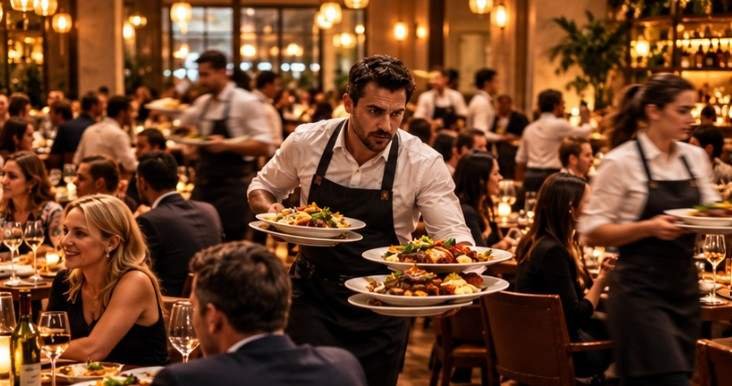
On a Friday at 8:00 PM, a packed restaurant looks like an undisputed success. Every banquette is filled, drink orders are flying across the bar, and the host stand is quoting forty-minute waits.
Yet, when the monthly profit and loss statement arrives, many operators face a bewildering reality: despite record-breaking sales, net profit is razor-thin.
Running a high-turnover dining room generates strong cash flow, but speed and sheer volume create subtle friction points. When a floor runs at maximum capacity, tiny inefficiencies don’t just stay small—they multiply across every turn. If you want to protect your bottom line, you have to look past the top-line revenue and identify where money quietly escapes during the rush.
1. The Tabletop Bleed: Glassware, Cutlery, and Dish Pit Casualties
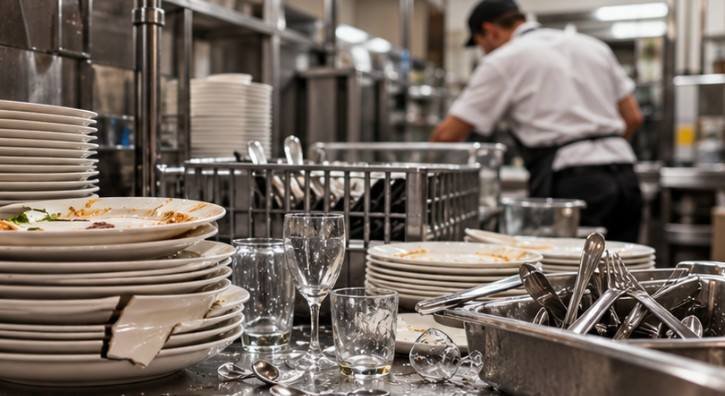
High-volume restaurants typically lose 1.5% to 3% of their annual sales to smallwares breakage and discarded cutlery.
When bussers and servers rush to reset tables within two minutes, handling shifts from careful to careless. Plates are stacked too high on service trays, leading to chipped rims and cracked bases. In the dish pit, boiling-hot glassware coming out of a commercial wash cycle is frequently hit with ice water, causing immediate thermal shock fractures.
The most expensive casualty, however, is flatware. In the scramble to clear plates during a massive dinner rush, forks and spoons are scraped directly into trash cans along with leftover food. Without magnetic trash bin collars or deliberate scraping protocols, an operation can easily throw away hundreds of dollars in silverware every month without noticing until par levels collapse.
2. Linen Wear and the Real Cost of Table Presentation
Managing dining textiles in-house often costs up to 40% more than operators budget once utility spikes, labor hours, and replacement rates are factored in.
Clean, crisp table settings set the tone for an upscale dining experience, but high-volume turns take a heavy toll on fabric. Red wine spills, candle wax, balsamic vinegar, and hot grease permanently ruin cloth napkins and table covers every shift.
Washing these items on-site ties up kitchen utility staff who should be handling prep or sanitizing cookware. It also drives up gas, electricity, and water bills while burning out residential or light-commercial washers that were never engineered for industrial grease.
To maintain presentation without bloating utility overhead, many high-turn operators look to commercial linen programs. Forward-thinking restaurateurs frequently partner with specialized providers for table linen rentals in Lansing to lock in predictable monthly costs, outsource sanitation, and eliminate the capital drain of constantly purchasing replacement stock.
3. Micro-Waste and the Kitchen Rush Tax
Micro-waste occurs when kitchen teams sacrifice portion accuracy and prep yield for speed, driving food costs up by 2% to 4% during peak periods.
When tickets trail out of the printer and the kitchen is slammed, precision is usually the first casualty. A line cook dishing out house-made chimichurri might ladle four ounces instead of two. A prep cook hurrying through beef tenderloin butchery leaves valuable ounces on the trim.
Over the course of a single weekend:
- Over-portioning high-cost proteins erodes plate margins.
- Rushed ticket reading leads to misfired steaks and expensive table comps.
- Garnishes and sides are carelessly over-prepped, only to end up in the compost bin at closing.
Plugging this leak requires strict adherence to restaurant inventory management and portion control tools. Pre-measured scoops, tare-scale spot checks, and pre-cut parchment portioning cost pennies up front, but they save thousands across high-volume service cycles.
4. The Compounding Price of Staff Burnout
Replacing a single experienced front- or back-of-house employee costs restaurants an average of $5,800 in recruiting fees, onboarding time, and lost shift productivity.
High-volume operations often treat staff like machines that can simply sprint for six consecutive hours. The result is predictable: exhaustion, chronic mistakes, poor guest interactions, and rapid turnover.
When seasoned servers leave, they take their speed and product knowledge with them. Inexperienced replacements ring orders incorrectly, fail to upsell appetizers or pairings, drop full trays, and slow table turnover down.
Implementing intelligent front-of-house labor optimization—such as staggered shifts, dedicated floor captains, and capped section sizes during peak rushes—protects your staff’s stamina. A slightly smaller section run by an energetic, attentive server consistently generates higher average checks and fewer costly comps than an overwhelmed server drowning in an eight-table section.
5. Accelerated Equipment Breakdown and Emergency Rates
Commercial restaurant equipment in high-turnout kitchens degrades twice as fast as in moderate-volume venues, triggering emergency service rates that run 2 to 3 times standard maintenance costs.
In a packed dining room, appliances rarely get a rest:
- Walk-in cooler doors open and close every ninety seconds, forcing compressors to run hot and continuously.
- Commercial ice machines are pushed to their limits, risking motor freeze-ups.
- Deep fryers run non-stop at high temperatures, degrading cooking oil rapidly and burning out heating elements.
When equipment inevitably quits on a busy Saturday evening, calling a technician incurs weekend emergency dispatch premiums, double-time labor rates, and lost revenue from an altered menu. Adopting a strict schedule for preventive restaurant equipment maintenance—cleaning condenser coils monthly, descaling dish machines weekly, and calibrating thermostats—prevents peak-hour disasters and extends appliance lifespan by years.
6. The Volume Trap: High Covers vs. Healthy Margins
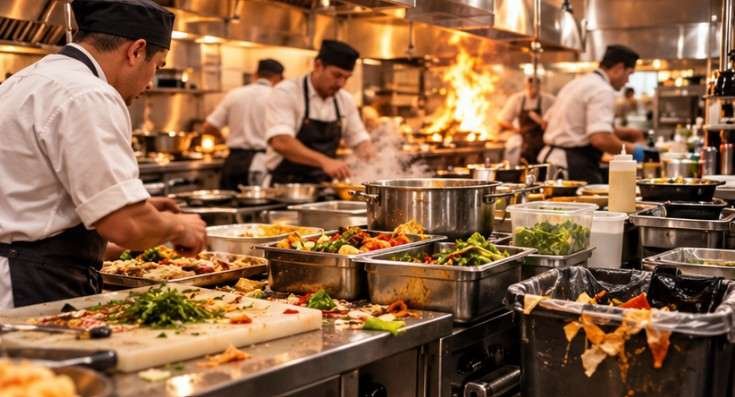
A dining room serving 350 covers a night at a 4% net margin can easily make less actual profit than the same room serving 220 covers at a 14% net margin.
Chasing volume often produces diminishing returns. Pushing for that extra turn per table frequently requires overstaffing the floor, buying extra inventory that spoils if a sudden storm causes cancellations, and incurring heavy dishware breakage.
| Metric | High Volume (Rushed) | Optimized Volume (Controlled) |
| Nightly Covers | 350 | 220 |
| Gross Sales | $14,000 | $10,500 |
| Food & Micro-Waste Cost | 34% | 29% |
| Breakage & Linen Loss | 3% | 0.8% |
| Net Margin | 4% | 14% |
| Take-Home Profit | $560 | $1,470 |
When pace is managed deliberately, servers upsell more dessert and digestifs, the kitchen executes flawlessly without comps, and equipment isn’t pushed to its breaking point.
Balancing Foot Traffic with Bottom-Line Health
Running a busy restaurant is a major achievement, but filling seats is only half the battle. True profitability in a high-volume venue comes down to controlling the hidden friction that accelerates during busy hours: the dropped silverware, the ruined linens, the over-portioned proteins, and the burned-out staff.
Take time to look behind the curtain of your peak hours. Inspect the dish pit trash, review your weekend comp sheets, track your smallware replacement frequency, and evaluate whether your current operational pace is serving your bottom line or merely exhausting your team. When you design systems that withstand the pressure of a rush, high customer volume finally translates into the healthy profit margins your hard work deserves.