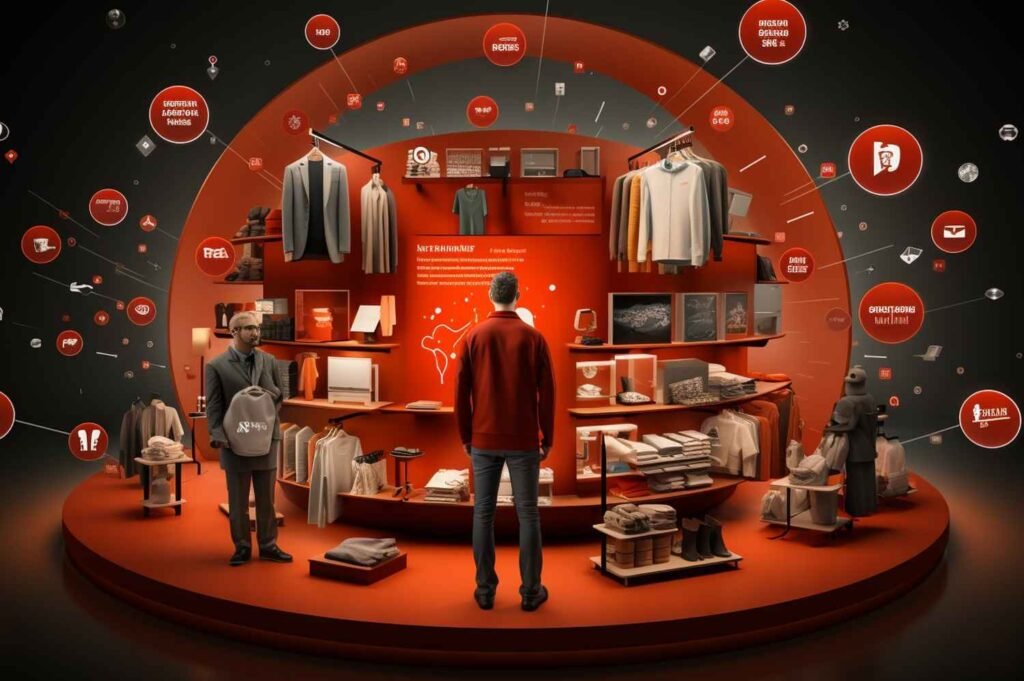
China’s retail market is changing fast, and the shift matters well beyond Asia. For US marketers, news from China’s chief curiosity officers and celebrity-owned brands offers a useful look at how celebrity influence, AI discovery, physical retail, and local cultural identity are converging. Western luxury still matters, but it now faces more pressure from celebrity IP, domestic brands, secondhand luxury, and social-commerce discovery.
Why Are Celebrity IP Brands Moving Into Physical Retail?
One of the biggest changes is the move from simple celebrity endorsement to celebrity IP commercialization.
Star Plus Legend has expanded its retail ambitions through Chouchou & Friends, including a global flagship on Shanghai’s East Nanjing Road. The move fits Shanghai’s growing “first-store economy,” which encourages debut stores, flagship locations, and distinctive retail concepts as part of efforts to stimulate consumption and strengthen the city as an international shopping destination.
A flagship can turn celebrity-linked characters and fandom into merchandise, events, social content, and repeat visits. For US brands, the lesson is clear: valuable celebrity partnerships may increasingly behave like intellectual property businesses, not short-term advertising contracts.
What Does a Chief Curiosity Officer Mean for Brand Strategy?

The title “Chief Curiosity Officer” sounds unusual because it is designed to. It reflects a larger marketing idea: create curiosity before asking consumers to make a purchase.
That approach is especially relevant in China, where shoppers can discover a product on Douyin, check opinions on Xiaohongshu, discuss it through WeChat, watch a livestream, compare prices, and complete a purchase without following a conventional search-engine journey.
Earlier research into Chinese consumer behavior has also associated brand curiosity with stronger purchase interest and word-of-mouth. The idea has become even more relevant as consumers gain more digital channels through which to investigate products.
That is why news from China’s chief curiosity officers and celebrity-owned brands is not simply about unusual executive titles. It is about creating brands that encourage people to search, talk, compare, and explore.
How Are Douyin and Xiaohongshu Changing the Buying Journey?
China’s ecommerce environment is deeply connected with social media. The US Department of Commerce identifies platforms including Douyin, Taobao, Kuaishou, and Xiaohongshu as important players in China’s livestream and influencer-driven commerce ecosystem. It reported that 597 million Chinese consumers had purchased products or services through livestream platforms as of December 2023.
Douyin is particularly influential for short-video discovery and livestream selling. Xiaohongshu, also known as RedNote, has become important for reviews, recommendations, fashion, beauty, travel, and lifestyle research.
KOLs and KOCs also matter. Celebrities create mass awareness, while smaller creators and everyday consumers can provide reviews and social proof. For American companies watching TikTok Shop develop, China demonstrates what happens when entertainment, discovery, recommendations, and purchasing become tightly connected.
Why Are Chinese Homegrown Brands Gaining Ground?
Chinese brands are increasingly competing through design, product quality, value, innovation, and cultural storytelling rather than price alone.
CNA reported in 2026 that domestic brands accounted for nearly 60% of China’s cosmetics market. The same broader shift is visible in technology, sportswear, fashion, and lifestyle products, where companies increasingly respond rapidly to consumer feedback gathered through China’s digital platforms.
Beauty brands such as Florasis have also gained attention by incorporating Chinese craftsmanship, aesthetics, traditional ingredients, and cultural narratives into contemporary products. This fits the wider rise of cultural confidence around domestic goods often associated with guochao and the shift from simply “Made in China” toward distinctly Chinese brand identities.
For US companies, the lesson is significant. Chinese shoppers are not necessarily rejecting overseas brands. They are becoming more willing to choose domestic alternatives when those products feel better designed, culturally relevant, innovative, or fairly priced.
Why Is Western Luxury Facing More Pressure in China?

China remains a critical market for luxury companies, but consumer priorities are changing.
Mainland China’s personal luxury market contracted again in 2025, while the secondhand luxury market reportedly expanded by 15% to 20%. Younger consumers are increasingly emphasizing smart purchases, quality, emotional value, cultural relevance, and individual identity rather than automatically choosing the most recognizable international logo.
Louis Vuitton has closed several mainland locations over the past two years, while other retailers have also rationalized their footprints. Yet this does not mean Western luxury is disappearing. Brands that localize effectively can still perform strongly. Coach, for example, recorded substantial China sales growth in 2026 while focusing heavily on younger consumers and localized engagement.
The larger shift is from automatic prestige to earned relevance.
Is AI Search Creating a New Battle for Brand Visibility?
Generative Engine Optimization, or GEO, is emerging as another important part of the story.
Artefact argues that GEO works differently in China because product and information discovery is distributed across super apps, closed digital ecosystems, platform-native search, and AI assistants rather than relying solely on traditional open-web search.
For brands, that raises the value of clear product information, consistent positioning, authoritative mentions, useful content, and strong consumer signals.
This development should also interest US marketers. Similar behavior is emerging through conversational AI and Google’s AI-powered search experiences. SEO is not disappearing; brands increasingly need to make themselves understandable and recommendable to AI systems as well as conventional search engines.
What Can US Brands Learn From China’s Retail Shift?

The biggest takeaway from news from China’s chief curiosity officers and celebrity-owned brands is that influence is becoming connected to ownership, experience, culture, and discovery.
Celebrity partnerships are becoming IP businesses. Physical stores are becoming experience hubs. Social platforms can influence purchasing from discovery through checkout. Domestic companies are turning cultural identity into a competitive advantage. Consumers are becoming more value-conscious, and AI is beginning to change how they discover brands.
US companies do not need to copy China’s retail model exactly. They should, however, watch where it is heading.
Brands that generate genuine curiosity, build communities, use creators intelligently, develop products worth discussing, and connect online discovery with memorable real-world experiences may be better positioned as commerce becomes increasingly fragmented.
Frequently Asked Questions (FAQs)
1. What is China’s first-store economy?
China’s first-store economy refers to policies and retail strategies designed to attract debut stores, flagship locations, and innovative retail concepts. Shanghai has made the strategy part of its effort to stimulate consumption and strengthen its international retail position.
2. Why are celebrity-owned brands growing in China?
Celebrity-owned and celebrity-linked brands can turn fandom into product discovery, retail traffic, social engagement, and sales. Long-term success still depends on credible products, useful brand IP, and repeat customers rather than fame alone.
3. What role do Douyin and Xiaohongshu play in Chinese retail?
Douyin is influential in short-form video and livestream commerce, while Xiaohongshu plays a major role in product research, recommendations, lifestyle discovery, and consumer reviews.
4. What is GEO in China?
Generative Engine Optimization focuses on improving how brands are understood and surfaced by AI-powered search and recommendation systems. China’s ecosystem is particularly complex because discovery occurs across platforms and super apps rather than one dominant search environment.
5. Are Western luxury brands losing China?
Not completely. Some luxury businesses face weaker demand, store closures, secondhand competition, and stronger homegrown brands, while others continue growing through localization, accessible luxury positioning, cultural relevance, and engagement with younger consumers.
Final Thoughts
When I look at China’s retail market, I see an environment where attention alone is no longer enough. Fame must lead somewhere, heritage must stay relevant, and luxury must justify its price. Digital visibility increasingly needs to work across social media, commerce platforms, physical experiences, and AI discovery.
For US marketers, this makes China especially useful to study. Celebrity IP, experiential stores, creator commerce, homegrown brands, cultural pride, secondhand luxury, value-conscious consumers, and AI search are converging within the same market.
The brands most likely to benefit from the next phase will not simply be the loudest. They will give consumers a reason to become curious, investigate further, trust what they find, and ultimately buy.