

When my digital marketing team launched our first cross-platform music campaign across Shenzhen and Chengdu, we treated Douyin as the only serious contender. That turned out to be an expensive miscalculation. Over the past twenty-four months, Kuaishou’s music moves challenge Douyin’s dominance across every commercial metric that matters: artist retention, catalog monetization, and standalone streaming adoption.
The battle lines across China’s digital media landscape are no longer confined to casual scrolling. They now dictate how songs are produced, distributed, and monetized.
The End of the 15-Second Shenqu Monopoly
Douyin built an empire around the shenqu—an addictive, high-velocity “divine song” designed specifically to match viral 15-second visual transitions. For years, major labels re-engineered entire production cycles simply to produce hooks that matched ByteDance’s automated delivery feeds.
My media buying data showed that while these viral hits racked up billions of impressions overnight, their commercial lifespan rarely exceeded three weeks. Listeners consumed the chorus passively without ever discovering the creator or purchasing concert tickets. Douyin operated as an unmatched attention factory, but it left artists commercially stranded on a treadmill of disposable audio clips.
Algorithmic Factory vs. Grassroots Retention
Kuaishou took the opposite strategic path. Instead of forcing creators through an unyielding, top-down recommendation waterfall, Kuaishou relies on decentralized community discovery. When managing campaigns across lower-tier cities, we noticed that tracks trending on Kuaishou did not disappear after a single weekend.
Users actively form emotional relationships with creators. This dynamic mirrors how mango tv draws beauty brands for its female audience—by anchoring brand affinity in dedicated cultural loyalty rather than fleeting algorithmic blips. Kuaishou’s “laotie” (trusted friend) culture anchors music directly inside livestreams, transforming casual listeners into paying patrons.
How Douyin Engineered Disposable Earworms
ByteDance refined its audio recommendation systems to maximize viewer dwell time, as reported by TechCrunch. If a track did not ignite user engagement within the first 1.8 seconds of an impression, the system dropped it from distribution pools entirely.
This algorithmic pressure pushed independent musicians into hyper-formulaic production styles. Douyin successfully built China’s most powerful promotional engine, but it created an opening for any competitor capable of offering genuine, lasting audience equity.
Securing the Mandopop Crown: The Jay Chou Coup

Kuaishou exposed Douyin’s vulnerability by striking directly at the cultural heart of Chinese pop music. In a landmark licensing deal documented by Billboard, Kuaishou signed an exclusive social agreement with JVR Music, the company behind Mandopop legend Jay Chou.
Securing Chou’s two-decade discography gave Kuaishou an instant cultural moat. More importantly, Chou launched his first official mainland Chinese social media profile exclusively on Kuaishou. When he hosted his debut live performance on the platform, tens of millions of fans tuned in simultaneously, shattering digital engagement records.
That single signing fundamentally changed industry perception. It demonstrated that Kuaishou was no longer just an alternative platform for rustic vlogging; it had become an indispensable destination for premier music IP.
TRADITIONAL DSP MODEL SHORT-VIDEO INTEGRATED MODEL
┌───────────────────────────┐ ┌───────────────────────────────┐
│ Search / Editorial Feed │ │ Algorithmic Video Discovery │
└─────────────┬─────────────┘ └───────────────┬───────────────┘
│ │
▼ ▼
┌───────────────────────────┐ ┌───────────────────────────────┐
│ Passive Audio Stream │ │ 1-Click Sync to Dedicated App │
└─────────────┬─────────────┘ └───────────────┬───────────────┘
│ │
▼ ▼
┌───────────────────────────┐ ┌───────────────────────────────┐
│ Flat Royalty Payout │ │ E-Commerce / Fan Gifting Pool │
└───────────────────────────┘ └───────────────────────────────┘
Standalone Streaming Wars: Xiao Sen Record vs. Fly Music
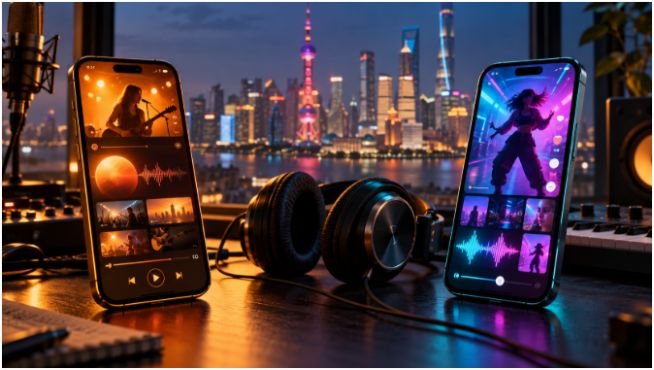
Both tech giants recognized that hosting audio clips inside a video feed was merely the initial phase of their strategy. The true economic prize lay in capturing the recurring revenue of dedicated music streaming.
To counter Douyin’s Fly Music (paired with Qishui Music), Kuaishou released Xiao Sen Record. Rather than operating as secondary utility extensions, these applications compete directly against established music streaming services.
Breaking TME and NetEase’s Streaming Oligopoly
For nearly a decade, Tencent Music Entertainment (TME) and NetEase Cloud Music held an iron grip over digital audio. That dynamic fractured after the State Administration for Market Regulation dismantled exclusive master copyright agreements, as tracked by Reuters.
Without legal copyright barriers blocking their way, short-video platforms deployed a lethal structural advantage: zero customer acquisition costs. When a song trends on Kuaishou or Douyin, users migrate into Xiao Sen Record or Fly Music with a single screen tap. Traditional streaming services simply cannot match that frictionless promotional funnel.
Where Music Budgets Actually Flow in China Today

During my strategic planning sessions with domestic brand managers last quarter, a striking financial reality emerged: over 75% of music promotion budgets now bypass traditional radio and streaming services altogether. Every serious marketing yuan flows directly into short-video initiatives.
The shift makes commercial sense. Placing a single on short video guarantees dynamic user participation. Thousands of creators use the sound file in their own skits, dance challenges, and product unboxings.
These viral soundbeds have turned grassroots creators into chinas newest brand darlings, allowing lifestyle labels to bypass traditional celebrity sponsorships. Music is no longer just ambient background audio in China; it serves as the core narrative engine for social commerce.
+————————————+————————————+
| Douyin (ByteDance Ecosystem) | Kuaishou (Tencent-Backed Network) |
+————————————+————————————+
| Tier-1 and Tier-2 urban audiences | Non-Tier-1 cities, Gen Z, & rural |
| 15-second viral hook production | Extended live sessions & deep ties |
| Standalone player: Fly Music | Standalone player: Xiao Sen Record |
| Centralized algorithmic delivery | Relational, creator-first discovery|
+————————————+————————————+
Douyin’s Urban Flash vs. Kuaishou’s Grassroots Loyalty
Deciding where to deploy release capital depends entirely on community structure. The commercial friction between these two giants stems directly from their opposing demographic foundations.
Douyin commands premier Tier-1 metropolitan professionals, digital agencies, and luxury consumer markets. Its viral cycles peak fast and generate massive visibility, but listener churn remains exceptionally high.
Kuaishou commands China’s massive non-Tier-1 markets, regional towns, and rural communities. In these digital town squares, creator loyalty is deeply personal. According to economic reporting from the Financial Times, domestic digital consumption growth in China is largely driven by lower-tier cities. When a Kuaishou artist promotes an album or performs in a virtual concert, fans support the stream with paid virtual gifts and direct e-commerce purchases at rates that consistently outpace Douyin’s urban baseline.
The Final Bell: Who Wins the Soul of Chinese Streaming?
Douyin remains the undisputed king of sheer velocity. If your operational goal is generating 100 million superficial impressions across Shanghai and Beijing by Friday afternoon, Douyin is your engine.
Yet Kuaishou has proven that long-term digital music economics requires more than algorithmic sprints. By securing indispensable heritage IP like Jay Chou, nurturing sticky creator-fan communities, and funneling traffic directly into Xiao Sen Record, Kuaishou has effectively dismantled ByteDance’s monopoly over digital sound. For independent artists and cross-border music executives alike, the smartest play is no longer picking a single winner—it is mastering the art of playing both sides of the fence.
Frequently Asked Questions
1. How do Kuaishou and Douyin handle music licensing differently?
Douyin prioritizes short promotional clips for its automated video feed, while Kuaishou invests heavily in complete catalog ownership and long-term artist partnerships.
2. What is Xiao Sen Record?
Xiao Sen Record is Kuaishou’s standalone music streaming platform, designed to convert short-video audiences into full-track audio subscribers.
3. Can independent musicians monetize directly on Kuaishou?
Yes, independent artists generate revenue through direct livestream gifting, creator tip pools, and integrated social e-commerce rather than relying solely on streaming royalties.
4. Why did Kuaishou sign an exclusive deal with Jay Chou?
Kuaishou acquired Jay Chou’s catalog to anchor premier Mandopop authority on its platform, breaking Douyin’s cultural monopoly with legendary mainstream IP.