A category page can rank for valuable shopping searches without overwhelming visitors with paragraphs of text. The secret is knowing where information belongs and how much shoppers actually need.
Understanding how to structure ecommerce category page copy for seo means combining keyword relevance, product discovery, and buying guidance into one organized experience. Too little information leaves search engines guessing. Too much pushes products out of sight.
For American retailers competing in crowded markets, effective category copy should help customers recognize the right products, compare options, and purchase confidently.
Build the Page Around the Shopper’s First Decision
The most practical layout divides category content into three distinct areas, giving each a specific responsibility.
1. Above the Product Grid: Establish Relevance Immediately
Place a descriptive H1 near the top, followed by approximately 50–100 words introducing the collection.
For example, a footwear retailer might use:
H1: Women’s Waterproof Hiking Boots
“Explore waterproof hiking boots designed for wet trails, weekend adventures, and challenging terrain. Compare lightweight styles, insulated options, and supportive designs from trusted outdoor brands.”
This introduction identifies the products, highlights relevant features, and prepares visitors to browse. Avoid inserting lengthy company histories or unrelated promotional content before the products.
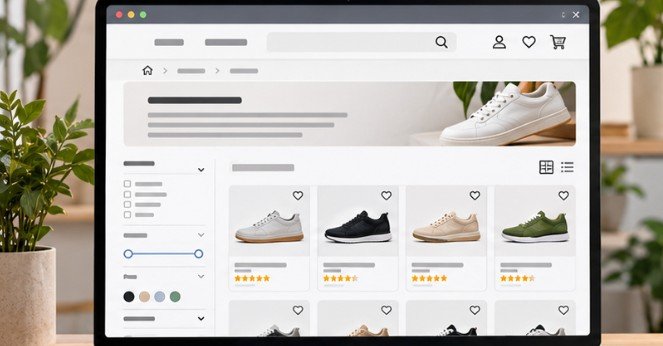
2. Product Grid: Make Comparison Effortless
The product listing should remain the central feature of the page. Useful product cards display accurate images, recognizable product names, prices, availability, and relevant characteristics.
Filtering by size, color, brand, price, or material should simplify selection rather than create additional confusion.
Google’s ecommerce pagination guidance also emphasizes making products accessible through crawlable navigation, particularly when stores use pagination or incremental loading.
3. Below the Grid: Provide Practical Buying Guidance
Reserve approximately 200–350 words for information that genuinely helps customers make decisions.
For waterproof hiking boots, that might include differences between waterproof membranes, outsole traction, ankle support, and insulation.
These explanations introduce useful secondary keywords while answering questions that could otherwise interrupt a purchase.
The recommended lengths are editorial starting points, not Google ranking requirements. Larger or more technical categories may need additional detail.
Choose Keywords That Match Shopping Intent
Before drafting category descriptions, identify the primary commercial keyword representing the products. A retailer selling kitchen appliances might organize its targeting around these distinctions:
| Keyword | Best destination |
| Espresso machines | Main category |
| Automatic espresso machines | Subcategory |
| Best espresso machine for beginners | Buying guide |
| How to clean an espresso machine | Educational article |
The category should generally target a broad product phrase, often plural, while subcategories address more specific collections.
Use supporting terms naturally, including dimensions, materials, intended uses, and product variations.
Repeating the main keyword excessively contributes little value. Accurate product terminology gives shoppers clearer information and helps define the collection.
Organize Headings Around Real Buying Questions
A strong heading structure provides an immediate outline of the collection.
For an espresso machine category, a useful arrangement could include:
- H1: Espresso Machines
- H2: Choose the Right Espresso Machine
- H3: Automatic vs. Manual Espresso Machines
- H3: Features Worth Comparing
- H2: Espresso Machine FAQs
Each heading should introduce genuinely different information rather than repeat the same keyword.
The World Wide Web Consortium’s accessibility guidance explains that correctly organized headings help visitors navigate information, including people using assistive technologies.
Using one clear main H1 and logically nested H2 and H3 headings is a sensible editorial approach. Search relevance and accessibility work together when headings describe content accurately.
Turn Category Descriptions Into Useful Buying Advice

Generic promotional language rarely answers meaningful customer questions. Consider the difference between these descriptions:
Weak: “Discover our amazing collection of premium office chairs at unbeatable prices.”
Stronger: “Compare ergonomic office chairs with adjustable lumbar support, breathable mesh backs, and seat-height controls for home offices and professional workspaces.”
The second version communicates identifiable product characteristics.
Effective category copy should explain which products suit different needs, which features justify price differences, and what customers should verify before ordering. Trust information also matters.
The Federal Trade Commission’s online shopping advice recommends checking product descriptions, delivery conditions, return policies, and total purchase costs.
Retailers can address these concerns by connecting category copy to accurate shipping information, sizing resources, and return-policy pages. Avoid promising benefits that individual products cannot support.
Strengthen Navigation With Contextual Internal Links
Category copy should guide customers toward narrower product selections without forcing them to restart their search.
A furniture store’s sofa category might naturally link to sectional sofas, sleeper sofas, leather sofas, and complementary living room furniture.
Use descriptive anchor text rather than vague phrases such as “click here.” The accessibility organization WebAIM recommends meaningful link wording that explains a destination even outside its surrounding paragraph.
Link Text and Appearance
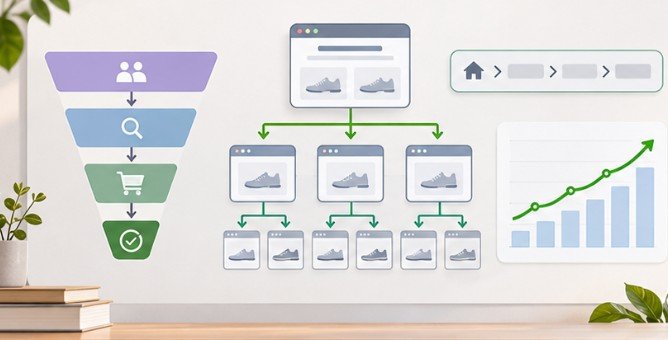
Breadcrumb navigation offers another useful connection between related pages.
A typical path might read:
Home → Furniture → Living Room → Sectional Sofas
These links support navigation while communicating the relationship between categories and subcategories.
Use Structured Data Without Expecting Guaranteed Rich Results
Structured data supplies machine-readable context about page content and navigation. Three commonly discussed schema types are particularly relevant.

BreadcrumbList Schema
BreadcrumbList describes a page’s position within the site’s hierarchy. Google supports this markup for breadcrumb presentation in eligible search results.
ItemList Schema
The Schema.org ItemList specification defines a structured representation of a collection of items. It can describe an organized product listing, although implementing it does not automatically create enhanced Google shopping results.
Google generally recommends product-specific rich-result markup on individual product pages rather than broad category listings.
FAQPage Schema
FAQ content can answer common purchasing questions, but adding markup should not be treated as a guaranteed visibility strategy.
Google restricts FAQ rich-result eligibility primarily to authoritative government and health websites. Ordinary ecommerce stores should prioritize helpful answers rather than expecting expanded FAQ listings.
Google for Developers
Prevent Filters From Creating SEO Problems
Filters improve shopping experiences but can generate numerous URLs representing nearly identical product collections.
For example, changing price ranges, sorting preferences, and colors may create multiple parameter combinations.
Not every variation deserves separate search visibility.
Use canonical tags where appropriate, control low-value faceted URLs through a considered crawling and indexing strategy, and preserve indexable pages for filter combinations with meaningful search demand.
Importantly, a canonical tag is a signal rather than an absolute indexing command.
Keep paginated products discoverable through normal links. Avoid automatically canonicalizing every pagination page to the first page when subsequent pages contain distinct products.
Frequently Asked Questions
1. How much copy should an ecommerce category page contain?
Start with a 50–100-word introduction and 200–350 words of supporting guidance. Adjust the length according to category complexity and customer needs rather than targeting a fixed SEO requirement.
2. Should category descriptions appear above or below products?
Place a short introduction above the grid and detailed buying guidance below it. This balances immediate product visibility with useful information for shoppers and search engines.
3. What is the biggest mistake when learning how to structure ecommerce category page copy for seo?
Prioritizing keyword repetition over shopping usability. Effective descriptions explain products clearly, support comparisons, and preserve easy access to the catalog.
4. Do category pages need FAQ sections?
Not always. Include concise FAQs when customers have recurring questions about sizes, compatibility, materials, or purchasing conditions. Avoid adding generic questions solely to increase word count.
Make Every Section Earn Its Place
The strongest ecommerce category pages succeed because every element has a purpose.
The heading identifies the collection. The introduction establishes relevance. Product listings enable comparison, while supporting descriptions resolve uncertainty.
For retailers competing across American search results, this structure offers a practical balance between organic visibility and customer convenience.
Start by reviewing one important category. Remove unnecessary introductory text, improve product-specific explanations, and strengthen navigation. Then measure whether visitors discover products more easily and move toward purchases.
Ultimately, category copy should make shopping simpler, not give customers more material to scroll past.