
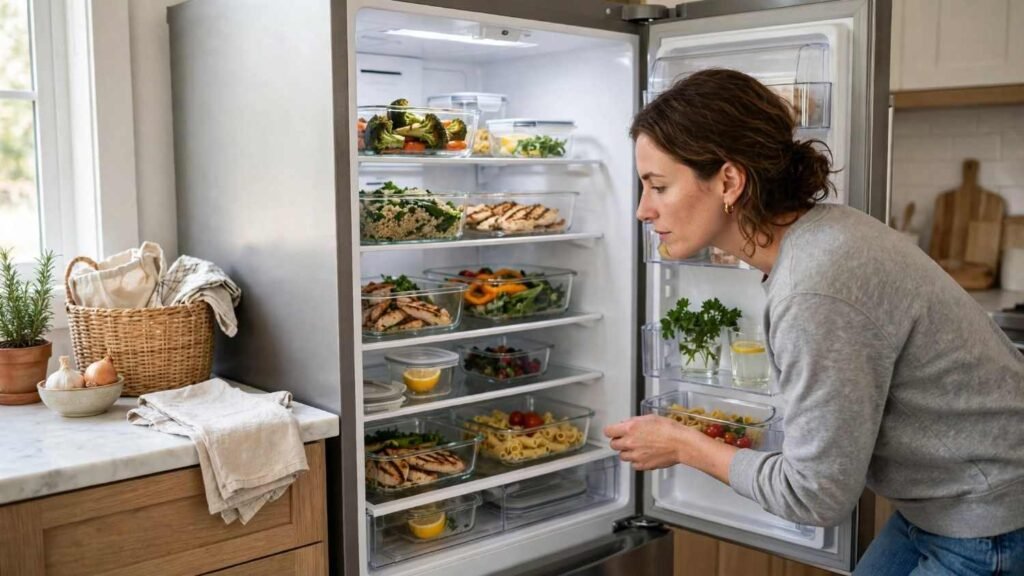
Have you ever opened your refrigerator only to discover wilted spinach, forgotten leftovers, or spoiled strawberries hiding behind milk cartons? I’ve realized that poor refrigerator organization can waste groceries and money without us noticing.
Learning how to organize a refrigerator to reduce food waste starts with two simple principles: temperature control and visibility. When groceries stay in suitable storage conditions and remain easy to find, you’re more likely to enjoy them before they spoil.
I’ll share practical refrigerator organization tips that can help American households preserve freshness, simplify meal preparation, and avoid unnecessary grocery expenses.
Why Does Proper Refrigerator Organization Reduce Food Waste?
An organized refrigerator helps prevent forgotten ingredients, duplicate purchases, and premature spoilage.
Different refrigerator areas experience temperature variations, while crisper drawers manage humidity. Understanding these conditions helps you choose appropriate storage locations.
I recommend starting with a complete cleanout. Remove spoiled food, wipe shelves with warm, soapy water, and check your refrigerator temperature.
According to the FDA (The Food and Drug Administration), refrigerators should stay at 40°F or below, while freezers should maintain 0°F. Use an appliance thermometer for accuracy.
Where Should You Store Food in Your Refrigerator?
Understanding proper refrigerator storage makes everyday meal planning easier. I recommend organizing each section according to food safety, temperature stability, and accessibility.
Top Shelves: Ready-to-Eat Foods and Leftovers
Upper shelves work well for cooked meals, prepared salads, ready-to-eat foods, and properly stored herbs.
These shelves often maintain relatively consistent temperatures, although exact cold spots depend on refrigerator design.
Avoid placing uncovered raw meat above other foods because leaking juices can cause cross-contamination.
Middle Shelves: Dairy Products and Eggs
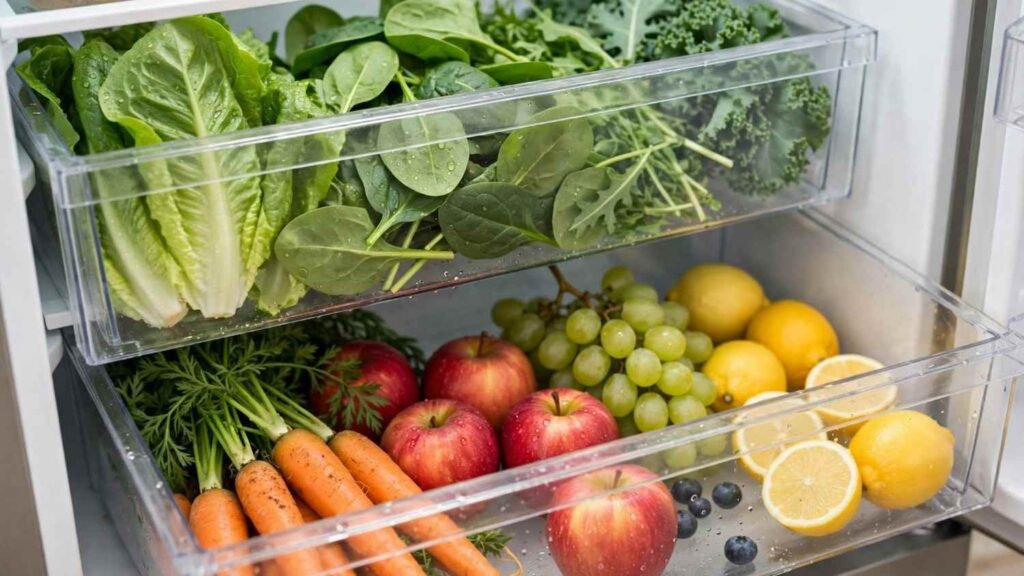
Store yogurt, cheese, milk, eggs, and deli items on interior shelves where temperatures remain relatively stable.
I prefer keeping eggs in their original cartons rather than transferring them into refrigerator-door trays.
Bottom Shelf: Raw Meat, Poultry, and Seafood
Keep raw chicken, beef, fish, and other uncooked proteins in sealed, leakproof containers on the lowest suitable shelf.
This prevents juices from dripping onto other groceries.
The bottom shelf may be particularly cold in some refrigerators, but not all models. Avoid placing delicate produce near freezing surfaces.
Raw poultry and ground meat generally require cooking or freezing within one to two days.
Crisper Drawers: Fruits and Vegetables
Use high-humidity settings for leafy greens, broccoli, and carrots. Low-humidity settings generally suit apples, pears, and certain ripening fruits.
Separating incompatible produce helps preserve freshness.
Refrigerator Door: Condiments and Sauces
The refrigerator door experiences frequent temperature fluctuations.
I recommend storing condiments, pickles, suitable pasteurized sauces, and butter according to their packaging instructions. Refrigerated juices can go here when the manufacturer permits.
Avoid keeping milk, eggs, and raw meat in the door.
How Do You Create an Eat-First Zone to Prevent Food Waste?
One of my favorite fridge organization ideas involves reserving a visible section for groceries that need attention soon.
Place opened cheese, safely stored leftovers, and softening produce in a transparent bin near eye level.
I call this my “Eat First” zone.
Review foods approaching their recommended storage limits within the next two or three days, but never extend their safe storage periods.
I also follow the first-in, first-out (FIFO) method. Whenever I unpack groceries, I move older items forward and place newer purchases behind them.
This simple habit makes reducing food waste at home much easier.
How Can Clear Containers and Food Labels Keep Groceries Fresh?

Transparent, food-safe containers make leftovers easier to identify without opening every package.
I prefer airtight glass or reusable plastic containers over opaque bowls for foods that benefit from sealed storage. Clear acrylic bins can also organize packaged groceries.
Use painter’s tape and a marker to label prepared meals with their cooking dates.
Most cooked leftovers remain safe for three to four days when refrigerated properly.
Refrigerate perishable food within two hours, or one hour when temperatures exceed 90°F. Divide large portions into shallow containers for faster cooling.
For additional inspiration, the YouTube channel Simplify Your Space demonstrates practical refrigerator organization techniques using bins, jars, and reusable containers.
How Can You Keep Fruits and Vegetables Fresh Longer?
Smart produce care is essential for keeping food fresh longer.
Separate Ethylene-Producing Fruits From Sensitive Vegetables
Apples, avocados, and tomatoes produce ethylene gas, which can accelerate deterioration in sensitive produce.
I recommend separating these foods from leafy greens, cucumbers, and other ethylene-sensitive vegetables.
Store tomatoes at room temperature when appropriate, and refrigerate ripe avocados when you need to slow further ripening.
Prevent Excess Moisture in Crisper Drawers
Excess surface moisture can encourage mold and spoilage.
Line appropriate storage containers with clean paper towels or use mesh trays that allow moisture to drain.
However, avoid drying out leafy greens. They benefit from suitable humidity and protection against moisture loss.
Should You Wash Berries Before Refrigerating Them?
I prefer washing delicate berries shortly before eating rather than before storage.
If you wash them in advance, dry them thoroughly and refrigerate them in a suitable container with a paper towel to absorb excess moisture.
Keep potatoes, dry onions, and whole bananas in appropriate room-temperature storage rather than refrigerating them routinely.
What Common Refrigerator Organization Mistakes Should You Avoid?

Overcrowding shelves, hiding leftovers, mixing incompatible produce, and storing highly perishable food in the door can contribute to waste.
Avoid blocking airflow or storing raw meat above ready-to-eat meals.
Another mistake involves automatically discarding food after its “Best if Used By” date. Such labels generally indicate quality rather than an absolute safety deadline, although food safety requirements still apply.
I also recommend checking your refrigerator before grocery shopping. Use extra vegetables in soups, repurpose safely stored leftovers, and freeze suitable ingredients before they spoil.
Frequently Asked Questions (FAQs)
1. How Often Should You Clean and Organize Your Refrigerator?
I recommend checking groceries weekly, cleaning spills immediately, and performing a more thorough cleaning periodically. A quick inventory before shopping helps prevent unnecessary purchases.
2. What Is the Best Refrigerator Temperature to Prevent Spoilage?
Maintain your refrigerator at 40°F or below and your freezer at 0°F. An appliance thermometer helps confirm safe temperatures.
3. How Long Can You Keep Cooked Leftovers in the Refrigerator?
Most cooked leftovers should be consumed within three to four days when refrigerated correctly. Freeze suitable portions earlier if you cannot finish them.
4. Can Refrigerator Organization Help Lower Grocery Bills?
Yes. Keeping ingredients visible, rotating older groceries forward, and planning meals around available food can reduce unnecessary purchases and waste.
Final Thoughts: Build a Refrigerator Organization Routine That Lasts
I’ve learned that understanding how to organize a refrigerator to reduce food waste doesn’t require expensive organizers or complicated systems.
Start with correct food placement, visible containers, moisture control, and an eat-first zone.
I recommend spending a few minutes reviewing your refrigerator every week. These simple habits can help keep groceries fresher, make meal preparation easier, and stretch your household food budget further.