
U.S. ecommerce sales reached an estimated $340.2 billion in the second quarter of 2026, accounting for 17.1% of total retail sales, according to the U.S. Census Bureau. That scale creates opportunity, but it also makes product launches brutally competitive.
Knowing how to align content marketing with ecommerce product launch timing can be the difference between sending interested shoppers through a carefully designed buying journey and simply generating a temporary spike in impressions.
The most effective launches do not begin with an announcement post. They begin weeks earlier, when content starts defining the problem, attracting the right audience, collecting demand signals, and preparing shoppers to understand why the product deserves attention.
Content and Product Teams Need One Launch Story
One of the most common launch mistakes is treating content as a separate marketing function.
The product team talks about features. Paid advertising emphasizes discounts. Email promotes urgency. Social media tries to sound entertaining. The product page uses entirely different terminology.
That fragmentation creates unnecessary friction.
Before producing launch assets, define three things: who the product is primarily for, what problem matters most to that audience, and why this particular product provides a better solution.
The U.S. Small Business Administration recommends using market research to identify customers and competitive analysis to understand how a business can differentiate itself.
Those principles belong at the beginning of content planning. If customer research says convenience is the strongest purchase driver, for example, your blog articles, demonstration videos, email copy, product page, creator brief, and ads should reinforce convenience rather than introducing five competing value propositions.
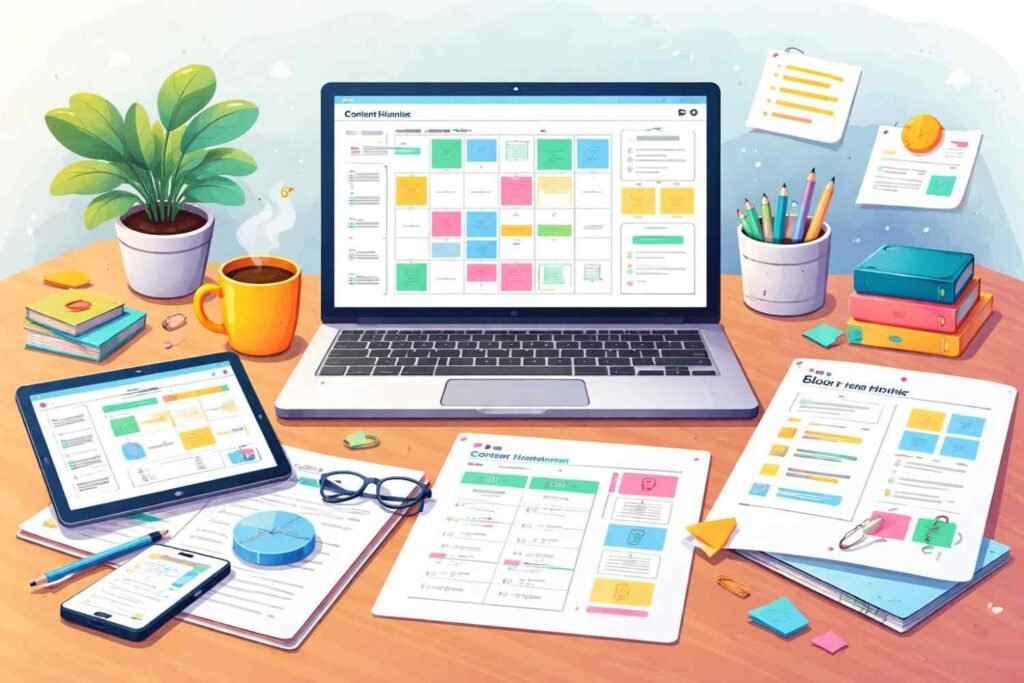
This is where a clear editorial framework matters. Establishing your core pillars of content creation before launch helps keep every channel anchored to the same audience need.
Build Demand Before You Ask for the Sale

A launch calendar should begin before inventory becomes available. Pre-launch content has a different job from launch-day content: it creates recognition.
Start With the Problem, Not the Product
Suppose an ecommerce company is preparing to launch an insulated lunch container designed for commuters. Publishing ten posts saying that a new container is coming provides limited value.
Instead, the brand could publish content around keeping lunches cold during long commutes, preventing leaks inside work bags, meal-prepping for office days, or choosing food-safe storage materials.
Finding relevant topics before a product launch also means identifying questions and opportunities that competing brands have overlooked.
Exploring how to find content ideas your competitors missed can help ecommerce teams uncover underserved customer needs and create useful content that attracts potential buyers before launch day.
People can discover that material before they know the product exists. This creates a natural sequence:
| Launch stage | Customer question | Best content |
| Pre-launch | “How do I solve this problem?” | Educational articles, short videos, guides |
| Consideration | “What should I look for?” | Comparisons, FAQs, demonstrations |
| Launch | “Why should I buy this one?” | Product pages, email, reviews, creator content |
| Post-launch | “Did I make the right choice?” | Setup guides, tips, onboarding, support content |
The American Marketing Association describes ecommerce content marketing as providing useful information, inspiration, and education around products rather than relying entirely on sales messaging. That distinction is particularly important during the pre-launch period.
Create a Demand-Capture Mechanism
Awareness without capture is difficult to monetize. Give interested shoppers somewhere to go before launch: a waitlist, early-access page, SMS signup, product notification form, quiz, or reservation system.
Then tag those subscribers separately from your general newsletter list. Someone who specifically requested information about an unreleased product has stronger intent than an ordinary subscriber. That audience should receive launch-specific education rather than generic promotional emails.
Make Launch Week an Information Sequence
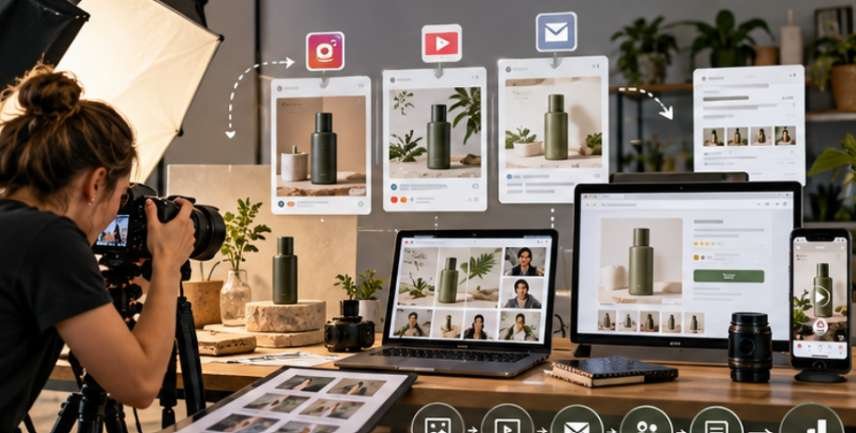
Launch week should answer questions in the order shoppers actually ask them.
First comes relevance: Why should I care?
Then understanding: What does the product actually do?
Next comes evaluation: Is it better suited to me than the alternatives?
Finally comes confidence: Can I trust the company enough to purchase?
A coordinated launch might therefore begin with a founder story or problem-focused announcement, followed by demonstrations, specification explanations, comparison content, FAQs, customer reactions, and urgency-based messages later in the week.
This is also an opportunity to connect editorial content with commercial pages. Product-review publishers, affiliates, and retailers can use formats such as those covered in these product review content ideas to answer comparison and evaluation questions that ordinary product descriptions often miss.
Treat the Product Page as Part of the Content Strategy
Content cannot compensate for a weak destination page.
If an article successfully explains a problem but sends shoppers to a product page containing vague copy, confusing variations, slow-loading images, hidden shipping details, or an unclear call to action, the buying journey breaks at its most valuable point.
Your launch page should quickly communicate the primary benefit, price, important specifications, delivery expectations, returns information, supporting images or demonstrations, and the next action. Accessibility deserves attention as well.
The World Wide Web Consortium’s Web Content Accessibility Guidelines cover text, images, multimedia, navigation, forms, and other web experiences. W3C specifically notes that an ecommerce buying process includes the entire sequence of pages used to select and purchase products, including checkout.
In practical terms, launch testing should extend beyond the attractive hero section. Test product selection, cart functions, checkout forms, confirmation screens, keyboard navigation, image alternatives, and mobile usability.
Coordinate Channels Around Customer Intent
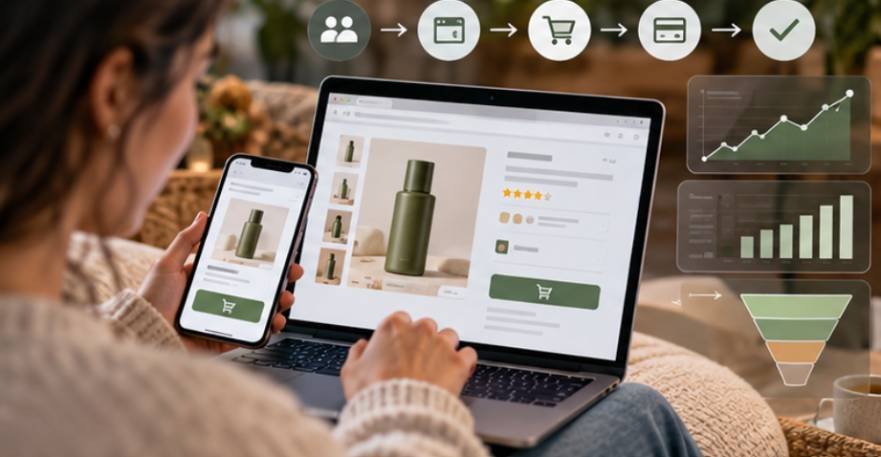
Understanding how to align content marketing with ecommerce product launch performance also means resisting the temptation to publish the same message everywhere.
Email subscribers may need early access.
Search visitors may need detailed educational content.
Instagram or TikTok audiences may respond better to demonstrations.
Existing customers may need an explanation of how the new product differs from something they already own.
Retargeted shoppers may simply need reassurance about shipping, returns, durability, sizing, or guarantees.
The message remains consistent, but the format changes according to context.
That is alignment—not duplication.
Use Social Proof Carefully
Early reviews, beta feedback, creator videos, and unboxing content can remove uncertainty quickly, especially for an unfamiliar product.
They also create compliance responsibilities.
The Federal Trade Commission says endorsements should reflect honest experiences, and material relationships between brands and endorsers should be clearly disclosed. Free products, endorsements, influencers and reviews,payments, discounts, employment relationships, and other connections may require disclosure.
The FTC also warns against practices that distort consumer perception of reviews, including certain forms of fake or manipulated feedback.
That means a creator seeding program should include disclosure instructions before content goes live, not after a compliance problem appears.
Do Not Stop Publishing After Launch Day
Many ecommerce teams front-load nearly their entire content budget before release and then become quiet.
That leaves valuable opportunities untouched.
After launch, customer service tickets, comments, reviews, search queries, returns, and product questions reveal what shoppers still do not understand.
Turn recurring questions into tutorials, troubleshooting articles, demonstrations, comparison pages, onboarding emails, and updated FAQs.
Post-purchase content matters too. Teach buyers how to use, maintain, store, clean, assemble, or get better results from the product where relevant.
You can also repurpose successful launch assets. A livestream demonstration can become several short videos. Customer questions can become an FAQ article. Strong reviews can inform product-page copy. A launch comparison can evolve into evergreen search content.
Frequently Asked Questions
1. How early should content marketing start before an ecommerce launch?
Four to eight weeks is useful for many launches, although timing depends on product complexity, purchase price, existing audience size, seasonality, and whether search visibility is important.
2. What content should be published on product launch day?
Prioritize the optimized product page, announcement content, email, demonstrations, FAQs, social posts, and any credible customer or creator proof available at launch.
3. How do you measure whether launch content is working?
Track qualified traffic, waitlist growth, email engagement, product-page visits, assisted conversions, add-to-cart rate, conversion rate, customer acquisition cost, and post-launch revenue by content source.
4. Why is how to align content marketing with ecommerce product launch planning important?
Alignment ensures customers receive the right information before, during, and after release instead of encountering disconnected messages that create confusion and weaken conversion.
The Launch Should Feel Like One Continuous Conversation
A successful ecommerce launch rarely hinges on one viral post or perfectly written announcement. It works because every piece of information moves the shopper slightly closer to confidence.
Start by identifying the customer’s problem. Build useful content around that problem. Capture interested prospects. Educate them as release day approaches. Make the product page easy to understand and buy from. Then keep answering questions after the transaction.
The goal is not to produce more launch content. It is to make every article, email, video, review, and product page feel like part of the same buying conversation.