

A customer discovers your product through a friend’s text message, visits your store, and completes a $250 purchase. Your analytics dashboard celebrates another direct conversion. But the content that sparked the recommendation receives no credit.
This invisible customer journey explains why dark social attribution for ecommerce content teams deserves attention. Private conversations influence purchasing decisions, yet conventional analytics frequently cannot identify where those recommendations originated.
For online retailers investing in buying guides, product comparisons, and creator partnerships, understanding these hidden interactions can change how content performance is measured and marketing budgets are allocated.
How Dark Social Distorts Ecommerce Reporting
Traditional attribution systems rely heavily on measurable interactions, including referral sources, campaign parameters, advertising clicks, and recorded website sessions.
Private recommendations create gaps between those measurable interactions.
Organic Content May Receive Too Little Credit
A detailed furniture buying guide might generate hundreds of private recommendations without producing corresponding measurable referral traffic.
Consequently, editorial teams may underestimate its contribution to revenue.
Paid Campaigns Can Receive Disproportionate Credit
A shopper might receive a private recommendation, research the brand independently, and eventually click a branded advertisement.
Certain last-click reporting approaches emphasize that final advertising interaction, even though earlier content helped create demand.
This does not make the advertising campaign ineffective. It means the reported conversion credit may not represent the complete buying journey.
Direct Traffic Becomes Difficult to Interpret
Google’s GA4 documentation on direct traffic confirms that visits without clear referral information can enter the direct traffic category.
However, bookmarks, manually entered URLs, redirects, and tracking restrictions also contribute to these sessions.
Analytics Help
Therefore, treating every direct visitor as a dark social referral produces misleading conclusions.
Five Practical Methods for Measuring Hidden Social Revenue
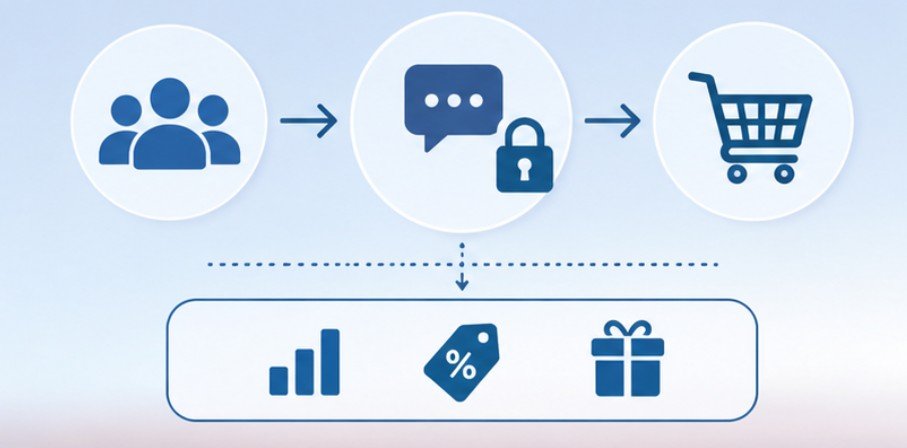
No single measurement technique can reveal every private interaction.
The most useful approach combines technical tracking, customer feedback, and content-level analysis.
1. Ask Customers Where Their Discovery Started
Post-purchase surveys offer information that conventional tracking cannot capture.
Add a short question to the confirmation page:
“Where did you first hear about our brand?”
Provide options covering friends, family, private messages, social platforms, search engines, creators, and other sources.
A second optional question can ask which recommendation most influenced the purchase.
Separate initial discovery from final purchase influence. These are different customer experiences.
Keep surveys optional where possible to avoid creating unnecessary checkout friction, and analyze responses alongside participation rates.
2. Investigate Direct Visits to Deep Content Pages
Open Google Analytics 4 and review direct sessions landing on specific product guides, comparison articles, or unusually long URLs.
For example, a visit directly entering /guides/adjustable-standing-desk-comparison deserves investigation.
Such URLs are less likely to be typed manually than a homepage address.
However, bookmarks, copied browser addresses, missing campaign tags, and technical attribution failures remain possible explanations.
Treat these visits as potential dark social signals rather than confirmed private referrals.
3. Add Tracking Parameters to Share Actions
Create share buttons for SMS, WhatsApp, email, and copied links.
When a shopper selects a share action, generate a URL containing campaign parameters.
For example:
?utm_source=share_button&utm_medium=private_share&utm_campaign=holiday_guide
These parameters help identify visits arriving through tagged sharing actions.
Use separate values for different mechanisms where appropriate, and validate that redirects preserve the parameters.
Importantly, a tagged link identifies the sharing mechanism used, not necessarily the recipient’s actual messaging platform.
4. Connect Promotional Codes to Specific Content
Unique promotional codes can help connect purchases to editorial campaigns.
A holiday gift guide might offer GIFTGUIDE10, while a creator partnership uses another identifier.
If a customer redeems the code after receiving a forwarded message, the order can still be associated with the original campaign.
However, codes may circulate independently, so redemption establishes campaign association rather than proving the exact customer journey.
5. Compare Revenue Patterns Around Content Releases

Track changes in direct traffic, branded search, product views, and revenue after publishing important content.
Review consistent 24-hour, 48-hour, and 72-hour windows.
Compare those results against similar periods without major releases.
Account for promotions, seasonality, advertising changes, and other simultaneous campaigns.
A traffic increase following publication is useful evidence, but it does not independently establish causation.
A Simple Dark Social Measurement Framework
Teams implementing dark social attribution for ecommerce content teams should begin with a controlled reporting framework rather than purchasing complicated attribution software immediately.
Start with three categories of evidence:
- Confirmed signals: tagged shared-link visits, trackable referral codes, and explicitly reported customer recommendations.
- Probable signals: unexplained direct landings on complex URLs alongside relevant customer feedback.
- Contextual signals: changes in branded searches, product interest, and revenue following content distribution.
Keep these categories separate to prevent double counting.
For example, suppose 200 purchases generate survey responses, and 30 customers identify private recommendations as their discovery source.
That produces a 15% self-reported private-recommendation share among respondents.
If those customers represent $6,000 in revenue, report that figure as respondent-associated revenue, not independently verified incremental revenue.
This distinction protects editorial teams from overstating content performance.
Beyond tracking attributed purchases, ecommerce teams can evaluate whether content strengthens brand awareness, recognition, and purchase consideration over time; learn how to measure brand lift from content marketing.
Create Ecommerce Content People Actually Want to Share
Measurement improves when content has practical value beyond promoting products. Comparison guides help shoppers explain differences between competing options. Sizing calculators reduce uncertainty, while gift guides help customers request opinions from friends and relatives.
Product quizzes can also produce personalized recommendations worth sharing. For higher-priced merchandise, useful content should address product compatibility, maintenance expectations, warranties, and long-term ownership costs.
These details give customers reasons to discuss purchases privately before committing.
When customers find a brand’s recommendations genuinely useful and trustworthy, those experiences can also strengthen long-term relationships and encourage repeat purchases; explore these approaches to building brand loyalty in ecommerce.
Brands can also distribute educational materials through Instagram broadcast channels, SMS lists, and private customer communities.
Ecommerce brands can extend this distribution strategy by introducing products to relevant niche creators through targeted gifting campaigns that encourage authentic recommendations; explore this micro-influencer seeding strategy for D2C brands for practical ideas.
Every campaign should have consistent tracking conventions so performance remains comparable across channels.
Privacy, Compliance, and Attribution Limitations

Private messaging should remain private. Retailers do not need access to personal conversations to estimate the business impact of shared content.
The International Association of Privacy Professionals consent management guidance emphasizes clearly identifying data-processing activities and maintaining appropriate consent records.
For American ecommerce businesses, tracking practices should also account for applicable state privacy laws and consumer preferences.
If creators or affiliates receive compensation for recommendations, the Federal Trade Commission’s influencer disclosure guidance explains the importance of clearly disclosing material brand relationships.
Avoid collecting message contents, contact lists, or unnecessary personal information solely to improve attribution reporting. Reliable measurement should strengthen customer trust, not compromise it.
Frequently Asked Questions
1. What is dark social attribution for ecommerce content teams?
It estimates how private sharing through messaging applications, texts, and forwarded emails contributes to ecommerce traffic and purchases when traditional analytics cannot identify the original referral source.
2.Can Google Analytics 4 identify dark social traffic?
GA4 can identify tagged visits and suspicious direct traffic patterns, but it cannot reliably classify every private recommendation without additional tracking signals or customer feedback.
3. What is the most affordable way to measure dark social?
Start with optional post-purchase surveys, tagged sharing links, content-specific promotional codes, and direct landing-page analysis before investing in specialized attribution platforms.
4. Does dark social affect SEO performance?
Private sharing can introduce additional visitors to organic content and increase brand awareness. However, private shares should not be treated as direct Google ranking factors.
Measure Influence, Not Just Clicks
The most influential customer recommendation may never appear as a recognizable social referral.
That does not make the recommendation less valuable. It simply exposes the limits of measuring purchasing decisions through recorded clicks alone.
A stronger ecommerce reporting strategy combines observable campaign data with customer feedback, revenue patterns, and careful interpretation.
Content teams should prioritize identifying meaningful trends rather than claiming perfect attribution.
Begin by adding one post-purchase survey and auditing direct traffic to your strongest editorial pages.
The goal is not to illuminate every private conversation. It is to understand which content consistently earns enough customer trust to be recommended.