
China’s live-commerce market reached roughly $900 billion in 2025—close to the scale of the entire US e-commerce market. Yet 68% of North American consumers surveyed by NielsenIQ said they had never purchased a product through social media.
That extraordinary divide explains why will the west catch up with chinas social commerce is no longer simply a question about livestream shopping or TikTok trends. It is really a question about whether American consumers, technology companies, retailers, payment networks, and creators will eventually operate as one connected commerce ecosystem. The answer is probably yes in pieces—but not by copying China.
China Built Social Commerce Into the Shopping Journey
Social commerce succeeds when entertainment, product discovery, recommendations, payment, customer service, and purchasing happen with minimal interruption. China spent years building precisely that environment.
Platforms including Douyin, Taobao, WeChat, and Pinduoduo have accustomed consumers to moving quickly from watching content to investigating a product and completing a transaction.
The World Bank has documented how integrating social networks, commerce, and mobile payments helped Chinese platforms such as Pinduoduo scale rapidly. Embedded payment infrastructure reduced the friction between deciding to purchase and actually paying.
That infrastructure matters more than flashy livestream studios. A shopper watching a Douyin creator does not necessarily experience entertainment, advertising, product research, and checkout as four separate activities. They can become parts of the same session.
Live Shopping Is Already Normal Behavior
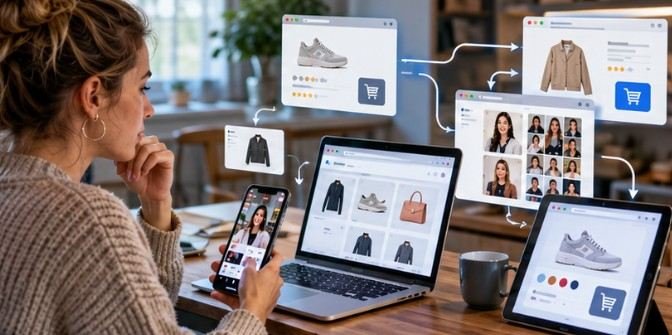
NielsenIQ reports that China’s live-commerce market was approximately $900 billion in 2025. Among Chinese consumers who already used live commerce in 2023, 57% had been using it for at least three years, while 87% participated at least monthly. That is a mature shopping habit, not an experimental marketing channel.
By comparison, US consumers certainly shop digitally. The Census Bureau estimated US retail e-commerce sales at $340.2 billion during the second quarter of 2026, representing 17.1% of retail sales on a seasonally adjusted basis.The crucial difference is where those transactions occur.
Americans Discover Socially but Often Purchase Elsewhere
The US already has one major ingredient required for social commerce: product discovery. Pew Research Center found that 30% of adult social-media users surveyed in 2022 had purchased something after seeing an influencer or creator promote it. Among people who followed influencers, the figure reached 53%. Younger consumers were especially receptive.
That suggests Americans do not reject commerce-related social content. They simply do not always want their entire transaction to remain inside the social platform.
A TikTok video may introduce a skincare product. The shopper might then search Google, read Reddit discussions, check reviews, compare Amazon prices, visit the manufacturer’s website, and finally purchase somewhere else. China’s dominant platforms are designed to collapse many of those steps.
Trust May Be the West’s Hardest Problem
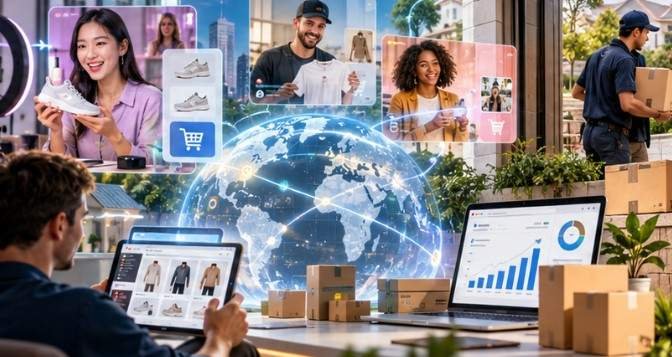
Friction is not necessarily bad. Sometimes shoppers leave social platforms because they want another layer of verification before handing over their money.
The Federal Trade Commission reported that consumers said they lost $2.1 billion to scams originating on social media during 2025. Shopping scams were the most commonly reported category, with buyers frequently encountering fake stores, counterfeit products, or merchandise that never arrived.
That environment makes hesitation rational. The OECD similarly identifies misleading marketing, fraud, unsafe products, unreliable reviews, unclear disclosures, and questionable seller practices as continuing challenges for digital marketplaces.
Before American social commerce reaches Chinese scale, platforms may therefore need to sell something even more important than merchandise: confidence.
Why America Probably Will Not Build a Chinese-Style Super-App
One popular explanation for the difference is China’s super-app ecosystem. That matters, but expecting the US to produce an exact WeChat equivalent misses the bigger issue.
American digital commerce is divided among highly specialized companies. Amazon dominates significant parts of retail. Google influences product research. Meta owns major social audiences. TikTok drives discovery. Shopify powers merchants. Apple and Google participate in payments.
Each company wants to control valuable portions of the customer journey.
China’s system developed around tighter combinations of social interaction, payments, marketplaces, and services. World Bank research into Chinese digital finance has highlighted how companies such as Alibaba and Tencent expanded financial services inside existing online ecosystems. The Western alternative may therefore be interoperability rather than one giant app.
Will the West Catch Up With China’s Social Commerce?

The strongest answer is: partially. Western social commerce can grow dramatically without ever looking identical to China’s model.
TikTok Shop demonstrates that entertainment-to-purchase behavior can work in Western markets. Instagram, YouTube, creator storefronts, affiliate commerce, AI shopping assistants, and retail-media networks are attacking other pieces of the same opportunity.
But China retains structural advantages: experienced livestream hosts, habitual live-shopping audiences, integrated digital payments, sophisticated merchant ecosystems, and enormous consumer familiarity with buying inside entertainment platforms.
NielsenIQ found that 59% of APAC consumers already purchased through social platforms, while 68% of North American consumers had never done so. Closing that behavioral gap could take years.
What Western Platforms Can Learn Without Copying China
The most useful lesson from China is not “hire more livestream hosts.” It is reducing unnecessary distance between inspiration and action.
Western platforms can improve verified seller identities, transparent reviews, frictionless payments, creator accountability, product authentication, customer support, fast fulfillment, and simple returns.
They can also use AI to shorten product research without forcing users into immediate checkout.
The winning Western version of social commerce may therefore combine China’s convenience with the consumer protections and choice Americans already expect.
Frequently Asked Questions
1. Why is social commerce bigger in China?
Chinese platforms integrated social interaction, creators, mobile payments, marketplaces, entertainment, and shopping earlier and more deeply, making purchasing through content a familiar consumer behavior.
2. Is social commerce growing in the US?
Yes. Creator recommendations, TikTok Shop, shoppable videos, affiliate storefronts, and retail-media tools are expanding, although social purchasing remains far less established than in China.
3. Will the West Catch Up With China’s Social Commerce completely?
Probably not in identical form. Western markets can close the commercial gap while retaining separate retailers, payment systems, search platforms, and social networks.
4. What is the biggest obstacle to US social commerce?
Trust is a major hurdle. Consumers need reliable sellers, authentic products, credible reviews, secure payments, clear returns, and dependable delivery before purchasing directly inside social feeds becomes routine.
The Real Race Is About Friction, Not Livestreams
China’s $900 billion live-commerce market makes the West look dramatically behind, but I would not measure progress simply by comparing livestream sales. The more revealing question is how many steps separate inspiration from confident purchase.
US consumers already discover products socially. The opportunity now is to connect discovery with trustworthy research, payment, delivery, and customer service without removing the safeguards shoppers value.
That is where will the west catch up with chinas social commerce becomes interesting. The West does not need another WeChat. It needs a commerce experience that feels just as effortless while remaining distinctly suited to Western shopping habits.