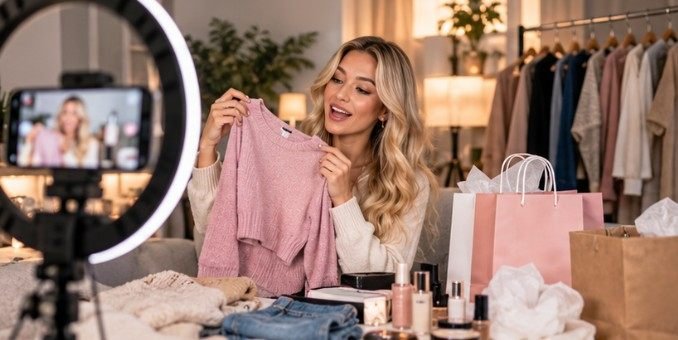
A product recommendation can now go from “What is that?” to “I bought it” without the shopper ever leaving a video. That change matters more than another viral influencer campaign.
The strongest argument for why the west should transition from influencer hauls to livestream shopping is not that livestreaming is newer. It is that live commerce combines discovery, demonstration, questions, social proof, and checkout in one experience. Traditional haul videos usually stop somewhere in the middle.
For U.S. retailers, that distinction is becoming harder to ignore. The U.S. Census Bureau reported that e-commerce accounted for 17.1% of total retail sales in the second quarter of 2026, with online sales rising 12.2% year over year. The opportunity now is to make that enormous digital-shopping market more interactive.
Influencer Hauls Solved Discovery, Not the Entire Purchase Journey
Influencer hauls became successful because they made shopping personal. Instead of seeing a polished advertisement, consumers watched someone they followed unpack clothes, test cosmetics, decorate a room, or review gadgets.
That model still has value. Pew Research Center found that 62% of U.S. TikTok users said product reviews or recommendations were one reason they used the platform. Among users ages 18 to 29, the figure reached 74%. But a conventional haul often creates a broken journey.
A viewer watches the video, remembers an item, follows a link, opens another page, checks available sizes, searches reviews, compares alternatives and eventually decides whether to buy. Every extra action creates another opportunity to leave.
Livestream shopping attempts to collapse those stages.
A host can introduce a product, demonstrate it and answer questions while a shopper accesses the item from the same experience. TikTok Shop, for example, supports direct product purchases through LIVE videos, while Amazon Live uses product carousels alongside creator broadcasts.
Live Shopping Turns Questions Into Part of the Storefront
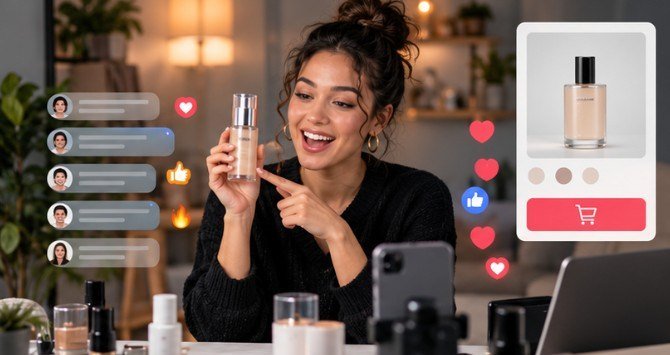
The biggest advantage of livestreaming may have less to do with entertainment than with uncertainty.
Imagine buying jeans online. A conventional haul might show how they look on one creator. A live host can respond when viewers ask whether the waistband stretches, whether the fabric looks thin under bright light or how the same style fits different body types.
That is a fundamental shift.
Demonstration Replaces Some Guesswork
For beauty products, hosts can show texture and application. With kitchen equipment, they can operate the product instead of describing it. Electronics sellers can demonstrate menus, ports and accessories.
It resembles the useful part of visiting a knowledgeable salesperson in a physical store, but delivered to hundreds or thousands of shoppers simultaneously.
Wharton professor Thomas Robertson has described livestream commerce as a more communal form of online shopping, with interaction among hosts and viewers creating a very different experience from solitary e-commerce.That communal element is precisely what prerecorded haul content cannot reproduce.
Better Product Understanding Could Help With an Expensive Retail Problem
American e-commerce has a returns problem.
The National Retail Federation estimated that 19.3% of online sales would be returned during 2025. That does not prove livestream shopping automatically reduces returns, and brands should be skeptical of anyone promising that it will.
But live demonstrations give retailers another opportunity to address the expectation gaps that frequently precede disappointing purchases.
A fashion host can discuss fit before checkout. A furniture seller can show proportions next to familiar objects. A beauty creator can explain who should not buy a particular shade or formula.
Counterintuitively, effective live selling should sometimes discourage the wrong customer from purchasing.
Preventing an unsuitable order can be more profitable than generating a sale that comes back a week later.
Why Livestream Shopping Creates a Stronger Commercial Loop
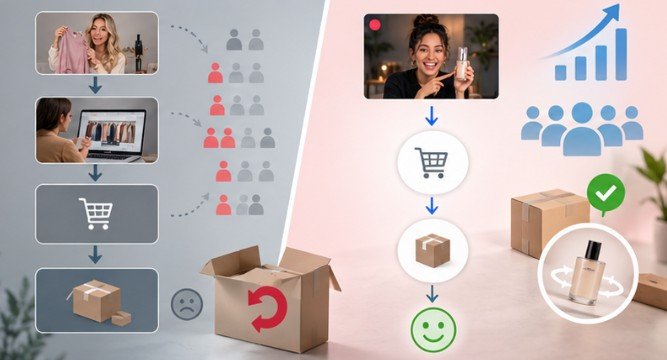
The distinction becomes clearer when the two approaches are viewed as customer journeys.
A typical influencer haul looks like this:
Discovery → interest → external search → comparison → product page → checkout.
Live commerce can look more like:
Discovery → demonstration → question → answer → purchase.
Fewer steps do not guarantee higher conversion, but they remove several points where intent can disappear.
Live commerce also produces an unusually fast feedback system. If 40 viewers ask whether a sweater is machine washable, the brand has discovered an information problem immediately. If viewers repeatedly request another color, that conversation becomes product research.
A prerecorded campaign generally cannot produce that type of feedback until comments, traffic and sales data accumulate.
The U.S. Market Is Starting to Look More Prepared
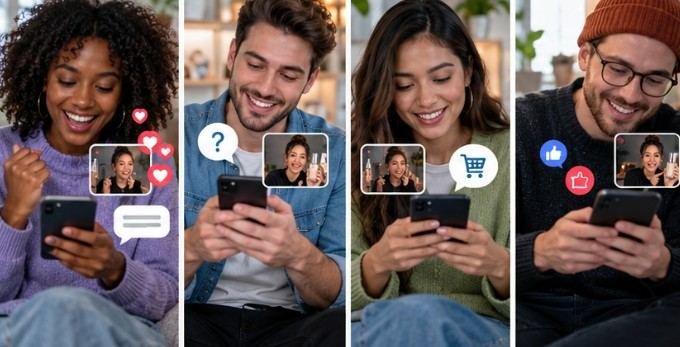
China remains the most famous example of large-scale livestream commerce, but copying China wholesale would be a mistake. American shopping habits, creator culture, platform preferences and attitudes toward aggressive selling are different.
The more useful question is whether U.S. consumers are already comfortable mixing creators and commerce.
They are.
Earlier Pew research found that 30% of adult U.S. social-media users had purchased something after seeing an influencer or creator post about it. Among people who followed influencers, the share reached 53%.
Meanwhile, major U.S. commerce platforms continue investing in shoppable live video. TikTok said its U.S. LIVE Shopping sales more than doubled year over year during the first half of 2026, although that figure comes from the company itself and should be treated as platform-reported performance rather than independent market measurement.
So the behavioral foundation already exists. Livestream shopping simply moves creator influence closer to the transaction.
Livestream Shopping Has Risks That Hauls Do Not
Live commerce can also magnify bad marketing. Aggressive countdowns, questionable scarcity claims and relentless discounting can damage trust. A poorly prepared host can make incorrect claims in real time. And because viewers enter streams at different moments, sponsorship disclosure requires special attention.
The Federal Trade Commission specifically advises that disclosures in livestreams should be repeated periodically so people who join later can understand the relationship between the creator and brand.
Brands therefore need moderators, accurate product information, clear promotional terms and trained hosts. Live should feel useful before it feels urgent.
Frequently Asked Questions
1. Why is livestream shopping better than an influencer haul?
Livestream shopping combines product discovery, demonstrations, questions and purchasing in one interactive experience. Hauls remain useful for awareness but usually create more distance between product discovery and checkout.
2. Why should the West transition from influencer hauls to livestream shopping?
It can shorten the buying journey, answer product questions immediately, create community participation and provide brands with real-time customer feedback while keeping creator-led discovery at the center.
3. Which products work best for livestream commerce?
Products that benefit from demonstration perform naturally in live formats, including apparel, beauty products, electronics, home goods, collectibles and products requiring explanation before purchase.
4. Should brands stop producing influencer haul videos?
No. Hauls remain effective discovery content. Brands can use short-form and prerecorded influencer content to generate interest, then use livestream events to demonstrate products and convert high-intent shoppers.
The Next Stage of Creator Commerce
The influencer haul is not disappearing. It is becoming the top of a more sophisticated shopping funnel.
For years, brands paid creators to generate attention and then hoped consumers would complete the rest of the journey themselves. Livestream commerce allows creators to stay present while shoppers investigate, question and decide.
That is why I see why the west should transition from influencer hauls to livestream shopping as less of a battle between video formats and more of an evolution in retail. The winning brands will not simply put cameras in front of influencers. They will build live experiences that make buying easier, product information clearer and conversations genuinely useful.