The most interesting livestream seller in China may no longer be the person shouting the loudest or offering the deepest discount. Some of the fastest-changing parts of the market now belong to soft-spoken former actresses, rural farmers, unconventional entertainers and even AI-generated hosts capable of broadcasting through the night.
That evolution makes the new stars of chinese livestreaming worth watching far beyond China. They show where social commerce could move next: away from pure salesmanship and toward entertainment, expertise, intimacy and always-on digital retail.
For American brands studying live shopping, the important lesson is not to copy China’s platforms. It is to understand why audiences are responding to a much wider range of personalities and formats.
The Livestream Superstar Formula Is Being Rewritten
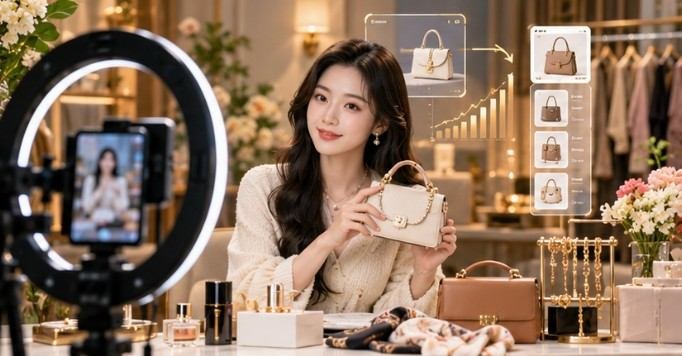
China helped industrialize livestream commerce by combining entertainment, product demonstrations, chat, payments and checkout inside the same digital experience.
Stanford Graduate School of Business has highlighted how Chinese digital ecosystems historically integrated social interaction, search and transactions more tightly than their American counterparts.
For years, that environment favored charismatic hosts who could maintain extraordinary energy while introducing product after product. Scarcity countdowns, discounts and rapid-fire sales pitches became familiar conventions. Now the format is fragmenting.
A livestream host can succeed because viewers trust her taste. Another may succeed because his everyday rural life feels authentic. A third attracts attention through interactive spectacle. An AI presenter can succeed for a completely different reason: it never needs sleep.
That means “star power” is becoming less about conventional fame and more about having a recognizable reason to keep watching.
Quiet Selling Turns Taste Into the Product
One of the strongest alternatives to aggressive selling has emerged on Xiaohongshu, China’s lifestyle-oriented social platform.
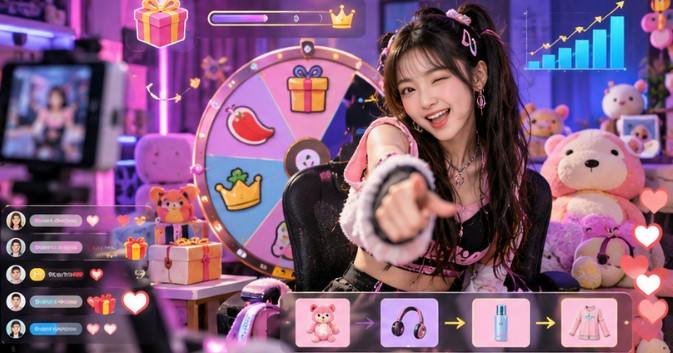
Dong Jie and the Rise of Calm Commerce
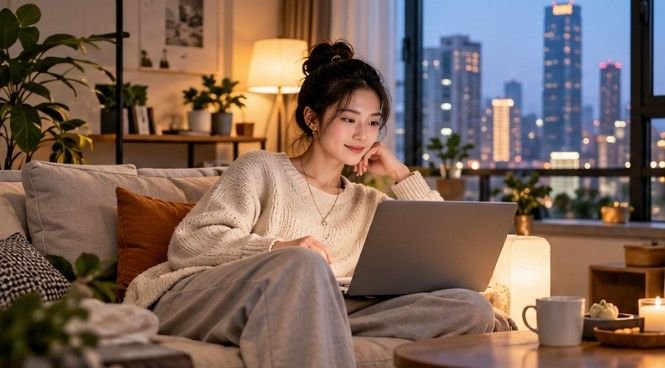
Actress Dong Jie became closely associated with a slower livestreaming style built around conversation, detailed presentation and aesthetic curation rather than relentless promotion.
Reuters reported that Xiaohongshu livestreamers frequently use a quieter, more conversational format than the high-speed selling associated with competing platforms. The platform has consequently attracted interest from premium fashion and lifestyle brands.
The commercial implication is important.
A host is no longer simply saying, “Buy this before the deal disappears.” She is effectively saying, “I have filtered thousands of things, and this is one worth noticing.”
The scarce resource becomes taste rather than attention.
Teresa Cheung and Sida Jiang Expand the Model
Teresa Cheung has similarly built a sophisticated shopping environment around storytelling and lifestyle curation. Former television personality Sida Jiang represents another version, combining fashion recommendations with conversation, personality and entertainment.
Products from premium labels can appear within these streams without turning the entire broadcast into an infomercial.
This is especially relevant for American luxury, fashion, beauty and home brands. Products requiring context often benefit from explanation more than aggressive discounting.
Livestreaming Is Also Becoming Participatory Entertainment
At the opposite end of quiet commerce lies interactive spectacle.
Creators have experimented with challenges, viewer-controlled actions and endurance-style broadcasts in which the audience influences what happens on screen.
Viral creator Fanqie Jiang Ye, for example, attracted attention through an unusual setup in which audience participation could trigger repeated spinning in a motorized gaming chair.
The commercial lesson is bigger than the stunt itself: livestreaming can function as a game.
Traditional television asks audiences to watch. Social video invites them to comment. Interactive livestreaming can allow them to affect events immediately.
That creates a simple engagement loop:
The Watch-React-Reward Loop
First, give viewers something understandable within seconds.
Second, let their comments, purchases, gifts or votes produce a visible consequence.
Third, acknowledge participation instantly.
Finally, introduce another reason to stay.
Brands should use that model carefully. Entertainment can generate enormous attention without generating trust, and an audience attracted by a bizarre challenge may have little interest in buying the product being promoted.
Farmers Are Becoming Media Businesses
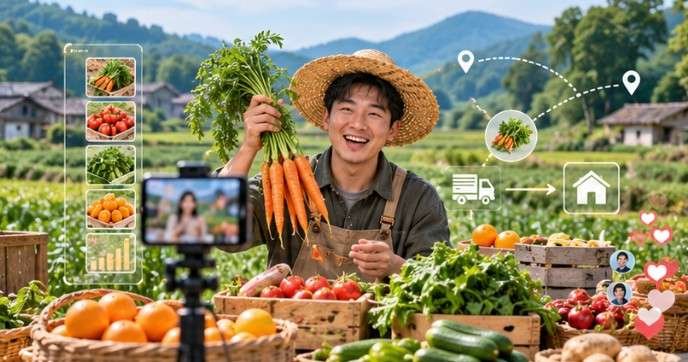
The rise of rural creators may be the most economically significant development of all.
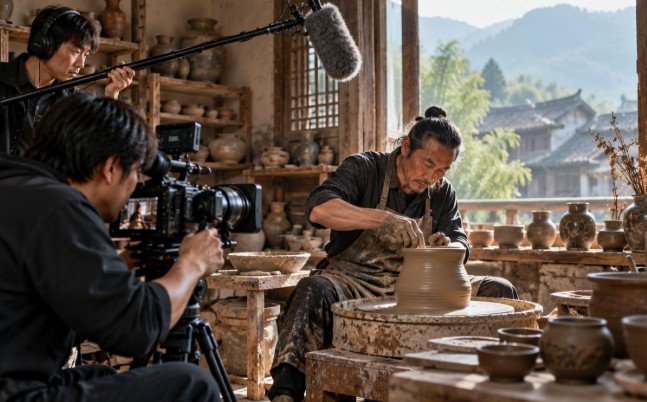
Chinese farmers and village entrepreneurs have increasingly used short video and livestreaming to demonstrate produce, show cultivation methods and sell directly to consumers.
Research published in the Journal of Rural Studies in 2026 found that livestream platforms can help rural participants acquire commercially useful digital skills and develop agricultural industry clusters. The researchers also warned about dependence on platform algorithms and unequal access to those capabilities.
This is not merely influencer marketing transplanted to the countryside.
The farm itself becomes content.
A creator can show bamboo shoots being harvested, fruit being picked or food being prepared before presenting the finished product. That visibility reduces the psychological distance between producer and customer.
The WTO has also documented livestreaming among the digital channels used by rural Chinese sellers, reflecting the broader connection between e-commerce and agricultural markets.
AI Hosts Create a Completely Different Kind of Star
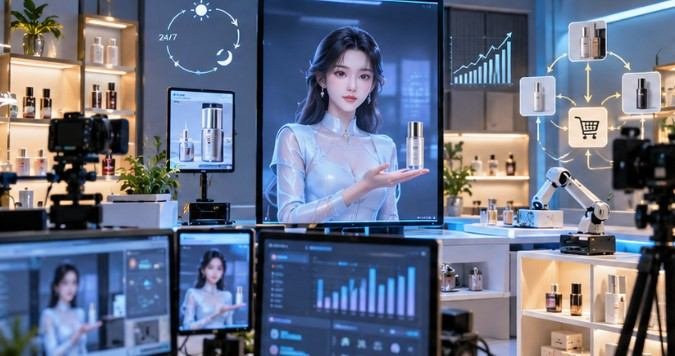
Perhaps the strangest member of the new stars of chinese livestreaming is not human.
AI-generated digital presenters are increasingly capable of demonstrating products, answering predictable questions and hosting streams for extremely long periods.
WIRED reported in 2025 that some virtual salespeople were already operating around the clock on Chinese shopping platforms. More recently, Meituan has described digital-human systems designed for continuous livestreaming and automated customer interaction.
The appeal to merchants is obvious: consistent delivery, lower staffing constraints and coverage during hours when human hosts would normally be unavailable.
But AI does not eliminate humans.
Someone still needs to verify product information, configure promotions, supervise responses, manage exceptions and ensure that automated claims remain accurate.
China’s regulatory framework increasingly recognizes those risks. Livestream e-commerce rules effective February 1, 2026 require stronger platform oversight and prohibit using AI to fabricate misleading commercial information or impersonate others for deceptive promotion.
What US Brands Should Actually Learn From China
American businesses should not assume China’s livestreaming formula can simply be imported. Platform architecture, consumer habits, payments, creator ecosystems and regulations differ substantially. The transferable idea is simpler: stop treating livestream commerce as a single format.
A beauty company might benefit from an expert educator. A premium apparel label may need a curator. A food producer could use behind-the-scenes storytelling. Commodity sellers may eventually find AI presenters economical for repetitive demonstrations.
The creator should fit the purchasing decision rather than forcing every product into the same high-energy sales template.
FAQs
1. Who are the new stars of Chinese livestreaming?
They include celebrity curators such as Dong Jie and Teresa Cheung, personality-driven hosts such as Sida Jiang, rural creators, experimental entertainment streamers and increasingly sophisticated AI presenters.
2. Why is quiet selling becoming popular?
Quiet selling replaces relentless discounts and shouting with conversation, taste and product storytelling, making it particularly suited to premium fashion, beauty, lifestyle and design categories.
3. Are AI livestream hosts replacing human creators?
Not completely. AI hosts can automate repetitive broadcasts and extend operating hours, but human oversight remains important for strategy, compliance, unusual questions and trust-building.
4. What can US brands learn from the new stars of chinese livestreaming?
The strongest lesson is format-product fit. Successful livestream commerce increasingly matches the host’s credibility, entertainment style and community with the specific reason consumers would consider buying.
The Next Livestream Star May Not Look Like an Influencer
The future of livestreaming is becoming harder to stereotype, and that may be its most important transformation.
The next breakout seller could be a former actress calmly discussing fabric, a farmer broadcasting directly from an orchard, an entertainer turning audience comments into a game or a digital avatar selling while its human team sleeps.
For US marketers, China’s experiment offers a useful warning: livestream commerce should not be reduced to putting a charismatic person beside a shopping cart. The real competitive advantage comes from finding a format people would voluntarily keep watching—even if nobody immediately told them to buy.