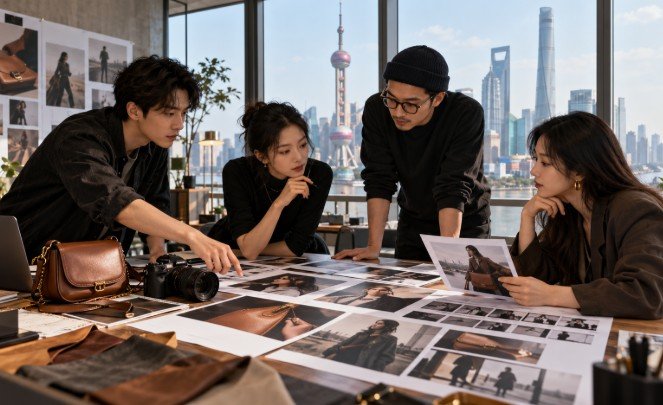
Shanghai Fashion Week is no longer simply a sequence of catwalks followed months later by clothes arriving in stores. Its Spring/Summer 2027 season brought nearly 100 runway presentations and roughly 1,000 participating brands into an ecosystem where shows, showrooms, online discovery, consumer data, and retail increasingly operate at the same time.
That commercial overlap explains why trending on tmall gearing up for shanghai fashion week is more interesting than a list of popular clothes. Tmall can function as an early-warning system for what shoppers are searching for, considering, discussing, and ultimately buying while designers are still competing for attention.
For American fashion companies watching China, the bigger lesson is clear: Shanghai is demonstrating what fashion week looks like when the runway and digital marketplace stop behaving like separate industries.
Shanghai Fashion Week Has Become a Commerce Network
The Spring/Summer 2027 edition ran from October 8 through October 16 under the theme “Renewed Radiance.” Alongside runway presentations, the official program included trade fairs, showrooms, industry events, and consumer-facing experiences across Shanghai.
The Shanghai municipal government’s official overview describes nearly 100 presentations and around 1,000 brands. That scale matters because Shanghai Fashion Week is functioning simultaneously as a cultural event, wholesale marketplace, product-testing environment, and retail campaign.
MODE Shanghai and independent showrooms connect designers with buyers. Platforms such as Tmall connect brands directly with consumers. Social and livestreaming channels compress the distance between seeing an emerging look and investigating the product.
The runway generates desire. Digital commerce measures whether that desire survives contact with price, product pages, customer reviews, sizing, and delivery.
Why Tmall Data Matters Before a Fashion Week
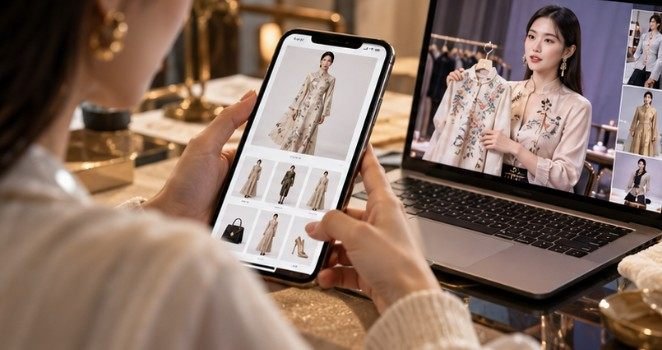
Fashion forecasting traditionally depended on runway editors, buyers, trend agencies, street style, and designer intuition. China’s platform economy adds another signal: observed digital behavior.
A 2026 China Online Consumer Brand Index developed by Peking University’s National School of Development and academic partners uses Taobao and Tmall information including sales, pricing, searches, and customer reviews to assess brand performance.
That makes online marketplaces useful for distinguishing between three very different phenomena:
Attention
A style suddenly gains searches, social mentions, or product-page traffic.
Intent
Consumers begin saving products, comparing alternatives, reading reviews, or following brands.
Conversion
Actual purchases demonstrate that the idea works commercially rather than merely aesthetically.
This distinction is crucial. A spectacular runway item can dominate social feeds while generating little demand. A less theatrical jacket, bag, shoe, or knitwear silhouette may quietly become the season’s genuine commercial winner.
China’s broader retail data reinforces the importance of watching digital demand. China’s National Bureau of Statistics reported that online retail sales of goods and services reached 13.48 trillion yuan during January-August 2026, while online goods sales rose 4.3 percent. Online clothing sales increased 4.9 percent.
The U.S. International Trade Administration’s China e-commerce guidance also identifies Tmall Global and other cross-border platforms as important entry points for international companies seeking Chinese consumers.
Heritage Craft Is Becoming Commercially Modern
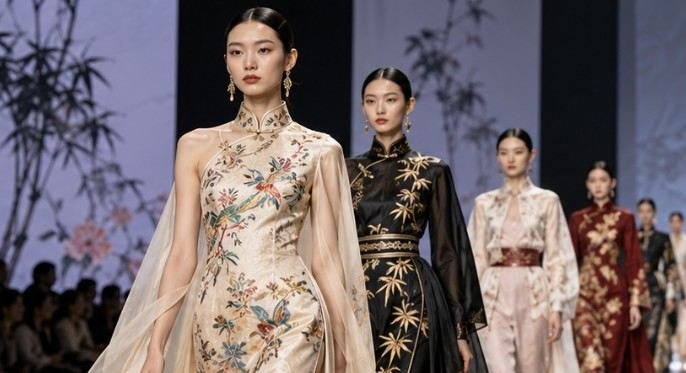
One of Shanghai’s strongest SS27 signals was not futuristic technology. It was heritage. Opening label HEMU drew on Dunhuang, the historic Silk Road center associated with the Mogao cave complex, while incorporating techniques and textiles including Yunjin brocade, Song brocade, Kesi silk tapestry, and embroidery.
The importance is not simply that traditional Chinese references appeared on a runway. Designers are becoming more sophisticated about translating cultural material into contemporary products.
Rather than printing obvious historical symbols onto garments, brands can use construction, texture, color, textile processes, proportion, and craftsmanship to create something recognizably modern.
That approach also supports the continuing strength of Chinese designer identity. Labels including XIAOLI, STAFFONLY, Comme Moi, PRONOUNCE and other domestic names occupied prominent positions in the official schedule.
For foreign brands, copying the visual language would miss the point. The lesson is to understand why culturally grounded products resonate and then develop authentic local relevance of their own.
Runway Experimentation Is Meeting Hard Commercial Reality
China’s fashion market remains enormous, but brands cannot assume that size guarantees easy growth.
Retail conditions have become selective. Consumers can compare thousands of products within minutes, and independent designers must balance recognizable creative identities against wearable products capable of producing repeat sales.
That tension was visible during SS27. Recent reporting showed designers expanding standalone stores, pop-ups, and direct-to-consumer operations rather than depending entirely on traditional multi-brand retailers and wholesale showrooms.
This is where trending on tmall gearing up for shanghai fashion week becomes commercially useful. Marketplace behavior can tell a brand whether runway excitement is translating into sustainable demand.
An extravagant coat might create publicity. The commercially scalable opportunity could instead be its collar, fabric treatment, cropped proportion, or color palette.
Smart brands separate the headline garment from the repeatable product idea.
A Five-Signal Test for Reading Tmall Fashion Trends
American brands evaluating Shanghai’s digital fashion signals should avoid simply copying the highest-ranking item. A better method is to test a trend across five questions.
That final question is increasingly important. Textile Exchange’s recent lifecycle research emphasizes the importance of measuring environmental impacts at the raw-material level rather than treating “sustainable” as a marketing label. Its 2026 cotton lifecycle assessment includes production data covering China and the United States.
The broader OECD definition and guidance for modern e-commerce is useful context too: digital commerce now involves increasingly complex intermediaries, AI-assisted transactions, subscriptions, and emerging ordering channels. Fashion’s buying journey is becoming considerably more complicated than clicking “add to cart.”
What U.S. Fashion Brands Can Learn From Shanghai
American labels do not need to duplicate China’s platform ecosystem to borrow its best ideas.
First, connect product development with search and behavioral data earlier. Waiting until a collection launches to discover what customers want wastes both inventory and marketing money.
Second, treat fashion events as sales ecosystems rather than publicity exercises. Runway shows, creator content, pop-ups, livestreams, product pages, CRM campaigns, and retail availability should reinforce one another.
Third, localize product development rather than merely translating advertisements. Donghua University projects with Tmall’s innovation center have previously demonstrated how digital consumer insight can feed directly into apparel design and product development.
Finally, protect what succeeds. Distinctive garments, branding, photography, textile patterns, and collaborations quickly become valuable intellectual assets once online visibility increases.
What Tmall Trends Cannot Tell You
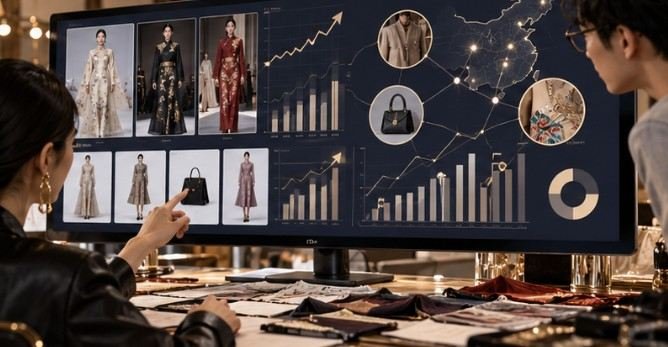
Marketplace data has limits. A Tmall bestseller does not automatically predict what Americans will purchase. Climate, body preferences, cultural symbolism, price expectations, platform behavior, and retail calendars differ substantially.
Sales rankings can also favor established brands with larger advertising budgets and stronger distribution. Search spikes may reflect promotions rather than genuine fashion movements.
That is why Tmall should be treated as one signal alongside runway direction, consumer research, social conversation, retail performance, material innovation, and cultural analysis—not as an automatic design brief.
Frequently Asked Questions
1. What does trending on Tmall reveal before Shanghai Fashion Week?
It can reveal rising searches, category interest, pricing preferences, brand momentum, and potential buying intent, helping companies distinguish commercially promising trends from short-lived fashion attention.
2. Why is Shanghai Fashion Week important to international brands?
It combines Chinese designers, international labels, buyers, trade fairs, consumer events, manufacturing capabilities, and sophisticated digital commerce within one influential fashion ecosystem.
3. Can U.S. brands use Chinese Tmall trends directly?
Not safely. They should validate Chinese trends against American consumer behavior, climate, pricing, sizing, cultural preferences, competition, and domestic search data before developing products.
4. Is Shanghai Fashion Week mainly about runway shows?
No. Modern Shanghai Fashion Week combines runway presentations with showrooms, wholesale activity, retail events, pop-ups, digital platforms, industry discussions, and consumer engagement.
The Signal Beyond the Runway
The most useful story coming out of Shanghai is not one particular silhouette, fabric, or designer. It is the increasingly short distance between creative experimentation and measurable consumer response.
Trending on tmall gearing up for shanghai fashion week captures that shift. Designers can create cultural excitement on the runway while platforms reveal almost immediately whether consumers want to explore, compare, and purchase what they see.
For U.S. fashion businesses, Shanghai offers a useful model: combine cultural intelligence with behavioral data, but never mistake data for creativity. The strongest brands will use both—letting designers create desire while giving shoppers enough influence to reveal which ideas deserve to become real businesses.