Luxury fashion houses often stumble when chasing digital relevance, producing marketing stunts that alienate traditional collectors while failing to engage internet-native buyers. The january 2021 social savvy brands gucci x doraemon campaign broke that mold by turning a 50-year-old Japanese manga character into a high-margin commercial triumph.
I analyzed this rollout across APAC and Western channels as it unfolded, tracking how creative director Alessandro Michele merged Italian craftsmanship with calculated social virality.
The collection launched on January 12, 2021, strategically timed for the Lunar New Year celebrating the Year of the Ox. By respecting the source material while engineering frictionless digital touchpoints, Gucci delivered a benchmark for luxury brand positioning.
The Strategic Anatomy of the Gucci x Doraemon Drop
When high fashion licenses cartoon characters, the execution often feels surface-level, consisting of basic logo slapping without conceptual depth. Gucci avoided this trap by treating the IP crossover as an archival dialogue rather than a gimmick.
Reimagining Heritage: The Ox Disguise and Pop-Culture Nostalgia
Doraemon holds generational emotional equity across Asia. The blue robotic cat represents optimistic childhood memories for millions of millennials and Gen Z consumers. To honor the Year of the Ox, Gucci did something audacious: they redesigned Doraemon. The character received a festive golden-brown coat, curved horns, and a tail, playfully disguised as an ox.
This customization showed cultural literacy. Rather than dropping a generic Western product into the holiday market, the house tailored the visual identity specifically for regional celebrations. According to historical runway retrospectives on Vogue Runway, Michele’s creative strength was his ability to destabilize stuffy luxury codes through vintage eclecticism. Transforming Doraemon into a celebratory zodiac creature honored local customs while generating immediate social chatter.
Designing for Scarcity Across Ready-to-Wear and Leather Goods
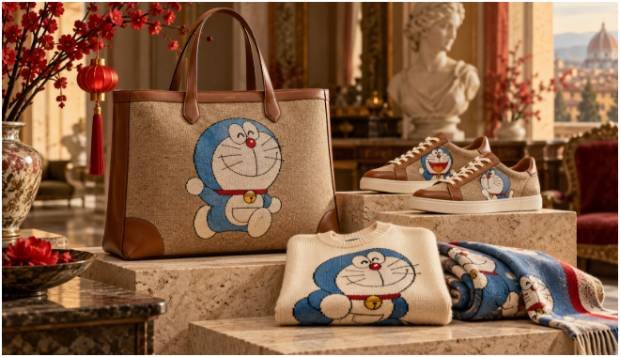
The capsule collection was expansive, offering over 50 individual references. Apparel pieces paired oversized silhouettes, retro track jackets, knit wool sweaters, and silk neck bows with vintage GG Supreme canvas prints.
The accessories lineup anchored the collection’s commercial viability:
- Structured Ophidia tote bags, duffles, and mini bucket bags with burgundy calfskin piping.
- Vintage-style bi-fold leather wallets and card cases decorated with Doraemon vignettes.
- Rhyton and Ace sneakers showcasing custom character embroidery.
- Collectible Gucci Dive watches bearing the disguised robotic cat on the dial.
By distributing the IP across entry-level leather card cases and runway-level structured luggage, Gucci built accessible price ladders for aspirational buyers without cheapening its core catalog.
Deconstructing the Multi-Platform Social Playbook
The physical collection would have fallen flat without an aggressive, platform-native distribution engine. Gucci bypassed traditional billboard advertising in favor of interactive social mechanisms across WeChat, Weibo, Xiaohongshu (RED), and Douyin.
+————————————————————–+
| GUCCI x DORAEMON SOCIAL FUNNEL |
+————————————————————–+
| AWARENESS: ArtWalls (Hong Kong/Shanghai) & Weibo Teasers |
| | |
| ENGAGEMENT: WeChat Red Envelopes & AR Packaging Scans |
| | |
| CONVERSION: Native Mini-Programs & Direct VIP Boutiques |
+————————————————————–+
Digital Red Packets and Social Commerce Virality
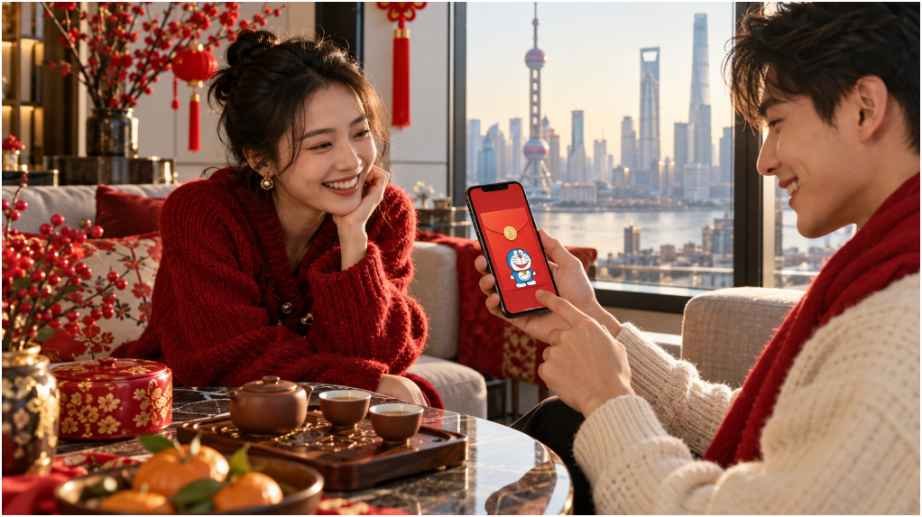
The centerpiece of the social strategy was a masterclass in behavioral mechanics: the digital red envelope (hongbao). During Lunar New Year, exchanging red packets containing money is a cherished tradition. WeChat allows users to apply custom branded covers to their digital cash transfers.
Gucci released limited-edition animated Doraemon covers exclusively through its WeChat mini-program. Obtaining one required completing interactive brand tasks, turning consumers into active advocates. The scarcity created frenzy. Friends begged each other for spare codes, and the custom covers turned every single peer-to-peer monetary gift into a branded micro-advertisement.
The campaign ignited massive organic virality. On Weibo, the user-generated hashtag #Gucci’sWeChatRedEnvelope racked up 160 million organic impressions in days without heavy paid amplification. This dynamic proved once again that modern campaigns succeed when luxury directly Targets Valuable Consumer Demographic groups through native, habitual social rituals.
Phygital Engagement: ArtWalls, Packaging, and AR Interactivity
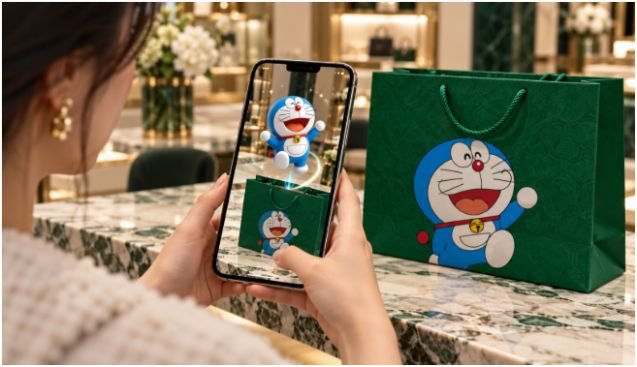
The digital experience extended directly to physical retail. All purchases arrived in specialized, fully recyclable emerald green packaging featuring Doraemon motifs.
Through the official Gucci App, customers scanned their shopping bags, apparel tags, or the monumental hand-painted ArtWalls erected in Shanghai and Hong Kong. The app activated proprietary augmented reality (AR) animations of Doraemon springing to life and dancing across the screen. As tech researchers at Wired have documented, immersive retail layers bridge tactile luxury with gamified engagement. This approach drove high user-generated unboxing posts across Xiaohongshu.
Even when geo-fencing challenges arose, digital audiences found workarounds—much like when fashion brands still flocked to animal crossing despite china restrictions to connect with quarantined players. Gucci met its audience precisely where they lived: inside their smartphones.
The Economics of Luxury Anime Collaborations
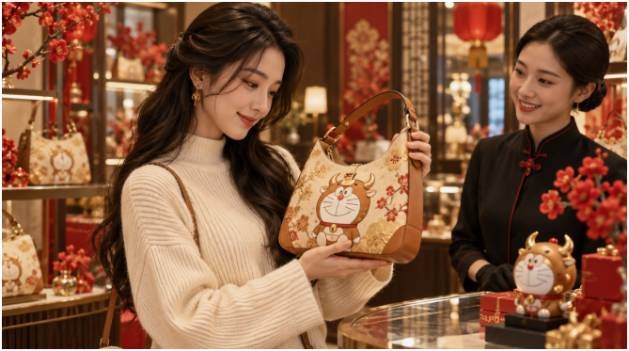
Luxury houses operate on manufactured desire and calculated exclusivity. Partnering with established anime properties creates unique financial mechanics that traditional celebrity sponsorships struggle to replicate:
| Strategic Dimension | Traditional Celebrity Endorsement | Manga/Anime IP Collaboration |
| Reputational Risk | High (personal scandals, public controversies) | Zero (curated, stable, perpetual canon) |
| Collector Obsession | Moderate (fan bases rarely hoard every release) | High (otaku completionist psychology drives sellouts) |
| Cultural Resonance | Fleeting (tied to current news or releases) | Cross-generational (appeals to both parents and kids) |
| Secondary Market Value | Depreciates rapidly post-campaign | Commands sustained resale premiums on Grailed/StockX |
As noted by market strategists at Business of Fashion, cartoon collaborations unlock immediate liquidity. They attract younger shoppers who purchase a wallet or sneaker today and mature into fine jewelry or bespoke tailoring clients tomorrow.
Key Takeaways for Modern Digital Strategists
Studying this campaign reveals several operational guidelines for executing global pop-culture crossovers:
- Localize Beyond Aesthetics: Modifying Doraemon to celebrate the Year of the Ox demonstrated genuine cultural investment rather than lazy seasonal opportunism.
- Build for Natural Habits: The viral WeChat red envelope worked because it enhanced an existing seasonal ritual instead of inventing an artificial one.
- Connect Physical and Digital Touchpoints: Using AR animations on shopping bags turned every unboxing into shareable video content for social feeds.
- Guard Brand Equity with Quality: Crafting the capsule with signature Florentine leatherwork and archival fabrics prevented the character graphics from looking like cheap merchandise.
Corporate brand managers aiming to replicate this playbook should study regional consumer psychology, as highlighted in omnichannel marketing frameworks from the Harvard Business Review.
Bow Ties, Bell Collars, and the Bottom Line
The january 2021 social savvy brands gucci x doraemon release established that heritage fashion can be playful without sacrificing luxury credibility. Alessandro Michele recognized that modern status symbols do not need to take themselves seriously to command four-figure price tags. By respecting the IP, engineering social scarcity, and blending augmented reality with physical retail, Gucci set the standard for modern luxury brand collaborations.
If you are planning an IP partnership, stop treating social platforms as distribution channels. Treat them as living digital environments where your community already gathers, talks, and plays.
Frequently Asked Questions
1. What made the Gucci Doraemon campaign unique in January 2021?
It reimagined Doraemon with an ox disguise for the Lunar New Year and drove record viral engagement via WeChat red packets.
2. How did Gucci incorporate augmented reality in the Doraemon collection?
Shoppers used the Gucci App to scan packaging and dedicated ArtWalls, triggering interactive AR animations of Doraemon dancing.
3. Which social platforms drove the campaign’s success?
The campaign gained massive traction across WeChat mini-programs, Weibo hashtags, and user-generated lifestyle posts on Xiaohongshu and Douyin.
4. Why do luxury brands partner with classic Japanese manga characters?
These partnerships tap deep childhood nostalgia among young affluent buyers while offering completely scandal-free cultural ambassadors.