I used to think increasing revenue meant one thing: get more traffic. Run more ads. Publish more content. Optimize more landing pages. But after working with a few e-commerce brands, I realized something uncomfortable: the real growth lever wasn’t traffic. It was what happened after someone added a product to the cart.
That’s where cross-selling and upselling in e-commerce quietly do the heavy lifting. When done right, they don’t feel aggressive. They feel helpful. They guide customers toward better decisions while naturally increasing average order value (AOV). And in many cases, that shift alone can move revenue by double digits without touching acquisition budgets.
Why Cross-Selling and Upselling in E-commerce Directly Increase AOV
At its core, average order value measures how much a customer spends per transaction. Instead of chasing more buyers, cross-selling, and upselling in e-commerce, focus on increasing the value of each purchase.
Upselling increases the value of the item itself. Cross-selling increases the number of items in the basket.
When executed strategically, these tactics can increase AOV anywhere from 10% to 40%, depending on implementation quality and personalization depth.
Upselling works by nudging customers toward a higher-tier product. Imagine someone browsing a standard camera priced at $500. If the product page clearly highlights why the professional DSLR at $750 delivers better long-term value, some buyers will upgrade. That single shift increases transaction value instantly.
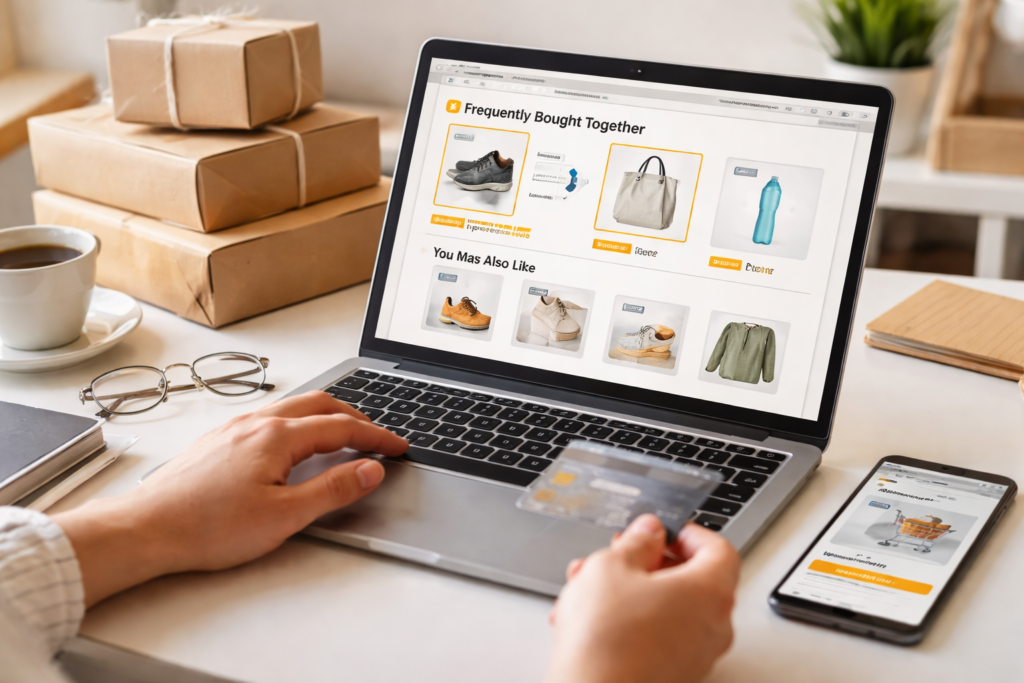
Cross-selling expands the cart. A customer buying a $1,000 laptop might add a sleeve, mouse, or extended warranty. These complementary product suggestions feel logical, almost expected, and can add $100 or more to the final total.
Strategic bundling takes it further. Offering a “Photography Starter Kit” that includes a camera, bag, and tripod at a slight discount makes the higher total feel like a smarter deal rather than a bigger expense.
The Measurable Revenue Impact

This isn’t theoretical. Some of the largest e-commerce platforms attribute a significant portion of their revenue to recommendation engines and related product systems. One widely cited figure suggests that roughly 35% of revenue for major online retailers comes from cross-sell and upsell recommendations.
Consulting research also shows that companies effectively implementing these tactics see around a 20% increase in revenue and up to 30% improvement in profit margins. That profit lift matters because selling to existing customers is dramatically more efficient than acquiring new ones. The probability of selling to an existing customer often ranges between 60% and 70%, compared to much lower rates for new prospects.
When you connect those dots, cross-selling and upselling in e-commerce stop looking like add-ons. They become a core growth strategy.
Tactics That Consistently Lift Average Order Value
Not all upsells and cross-sells perform equally. The execution determines whether customers perceive value or pressure.
Here are the most proven AOV drivers:
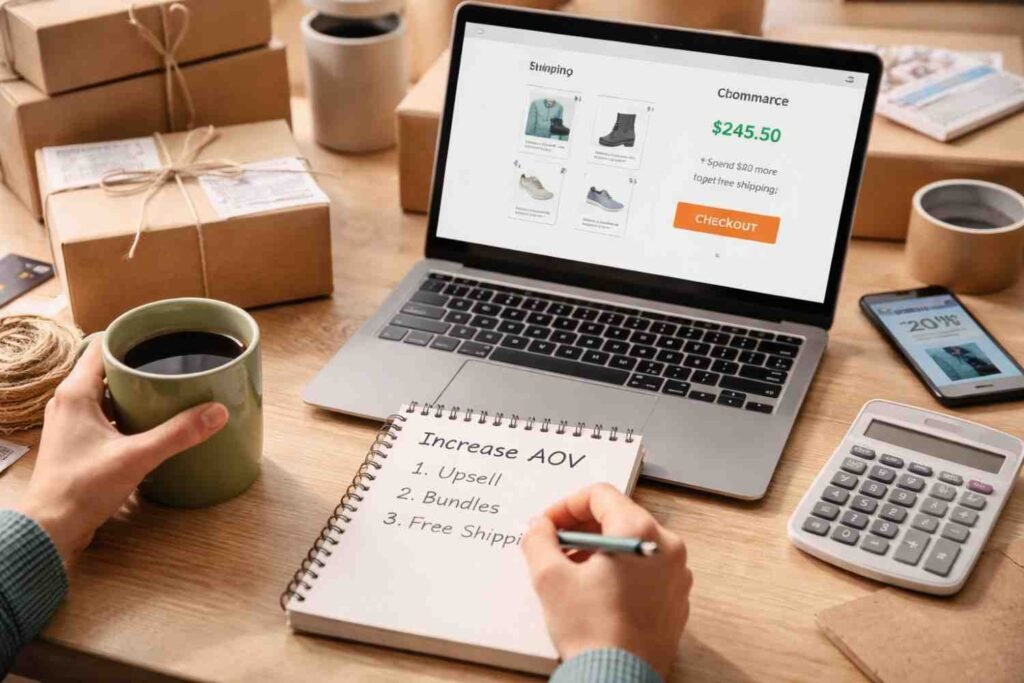
- Free shipping thresholds: Messages like “Spend $10 more to unlock free shipping” prompt incremental additions. Younger shoppers especially respond strongly to this trigger.
- Product comparison tables: Showing feature differences between standard and premium models justifies price upgrades clearly.
- Checkout add-ons: Small impulse items like screen protectors or batteries can increase AOV by up to 6% without disrupting flow.
- Data-driven personalization: AI-powered product recommendations can boost cross-sell conversion rates by 20% to 30%.
- Post-purchase offers: Confirmation pages and follow-up emails create a second opportunity to suggest complementary products.
Notice something important here: none of these tactics relies on pressure. They rely on relevance.
Personalization Is the Real Multiplier
The difference between annoying and effective cross-selling and upselling in e-commerce usually comes down to personalization.
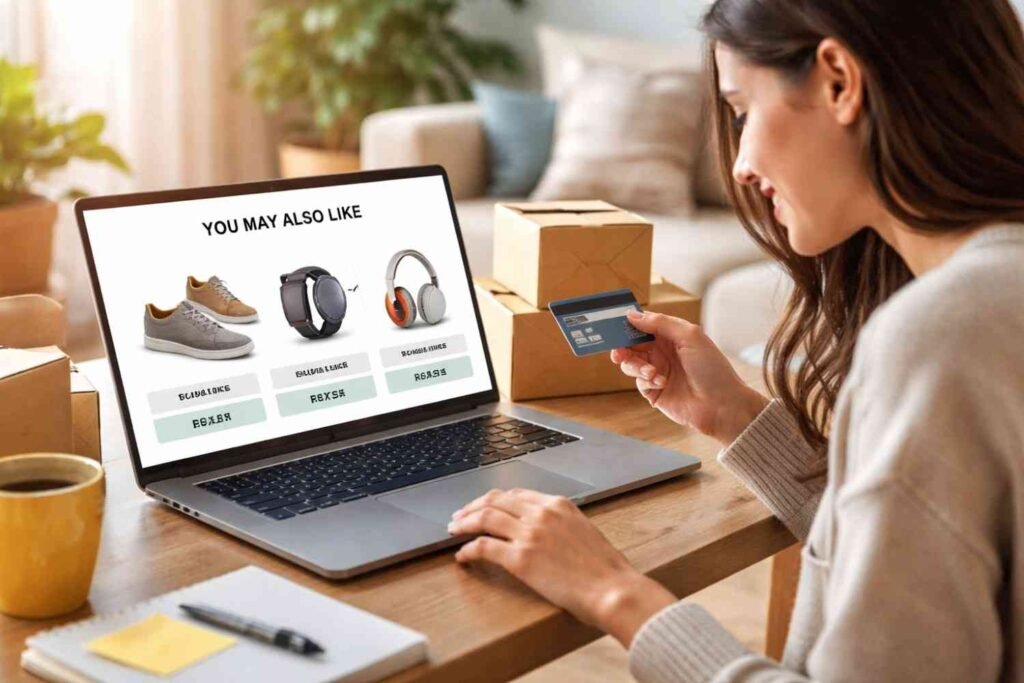
Generic “You might also like” widgets rarely move the needle. Behavior-driven recommendations based on browsing history, past purchases, or category interest perform far better.
If someone buys running shoes, recommending performance socks makes sense. If someone upgrades to a premium coffee machine, suggesting compatible pods feels natural. Context matters.
Modern e-commerce platforms now use predictive algorithms to analyze customer purchase behavior in real time. When those systems suggest relevant complementary products, they increase both AOV and customer satisfaction.
Where to Place Upsells and Cross-Sells for Maximum Impact
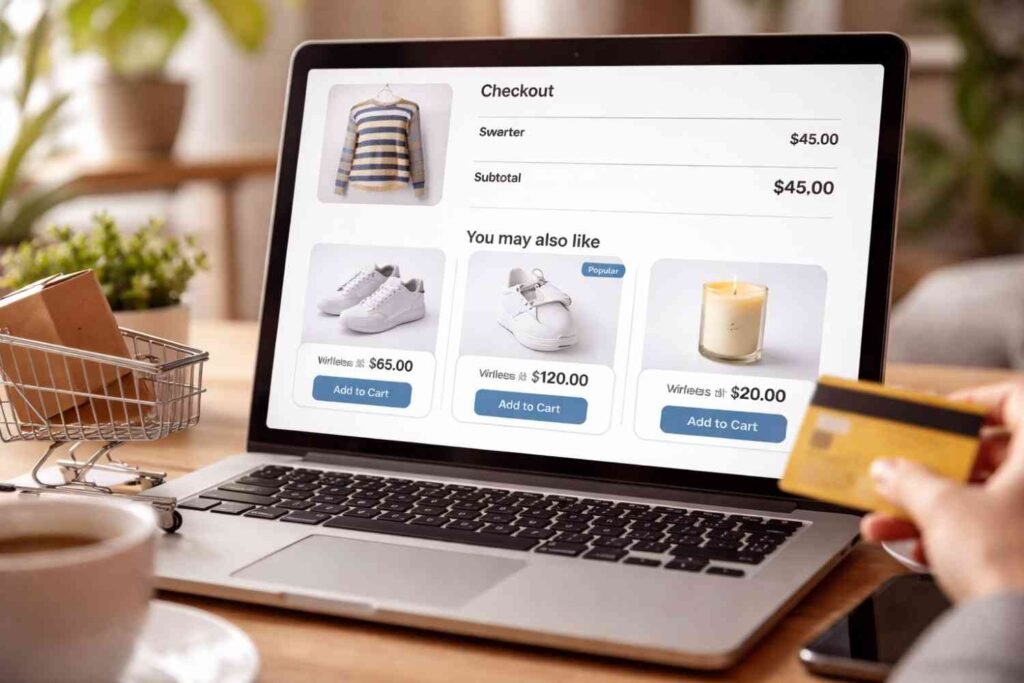
Placement often determines performance.
Product pages work well for premium upgrades and feature comparisons. Cart pages are ideal for complementary add-ons. Checkout flows require subtly low-cost impulse items perform better than major upgrades at this stage.
Post-purchase flows are often overlooked. Once the initial purchase is complete, resistance drops. A follow-up email offering accessories or extended warranties can convert surprisingly well because the buyer has already committed.
The key is flow. Cross-selling and upselling in e-commerce should feel like part of the buying journey, not interruptions.
Avoiding the “Pushy” Trap
The fastest way to damage trust is to overwhelm customers with aggressive pop-ups or irrelevant upgrades.
Effective e-commerce AOV strategies follow three principles:
- Relevance over volume
- Clarity over complexity
- Value over urgency
When the recommended product genuinely improves the customer’s experience, the upsell feels helpful. When it exists only to inflate the cart, customers notice and bounce.
Frequently Asked Questions (FAQs)
1. What is the difference between cross-selling and upselling in e-commerce?
Upselling encourages customers to purchase a higher-priced version of the product they’re considering. Cross-selling suggests complementary products that enhance or complete the main purchase.
2. How much can cross-selling and upselling increase average order value?
Depending on execution and personalization, these strategies can raise AOV between 10% and 40%, with additional long-term impact on customer lifetime value.
3. Do small checkout add-ons really make a difference?
Yes. Low-cost impulse items offered at checkout can increase average order value by up to 6% without disrupting the purchase flow.
4. Is personalization necessary for effective upselling?
Absolutely. Personalized recommendations based on behavior and purchase history significantly outperform generic product suggestions.
Final Thoughts
Cross-selling and upselling in e-commerce aren’t just revenue tricks; they’re alignment tools. When brands recommend better versions or complementary products that genuinely enhance the purchase, customers spend more because the offer makes sense. The lift in average order value becomes a byproduct of relevance, not manipulation.
The smartest ecommerce brands don’t push harder. They guide better.