
A blog can attract thousands of visitors every month and still generate surprisingly few sales. The problem is rarely traffic alone. More often, readers find useful information but never discover a compelling reason to explore the products behind it.
Understanding how to turn blog readers into ecommerce customers starts with recognizing that information and purchasing decisions are connected. Someone researching a problem may eventually need a product to solve it.
Successful ecommerce content bridges that gap through relevant recommendations, trustworthy information, thoughtful calls to action, and a shopping experience that feels like a natural continuation of reading.
Match Your Content to the Customer’s Buying Journey
Not every visitor is equally prepared to purchase. Understanding their position in the customer journey helps brands recommend products appropriately.
Awareness: Explain the Problem Before Selling
Awareness-stage readers are exploring an unfamiliar challenge.
For example, someone searching for ways to prevent dry skin during winter may appreciate explanations about indoor heating, moisturizing ingredients, and daily skincare habits.
A skincare retailer can introduce moisturizing products naturally without making the entire article promotional.
The immediate goal is building credibility.
Consideration: Help Readers Compare Solutions
Consideration-stage visitors understand their problem but remain uncertain about the best solution.
Content comparing products, materials, features, and price ranges becomes particularly valuable.
A kitchenware retailer might publish an article explaining ceramic versus stainless steel cookware, discussing durability, maintenance, and cooking performance.
Linking to relevant product categories helps readers investigate their options without disrupting the educational experience.
Decision: Remove the Remaining Doubts
Decision-stage readers generally need specific information before purchasing.
Detailed buying guides, product demonstrations, sizing explanations, and comparison articles can address these concerns.
For instance, an article comparing two coffee makers should explain capacity, cleaning requirements, warranty coverage, and practical differences.
The strongest content helps customers make informed decisions rather than simply declaring one product superior.
Turn Helpful Information Into Product Discovery
A strong ecommerce blog introduces products precisely when readers can understand their usefulness.
Instead of placing unrelated advertisements throughout an article, connect recommendations directly to the problem being discussed.
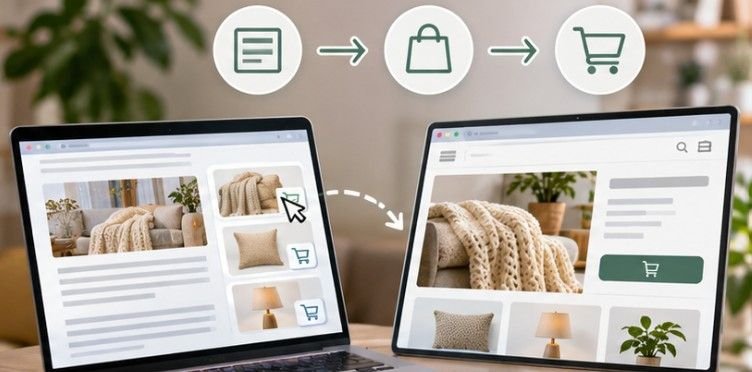
Add Contextual Product Links
Consider a home organization article discussing limited closet space.
A natural product reference might explain how adjustable shelving creates additional storage and link directly to compatible shelving systems.
Effective contextual links should:
Connect to products mentioned in the surrounding explanation.
Use descriptive anchor text.
Lead to relevant, available products.
Avoid excessive repetition.
Product recommendations become more persuasive when readers recognize their practical purpose.
Use Product Images and Comparison Elements
Visuals help customers understand features that descriptions alone may not communicate.
Include photographs showing dimensions, materials, applications, or products in realistic settings.
Small product cards can display prices, essential specifications, and links to detailed listings.
For budget-conscious shoppers, highlighting an affordable introductory product may encourage exploration without requiring a major financial commitment.
Write Calls to Action That Feel Like Helpful Next Steps
A call to action works best when it responds to something readers have just learned.
For example, after explaining how to select the correct mattress firmness, a bedding retailer might offer an invitation to explore mattresses organized by sleeping position.
This approach makes the next step relevant rather than intrusive.
Useful placements include an in-article recommendation, a small sidebar feature, or a closing product suggestion.
Avoid covering important paragraphs with aggressive pop-ups.
Accessibility matters, too. The World Wide Web Consortium’s mobile accessibility guidance explains how established accessibility standards apply across mobile devices.
Readable buttons, accessible navigation, and responsive layouts help more visitors interact comfortably with shopping links.
Build Trust Before Asking for a Purchase
First-time visitors often know little about the business behind an article.
Trust grows when content demonstrates genuine knowledge and makes commercial information transparent.

Demonstrate Expertise Through Useful Evidence
Original photographs, practical testing, accurate specifications, and clear explanations strengthen credibility.
A retailer recommending waterproof hiking boots could demonstrate performance through realistic product testing rather than relying on promotional descriptions.
Explain limitations alongside advantages.
A product that suits occasional weekend hikes may not be appropriate for demanding mountain conditions.
Acknowledging such differences helps readers evaluate recommendations.
Let Authentic Customer Reviews Provide Reassurance
Customer photographs and verified reviews can answer questions that promotional content overlooks.
However, testimonials must accurately represent real experiences.
The Federal Trade Commission’s consumer review rule addresses deceptive practices involving fabricated reviews and misleading testimonials.
Retailers should avoid invented ratings, undisclosed insider endorsements, and misleading claims about customer experiences.
Reliable social proof supports purchasing decisions without manufacturing confidence.
Capture Interested Readers Who Aren’t Ready to Buy
Many visitors need additional information or time before purchasing.
Email marketing provides a way to continue the relationship after they leave.
Offer something genuinely useful, such as a product selection checklist, maintenance guide, or carefully explained first-order discount.
A practical welcome sequence might deliver the requested resource, answer common product questions, and introduce relevant items in later messages.
Keep promotions connected to the reader’s original interests.
US businesses should also follow the FTC’s CAN-SPAM compliance guidance, including rules about accurate commercial email information and functional unsubscribe options.
Use Retargeting Selectively
Retargeting campaigns can reconnect with visitors who explored particular product categories. Someone reading multiple articles about home office ergonomics might find a relevant chair comparison useful.
However, advertising should respect applicable privacy requirements and user choices. Avoid excessive ad frequency or repeatedly promoting products unrelated to the visitor’s interests.
Measure Whether Your Blog Actually Influences Revenue
Knowing how to turn blog readers into ecommerce customers also requires understanding what visitors do after consuming content.
Page views alone reveal little about commercial performance.
Track meaningful actions such as product clicks, email registrations, cart additions, checkout starts, and completed purchases.
Google Analytics supports ecommerce events including view_item, add_to_cart, begin_checkout, and purchase, allowing retailers to examine different stages of the purchasing process.
A useful starting calculation is:
Blog visitor conversion rate = (Purchases ÷ Blog visitors) × 100
For example, if 2,000 blog visitors generate 30 purchases, the conversion rate is 1.5%.
This simplified calculation works best when purchases and visitors are measured consistently. For more accurate analysis, distinguish immediate purchases from later conversions influenced by blog visits.
A Practical Four-Week Blog Conversion Improvement Plan
Rather than redesigning an entire content strategy, test improvements on a small group of established articles.

Week 1: Identify Commercial Opportunities
Review high-traffic posts and determine which topics naturally relate to available products.
Prioritize articles attracting visitors who are comparing solutions or researching buying decisions.
Week 2: Improve the Shopping Path
Add relevant product links, concise recommendations, useful photographs, and clear calls to action.
Check that linked products are available and that product pages answer likely customer questions.
Week 3: Strengthen Trust and Usability
Review customer testimonials, mobile navigation, shipping information, and checkout accessibility.
Test the complete shopping journey on a smartphone.
Week 4: Compare Performance
Measure product clicks, cart additions, purchases, and revenue against the previous baseline.
Test one meaningful change at a time where possible.
Small traffic samples may not establish reliable results, so avoid declaring a winning variation after only a few purchases.
Frequently Asked Questions
1. How can ecommerce blogs increase sales without aggressive advertising?
Provide practical information, recommend products where relevant, and use helpful calls to action. Authentic reviews and transparent product details make purchasing decisions easier.
2. What blog content converts readers into customers most effectively?
Product comparisons, buying guides, tutorials, and problem-solving articles often attract commercially relevant visitors. Results depend on audience intent and product relevance.
3. How long does it take for blog content to generate ecommerce sales?
Results vary with search visibility, existing traffic, product demand, and website usability. Established articles may produce sales sooner than newly published content.
4. Should every blog article contain product links?
No. Product links belong where they genuinely help readers. Forcing commercial recommendations into unrelated educational content can weaken credibility.
The Next Step Is More Important Than the Page View
A successful ecommerce blog does more than attract visitors. It helps people understand problems, compare potential solutions, and make confident purchasing decisions.
The strongest strategies combine useful editorial content with relevant products, clear navigation, authentic evidence, and reliable performance tracking.
Not every reader needs to become a customer immediately. Some will return after additional research, while others may simply appreciate the information.
Start by improving the shopping journey within your most commercially relevant articles. A well-placed recommendation, supported by genuinely useful content, can accomplish more than dozens of generic promotional messages.