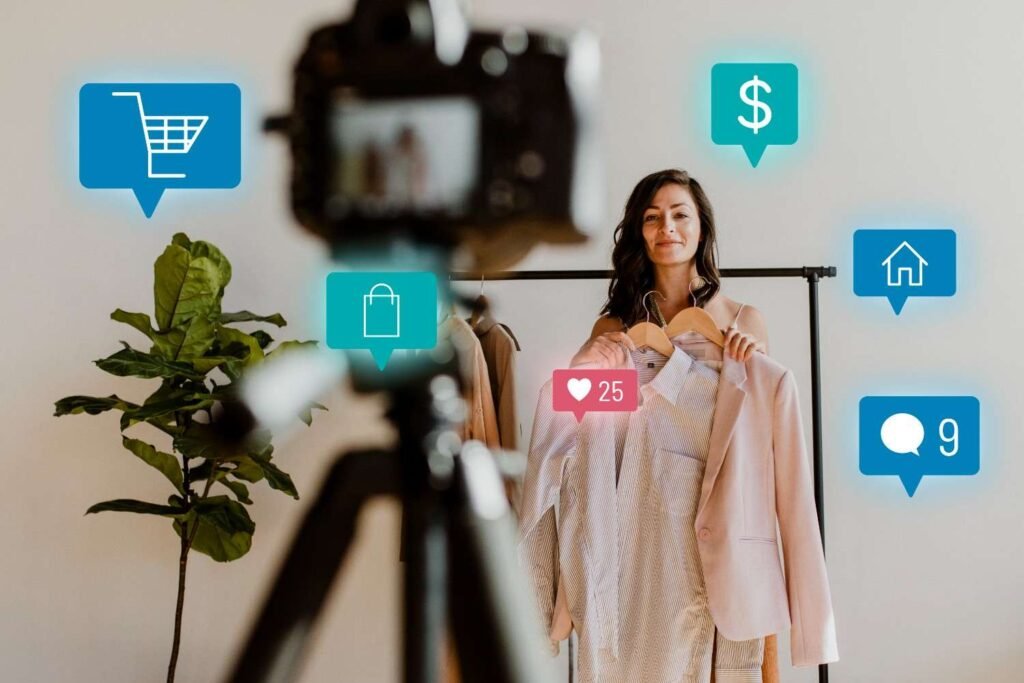
Online shopping is no longer just about browsing product pages, reading reviews, and clicking “add to cart.” The biggest change I see happening now is the way entertainment and e-commerce are merging into one continuous experience. Livestream shopping is at the center of that shift, giving consumers the ability to watch products in action, interact with hosts, ask questions, and buy in real time.
That is why CCI Take: E-Commerce Livestreaming Hits the Global Mainstream feels especially relevant today. What began as a fast-growing retail experiment in China has developed into a global commerce model influencing platforms, creators, brands, and marketplaces across the United States and beyond. For US retailers, the opportunity is no longer about testing whether live commerce can work.
It is about understanding how to use creator-led video, social shopping, AI hosts, and frictionless checkout to compete in a more interactive digital marketplace.
How Did Livestream Shopping Evolve From Entertainment Into Commerce?
Modern livestream commerce has roots in social video platforms where singers, comedians, gamers, and other performers interacted with audiences in real time. Fans often rewarded hosts with virtual gifts.
China’s ecommerce companies recognized that the same engagement could sell physical products.
Alibaba’s Taobao Live became an early force, while Douyin, Kuaishou, JD.com, and other platforms connected livestream entertainment with product pages, promotions, and integrated payments. Instead of watching content and later searching for a product elsewhere, consumers could watch a demonstration, ask questions, receive a discount, and buy immediately.
The COVID-19 pandemic accelerated that transition. Content Commerce Insider reported that China’s Ministry of Commerce counted more than 10 million e-commerce livestreams during the first half of 2020 alone, generating more than 50 billion views and promoting over 20 million products.
Celebrities, CEOs, sales representatives, chefs, fitness instructors, musicians, and fashion creators all joined the format.
Why Did China Become the Global Model for Live Commerce?

China created an unusually mature ecosystem around mobile payments, e-commerce marketplaces, short-form video, influencers, and livestreaming.
Taobao Live helped normalize shopping as entertainment, while Douyin and Kuaishou connected algorithmic content discovery with commerce. Consumers could move from a short video into a livestream and then complete a purchase without leaving the platform.
The market has since reached a level that Western retailers are still trying to understand. Reuters reported that livestream shopping represented more than 36% of China’s online retail in 2025, up from less than 18% in 2021.
That does not mean American retailers should simply copy China. US consumers already rely heavily on Amazon, search engines, brand websites, marketplaces, and social platforms. The American version of live commerce is developing around creators, niche communities, product drops, collectibles, short videos, and social discovery.
Is Livestream Shopping Becoming Mainstream in the US?
The American market is smaller than China’s, but growth has become difficult to ignore.
EMARKETER estimated that US livestream ecommerce sales increased nearly 50% in 2025 to $14.64 billion, while the number of buyers grew 21.5% year over year. TikTok Shop, Whatnot, and eBay Live are helping move live shopping beyond novelty status.
Amazon Live also gives brands and creators another way to demonstrate products, while YouTube, Instagram, and ecommerce platforms support different forms of livestream and video-led commerce. Shopify identifies TikTok, Instagram, and YouTube among the social platforms businesses can use for live shopping.
For US brands, I see the biggest opportunity in combining livestreaming with the content formats Americans already use every day rather than attempting to recreate China’s market exactly.
Why Does Livestream Shopping Convert So Well?
Livestream shopping works like a mobile, interactive version of QVC, but with much stronger social participation.
How Does Frictionless Checkout Improve Live Shopping?
The experience removes steps from the purchasing journey.
A consumer can discover a product, watch someone demonstrate it, ask questions, receive answers, and purchase without switching between multiple websites. Integrated checkout reduces friction at the moment when purchase intent is strongest.
Why Do Real-Time Demonstrations Build Trust?
Static product pages cannot answer individual questions.
During interactive shopping sessions, viewers can ask about fit, dimensions, materials, performance, colors, features, or product comparisons. A creator or brand representative can respond immediately.
That makes livestreams particularly useful for beauty products, fashion, consumer electronics, collectibles, home goods, and other products that benefit from demonstration.
How Do Urgency and Entertainment Increase Sales?
Live commerce also uses entertainment psychology.
Flash deals, limited quantities, exclusive coupons, auctions, countdowns, and creator-led product drops can encourage immediate action. At the same time, comments and reactions create a sense that shoppers are participating in a community rather than browsing alone.
How Are TikTok Shop, Whatnot, and eBay Live Changing US Ecommerce?
US platforms are developing different approaches to video commerce.
TikTok Shop links short-form entertainment, creator recommendations, livestreams, and native shopping. Whatnot has become especially important for collectibles and enthusiast communities, while eBay Live extends live selling into an established marketplace environment.
This matters because livestreams rarely operate alone.
A consumer might first encounter a product in a short video, watch more content from the creator, enter a livestream, compare products, and then purchase. Social commerce increasingly connects multiple content formats rather than depending on one broadcast.
That discovery-to-commerce funnel may be more important to US retailers than livestreaming by itself.
How Is India Expanding Live Commerce?
India offers another important example of livestream shopping becoming localized for a major ecommerce market.
Flipkart has invested heavily in creator-led video commerce. In 2025, the company ran a 100-hour beauty livestream involving more than 140 brands, over 40 guest influencers, and more than 100,000 engaged viewers. Flipkart said engagement during the event rose 2.5 times above its normal level.
During its GOAT Sale, Flipkart also used creator-led live commerce, video demonstrations, limited-time drops, and gamified shopping experiences. The company reported that 90% of users who joined live sessions returned to the same product category.
Amazon India has similarly built digital shopping experiences around creators, product discovery, ecommerce, and increasingly AI-assisted shopping.
The important lesson for US retailers is that successful live commerce adapts to local consumer behavior rather than following a single global formula.
Are 24/7 AI Livestream Hosts the Next Big Shift?
Artificial intelligence may create the next major change.
Human key opinion leaders, influencers, hosts, studios, and production teams can be expensive. That has encouraged Chinese ecommerce companies to experiment with AI-generated digital hosts capable of operating for much longer periods.
AI avatars can use product information and generated scripts to present merchandise, answer routine questions, and keep digital storefronts active around the clock.
The economics are attractive. Reuters reported that AI hosting tools offered through platforms such as JD.com can reduce livestream operating costs dramatically, in some cases by up to 90%.
However, replacing humans entirely creates a problem: trust.
Consumers often watch creators because of their personality, knowledge, spontaneity, and credibility. An AI avatar can deliver information efficiently, but it may struggle to recreate the relationship viewers have with a trusted human host.
I expect a hybrid model to become more common. AI can handle repetitive selling and lower-value sessions, while human creators lead major launches, high-engagement events, and community-driven streams.
What Could Slow the Growth of Livestream Commerce?
Rapid growth does not eliminate risk.
Platforms still have to address misleading product claims, low-quality sellers, disclosure requirements, privacy concerns, fraudulent listings, AI-generated content, recommendation quality, fulfillment, and returns.
Brands also face audience fatigue. If every creator becomes a nonstop salesperson, trust can decline quickly.
For live commerce to remain effective, retailers need to treat it as an experience rather than simply another advertising slot.
What Does Global Livestream Commerce Mean for US Retailers?

When I revisit CCI Take: E-Commerce Livestreaming Hits the Global Mainstream, the biggest change is clear: online shopping is becoming less dependent on the traditional search-product-page-checkout journey.
Consumers can now discover products through entertainment, learn about them from creators, interact with sellers in real time, and purchase almost immediately.
China established the model. India has adapted it through major e-commerce marketplaces. US companies are developing a version centered on TikTok Shop, Whatnot, eBay Live, Amazon Live, creators, short-form video, niche communities, and increasingly AI.
I do not expect livestream shopping to replace traditional ecommerce. I expect it to become another major layer within it.
Frequently Asked Questions About Livestream Shopping
1. What is livestream ecommerce?
Livestream ecommerce combines real-time video with online shopping, allowing consumers to watch product demonstrations, communicate with hosts, and purchase products during or immediately after a stream.
2. Why is livestream shopping popular in China?
China combines mobile payments, e-commerce marketplaces, influencers, short-form video, integrated checkout, and mature livestream platforms such as Taobao Live, Douyin, and Kuaishou.
3. Is livestream shopping growing in the United States?
Yes. US sales and buyer participation continue to grow, with platforms such as TikTok Shop, Whatnot, eBay Live, and Amazon Live making the format more accessible.
4. Why is CCI Take: E-Commerce Livestreaming Hits the Global Mainstream important for US brands?
It highlights the shift toward interactive, creator-driven shopping where entertainment, social proof, product education, and purchasing increasingly happen inside the same digital experience.
5. Can AI replace human livestream hosts?
AI hosts can reduce costs and support continuous broadcasting, but human hosts still provide authenticity, emotional connection, expertise, and trust. A hybrid approach is more likely to dominate.
Looking Ahead
I believe the future of livestream commerce will involve much more than people selling products in front of cameras. Short-form video, social shopping, creators, AI avatars, instant checkout, personalized recommendations, product demonstrations, and interactive communities are gradually merging into one retail ecosystem.
For US brands, the opportunity is not to imitate China’s system exactly. The smarter strategy is to understand why live commerce works and adapt those principles to American shopping habits. As shopping e-commerce platforms continue integrating social discovery, creator content, and faster checkout experiences, the line between entertainment and retail will become even less distinct.
When entertainment, convenience, trust, and commerce come together naturally, livestream shopping stops feeling like an experiment. It starts looking like another permanent part of modern ecommerce.