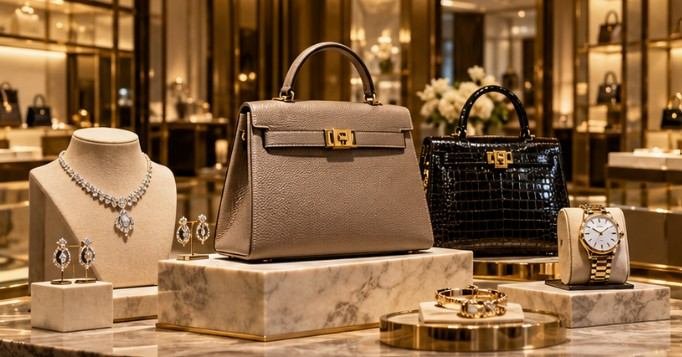
The most important NFT story in luxury is no longer a multimillion-dollar digital dress or a collectible sitting in a crypto wallet. It is a tiny digital identity attached to a handbag, watch, sneaker, or piece of jewelry.
That shift answers is the nft hype made for luxury more clearly than the frenzy of 2021 ever could. NFTs were not invented for luxury, and speculation alone was never a natural fit for an industry built around craftsmanship. Yet the underlying technology has proved surprisingly compatible with something luxury desperately needs: verifiable scarcity, provenance, ownership history, and stronger relationships with customers.
Luxury Loved NFTs for Reasons Beyond Crypto Speculation
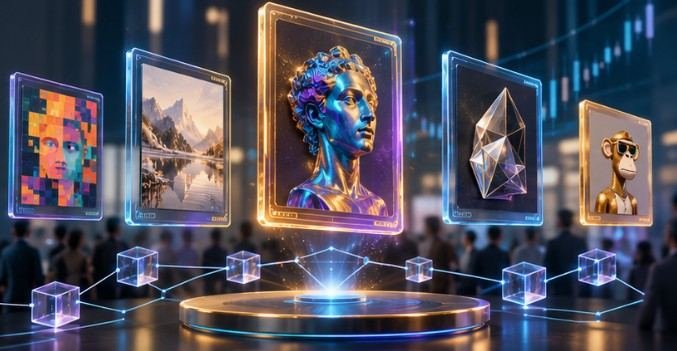
The NFT boom initially attracted luxury houses because digital tokens reproduced one of fashion’s most powerful commercial ideas: controlled scarcity.
A handbag can signal status because not everyone can obtain it. A limited-edition digital object could theoretically do the same inside games, virtual communities, and social platforms.
Gucci demonstrated the possibilities early. Its first NFT, a film inspired by Gucci Aria, sold through Christie’s for $25,000 in June 2021. Dolce & Gabbana went considerably further: its nine-piece Collezione Genesi NFT collection generated roughly $5.7 million in 2021.
Burberry also experimented with branded NFT characters and virtual accessories inside Blankos Block Party, bringing luxury products into a gaming environment rather than simply selling standalone digital art.
These experiments revealed three attractions for luxury brands: digital exclusivity, access to younger technology-oriented customers, and the ability to connect physical products with digital experiences.
The NFT Crash Exposed a Weakness Luxury Could Not Ignore
Luxury scarcity and NFT scarcity are not necessarily the same thing.
A Hermès bag may require scarce materials, specialized labor, years of expertise, controlled production, and a recognizable design history. An NFT can technically be made scarce by limiting how many tokens a smart contract produces, but the underlying digital image may remain easy to reproduce.
That distinction became harder to ignore as speculative NFT prices collapsed.
A widely cited 2023 dappGambl analysis examined 73,257 NFT collections and concluded that 69,795 had a market capitalization of zero Ether. The finding was subsequently reported as evidence that roughly 95% of the collections studied had effectively become worthless.
That does not mean NFTs themselves became useless. It means artificial scarcity without meaningful utility proved difficult to sustain.
The U.S. National Institute of Standards and Technology describes blockchain as a tamper-evident and tamper-resistant distributed ledger, technology that can support far more than cryptocurrency speculation.
Where NFTs Make More Sense for Luxury
The most durable applications increasingly begin with a physical product rather than a digital collectible.
Authentication and Provenance
Counterfeiting is particularly damaging to luxury because the customer is paying partly for confidence that an object is genuine.
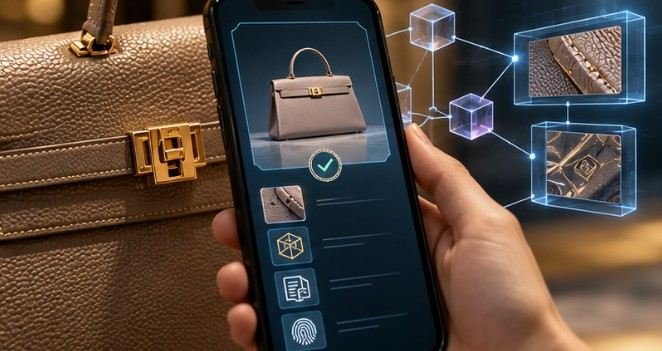
A blockchain record can provide a persistent digital identity associated with a particular product. Aura Blockchain Consortium, founded by major luxury groups including LVMH, Prada Group, OTB Group and Cartier, says more than 80 million products now use its infrastructure across more than 50 member brands.
Maison Margiela, for example, has introduced digital certificates connected to products through embedded NFC technology. Owners can tap the item with a smartphone to access authenticity information and its associated digital record.
Bvlgari has expanded its Digital Passport program to watches, giving customers access to authenticity confirmation, specifications, warranty information and component traceability. That is a considerably stronger proposition than asking buyers to speculate on a JPEG.
Resale and Ownership History
Luxury goods often live through several owners.
If reliable records travel with a handbag or watch, authenticated resale becomes easier. A digital passport may potentially document ownership transfers, repairs, warranties and product history.
That matters as luxury companies increasingly view resale not only as competition but also as another stage in the customer relationship.
Phygital Products
Another promising model ties a digital token to a physical purchase.
Instead of buying an NFT purely because someone hopes its resale price will rise, the customer receives a real product plus additional digital functionality: exclusive content, event access, membership benefits, a digital twin or future services.
The physical item supplies tangible value. The token becomes infrastructure.
A Five-Question Test for Evaluating a Luxury NFT
Consumers do not need to understand every part of blockchain engineering before assessing an NFT-linked luxury purchase. Ask five questions.
1. What does the token actually provide?
Look beyond the artwork. Does ownership provide authentication, event access, warranties, physical merchandise, repairs, membership privileges or resale documentation?
If the entire pitch is future price appreciation, risk rises considerably.
2. Is the issuer unquestionably legitimate?
Check the luxury house’s official website and verified channels rather than following links from unsolicited social-media messages.
The Federal Trade Commission’s cryptocurrency scam guidance recommends researching companies independently and being skeptical of guaranteed returns.
3. What exactly do you own?
Buying an NFT does not automatically transfer copyright in the associated artwork. Cornell Law School’s NFT legal overview explains that ownership of the blockchain record can differ from ownership of the linked asset or its intellectual-property rights.
The U.S. Copyright Office and USPTO reached a related conclusion after studying NFTs, emphasizing consumer education and transparency around intellectual-property rights. See the U.S. Copyright Office NFT study for additional detail.
4. Would the product still be desirable without the NFT?
This may be the best luxury test of all.
If a watch, bag or pair of shoes remains desirable because of its construction, design and brand heritage, the digital layer can add value. If removing the token destroys the entire proposition, buyers are largely purchasing speculation.
5. Have you considered taxes?
American collectors should not assume digital assets exist outside conventional tax rules. The IRS treats digital assets, including NFTs, as property for federal tax purposes, and certain sales or disposals can create reportable gains or losses.
The IRS digital-assets guidance explains current reporting requirements.
The Biggest Misconception: Blockchain Automatically Proves Authenticity
Blockchain can make a record difficult to alter. It cannot magically guarantee that incorrect information was never entered.
That distinction matters.
If a counterfeit product is incorrectly connected to a legitimate-looking digital record, blockchain alone does not inspect the stitching, gemstones or manufacturing process. Effective authentication still requires trustworthy issuance, secure product tags, controlled manufacturing data and reliable links between the physical object and its digital identity.
The technology protects records; reputable businesses must protect the connection between those records and reality.
So, Is the NFT Hype Made for Luxury?

Not in the form that dominated headlines during the speculative boom.
Luxury does not need thousands of branded digital collectibles whose main purpose is resale. It does have a strong reason to embrace technology that can document provenance, authenticate ownership, support resale, unlock experiences and give valuable physical objects persistent digital identities.
That is why is the nft hype made for luxury ultimately has a more nuanced answer: the hype was not. Some of the infrastructure may be.
Frequently Asked Questions
1. Are luxury NFTs still relevant?
Yes, but their role has changed. Luxury companies increasingly emphasize digital product passports, authentication, physical-digital products, ownership services and customer access rather than standalone speculative collectibles.
2. Can an NFT prove a luxury product is authentic?
It can strengthen authentication when securely linked to a genuine product, but blockchain cannot independently verify the physical object. Trusted issuance and secure physical-to-digital linking remain essential.
3. Does owning a luxury NFT give me copyright?
Usually not automatically. NFT ownership and copyright ownership are separate legal concepts. Buyers should review the token’s license and contractual rights before purchasing.
4.. Are NFTs taxable in the United States?
Potentially. The IRS considers NFTs digital assets and treats digital assets as property for federal tax purposes. Sales and other disposals may produce taxable gains or losses.
The Last Word
NFTs looked perfectly suited to luxury when prices were soaring because both markets seemed obsessed with scarcity. The difference became obvious after the crash: enduring luxury requires more than something being difficult to obtain.
The useful future is much less flashy. A digital identity that proves where a watch came from, follows a handbag through resale, records repairs, or unlocks meaningful owner benefits may never generate the excitement of a multimillion-dollar NFT auction. It does something more valuable—it solves a real problem. Luxury brands should judge blockchain by that standard, and consumers should do exactly the same.